**A Diplomatic Gift Takes to the Skies**
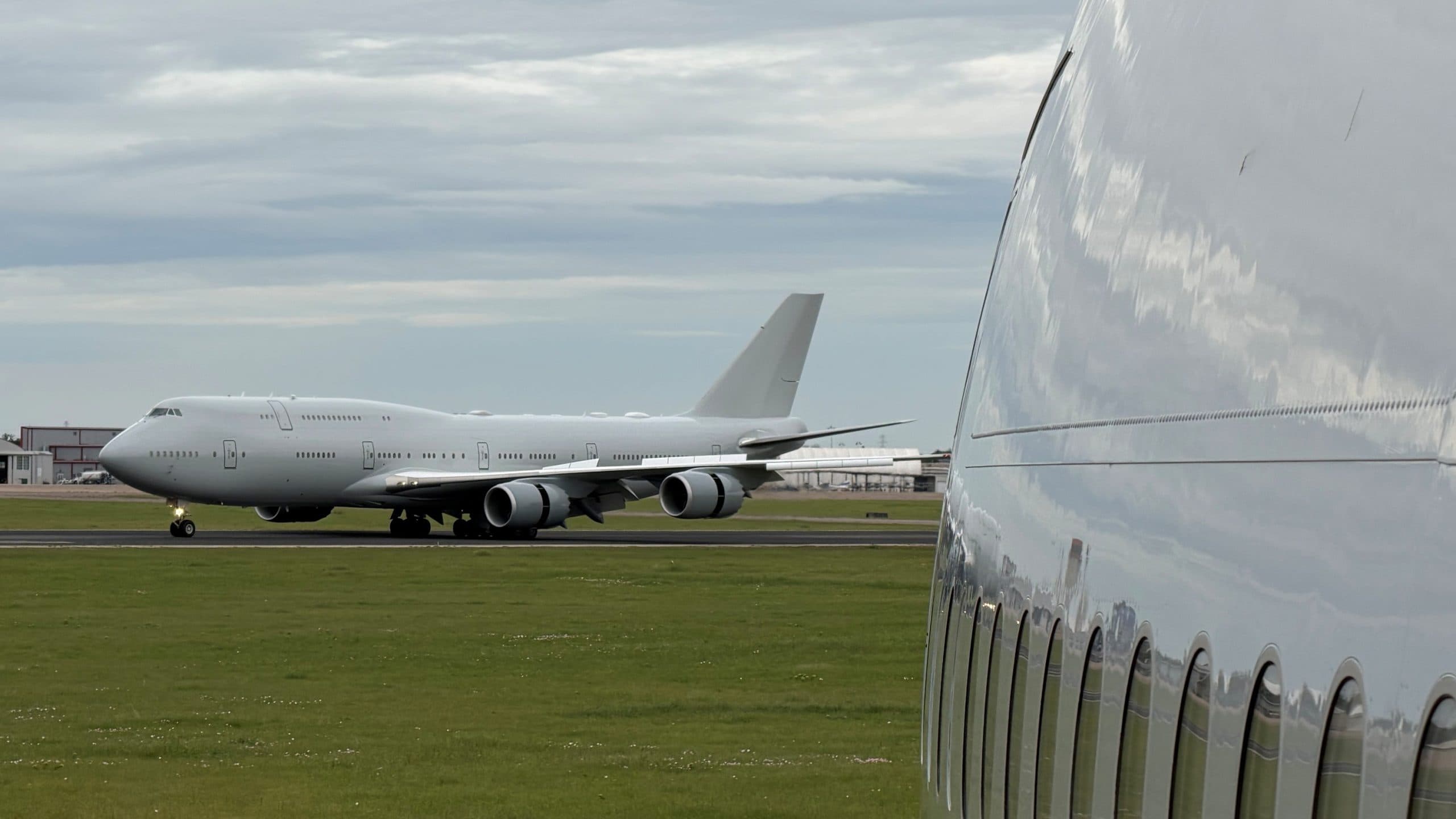
The United States Air Force has confirmed that a Boeing 747-8, originally part of the Qatari royal fleet and gifted to former President Donald Trump, will begin service as a temporary Air Force One this summer. The aircraft recently completed test flights over Texas and is currently being repainted in a red, white, blue, and gold livery. Valued at approximately $400 million, this luxurious jet—often described as a "palace in the sky"—will serve as an interim solution while the official VC-25B replacement program faces persistent delays.
**Why This Matters for Aviation Training**
For ATPL and ATC students, this story is far more than a political headline. It offers a real-world case study in aircraft modification, certification, and operational integration. The 747-8, originally configured for royal transport, must undergo extensive modifications to meet the stringent security and communication requirements of a presidential aircraft. These include hardened communications systems, self-defense countermeasures, and secure data links—all of which require supplemental type certificates (STCs) and rigorous testing. Understanding the certification process for such VIP modifications is directly relevant to students studying aircraft systems, airworthiness, and operational approvals.
**The VC-25B Program: A Lesson in Program Management**
The temporary Air Force One highlights the chronic delays in Boeing's VC-25B program, which was originally slated for delivery around 2024. Technical issues, a key subcontractor's bankruptcy, difficulties in hiring personnel with top-secret clearances, and cost overruns have pushed the expected delivery to 2028 or later. For future aviation professionals, this is a textbook example of how complex aerospace programs can be derailed by supply chain vulnerabilities, workforce constraints, and evolving regulatory demands. ATC students can also appreciate the logistical challenges of integrating a non-standard aircraft into the presidential fleet, including special handling procedures, communication protocols, and airspace management.
**Ethical and Operational Considerations**
The acceptance of this gift has sparked political controversy, with some critics citing potential conflicts of interest and national security concerns. However, from an operational standpoint, the aircraft's entry into service provides a unique opportunity to study how a foreign-state-owned asset is adapted to US standards. The modifications—estimated to cost over $1 billion—must comply with FAA regulations and military specifications, a process that involves extensive coordination between Boeing, the Air Force, and various certification bodies. This real-world scenario underscores the importance of cross-agency collaboration and regulatory compliance in aviation.
**What ATPL and ATC Students Should Take Away**
This case illustrates the intersection of politics, engineering, and operations in high-stakes aviation. For ATPL students, it reinforces the need to understand aircraft performance, systems integration, and the certification pathway for non-standard configurations. For ATC trainees, it highlights the importance of flexible airspace management and communication protocols when handling unique aircraft types. Ultimately, the temporary Air Force One is a reminder that aviation is never just about flying—it is about navigating complex regulatory, logistical, and political landscapes.