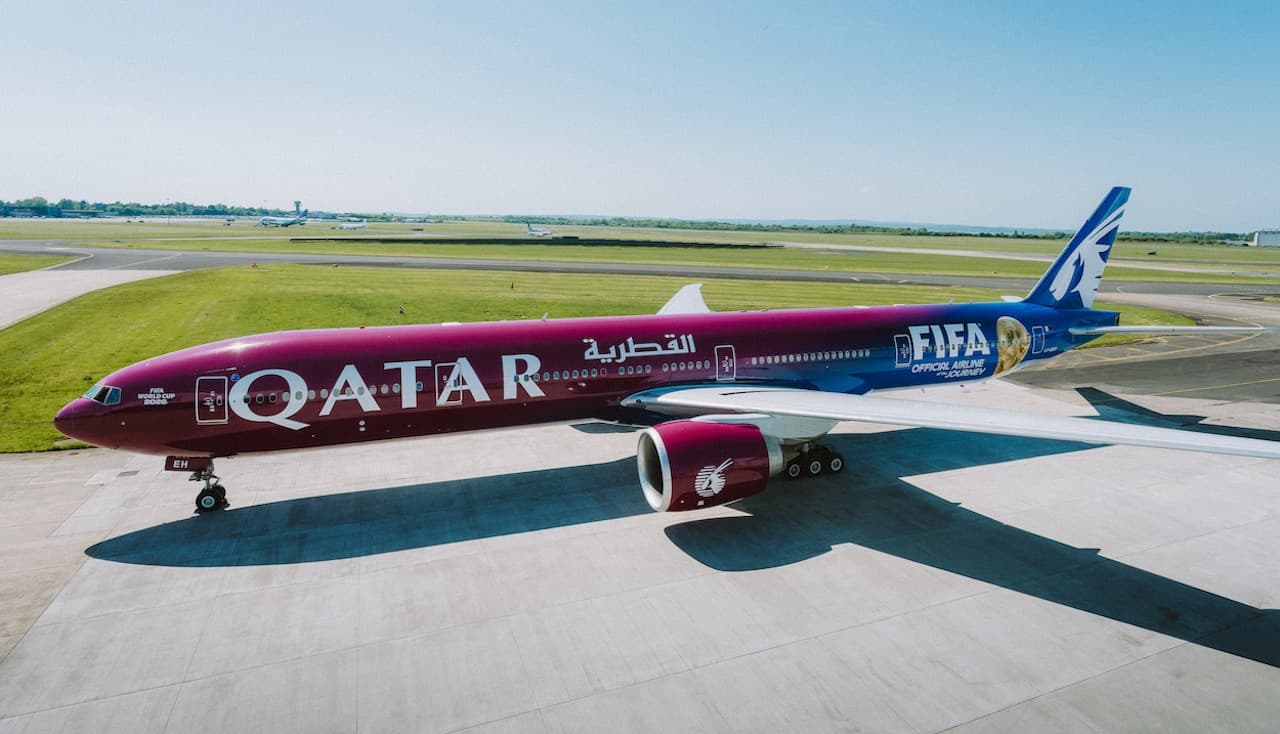
**Qatar Airways Suspends 13 Destinations: A Case Study in Network Resilience**
Qatar Airways has confirmed that 13 destinations from its Doha-Hamad hub will remain suspended longer than initially planned, with some routes not returning until at least summer 2027 and six others removed entirely with no return date. The affected cities include Djibouti, Hamburg, Mogadishu, Venice, and several Saudi Arabian secondary airports. This development is not just a business story—it is a real-world lesson for ATPL and ATC students on how geopolitical events reshape airline networks and airspace management.
**Why This Matters for Aviation Training**
For ATPL candidates, this situation highlights the fragility of route planning in the face of airspace closures. The suspensions are directly linked to the closure of Qatari airspace due to the Iran-US war, forcing the airline to operate via temporary corridors and a constrained schedule. Understanding how airlines adjust their networks under such pressure is critical for future pilots, who must be prepared for last-minute route changes, fuel planning adjustments, and operational diversions. ATC students, meanwhile, can analyze how airspace restrictions affect traffic flow, sector capacity, and coordination between adjacent air traffic control centers.
**Operational and Strategic Implications**
The list of suspended routes reveals strategic choices: seven medium-haul services to Saudi Arabia, Malta, and Neom Bay are deferred to March 2027, likely using lower-capacity Airbus A320ceo aircraft. In contrast, six routes—including Hamburg (only launched in 2024), Venice, and the fifth-freedom service to Mogadishu via Djibouti—have no scheduled return. This teaches students about the economics of route viability: a route may be cut not only due to demand but also because of operational complexity (e.g., fifth-freedom rights) or geopolitical risk. For ATC trainees, the fifth-freedom segment Doha–Djibouti–Mogadishu is a classic example of how airspace sovereignty and bilateral agreements affect flight paths and coordination.
**What ATPL and ATC Students Should Take Away**
First, network planning is dynamic: airlines constantly adjust schedules based on aircraft availability, demand, and external shocks. Second, airspace closures are a recurring challenge in the Middle East, and both pilots and controllers must be adept at working with NOTAMs, rerouting, and contingency procedures. Third, the suspension of a route like Hamburg—a new service—shows that even established airlines can withdraw from markets quickly, affecting crew bases, maintenance schedules, and passenger connectivity. For ATC, the loss of flights means reduced traffic, but also potential capacity reallocation and changes in sector demand.
**Conclusion**
Qatar Airways’ network cuts are a microcosm of the broader aviation industry’s vulnerability to geopolitical instability. For ATPL and ATC students, this case study underscores the importance of flexible thinking, thorough pre-flight planning, and a deep understanding of how airspace and route structures interact. As future professionals, you will face similar disruptions—and being prepared starts with understanding the forces that shape the skies.