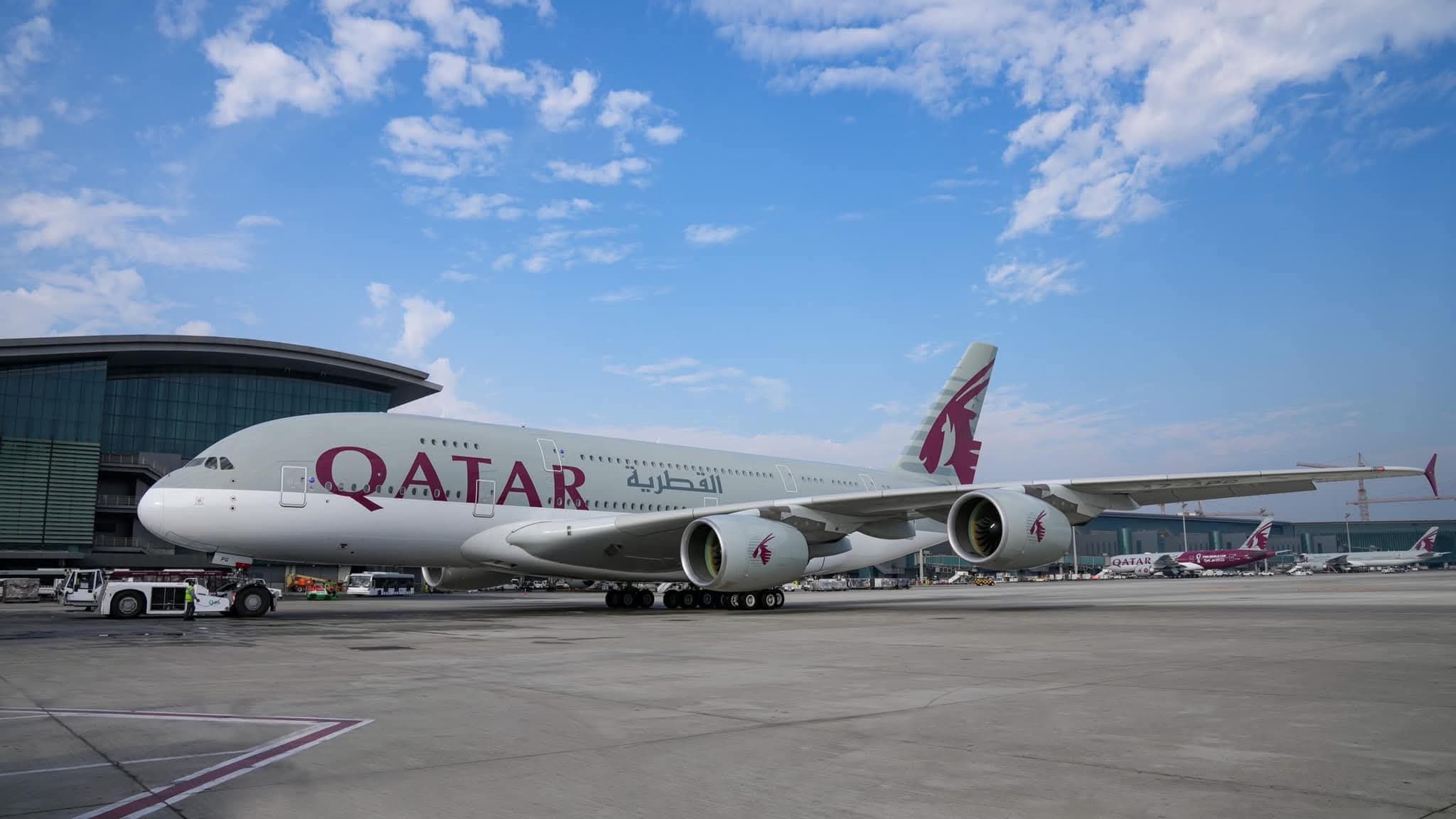
**Qatar Airways Defies Geopolitical Headwinds with Improved Profitability**
Qatar Airways has released its financial results for the fiscal year ending March 31, 2026, revealing a mixed but resilient performance in a challenging geopolitical landscape. The outbreak of military conflict involving the United States, Israel, and Iran severely disrupted regional airspace, forcing the airline to reroute flights, increase operational costs, and navigate demand uncertainty. Like other Gulf carriers, Qatar Airways had to rapidly adapt its network as certain air corridors became temporarily restricted or impassable.
**A New Leadership Era**
The period also saw a change in governance. In December 2025, Hamad Ali Al-Khater, former chief operating officer of Hamad International Airport, took over as CEO, replacing Badr Mohammed Al-Meer. This appointment signals a strategic push to strengthen synergies between the airline and its Doha hub, consistently ranked among the world's best airports.
**Revenue Down, Operating Profit Up**
Despite a 2.6% drop in revenue, Qatar Airways improved its operating profit by 3.7% to 15.2 billion riyals ($4.2 billion). This apparent paradox is largely explained by a 15.5% decline in fuel costs, the airline's largest expense, which fell from 24.4 billion to 20.6 billion riyals. The company credited "financial discipline and cost optimization" for offsetting a difficult operating environment.
**Traffic Declines, Net Profit Falls on Tax Changes**
Passenger traffic fell 3% year-on-year to 41.8 million, reflecting the sensitivity of long-haul travel to geopolitical crises, especially in a region critical for intercontinental flows between Europe, Asia, and Africa. Net profit dropped nearly 10% to 7.1 billion riyals ($1.9 billion), attributed to a higher tax burden under the OECD's "Pillar 2" global minimum tax of 15%, which took effect in Qatar.
**Massive Investments for the Future**
Despite a 22.9% decline in cash reserves to 32.7 billion riyals ($9 billion), Qatar Airways is pursuing an ambitious fleet renewal and expansion strategy. The airline signed major commitments with Boeing and GE Aerospace for up to 210 aircraft and 400 engines. It is also rolling out Starlink high-speed internet connectivity on its Boeing 787 and Airbus A350 fleets to enhance passenger experience.
**Cargo and Hub Strength**
The group's cargo division transported over 1.43 million tonnes during the year, proving resilient in times of crisis. Hamad International Airport continues to serve as a central hub, connecting more than 170 destinations despite geopolitical constraints.
**MyATPS Angle for ATPL/ATC Students**
This case study illustrates how airlines manage operational disruptions caused by airspace closures and rerouting—a key topic in ATPL and ATC training. Understanding the financial impact of fuel costs, route planning, and hub connectivity is essential for future aviation professionals.