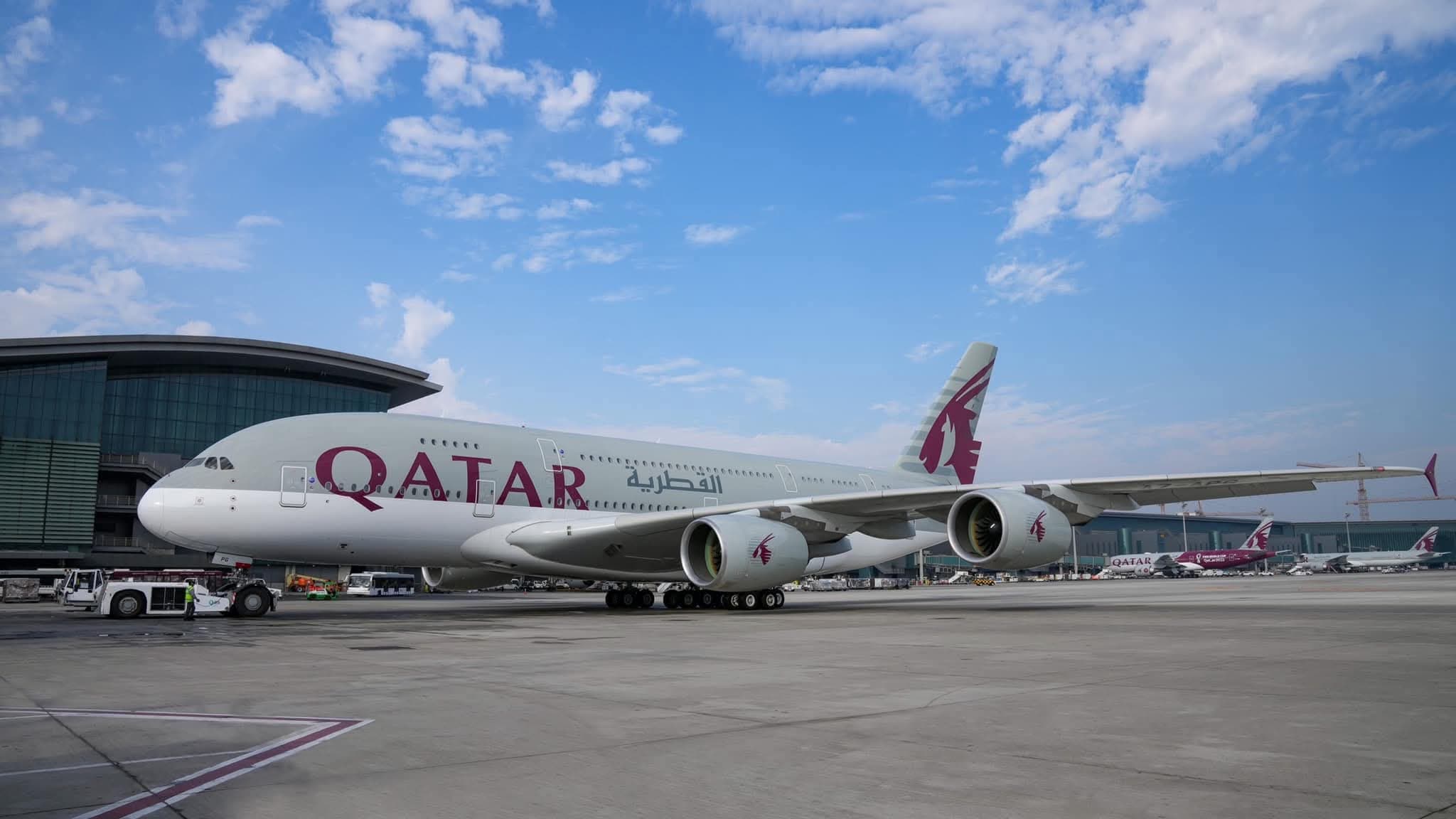
Qatar Airways is methodically rebuilding its global network, targeting over 160 destinations, with Africa emerging as a key growth axis. The airline has announced the resumption of several routes suspended since the pandemic, along with significant frequency increases on existing ones, and the opening of a new destination in Sudan. This strategic push underscores the importance of Africa for both point-to-point traffic and connecting flows through Doha-Hamad hub.
From June 16, 2026, Qatar Airways will reinstate four weekly flights to Seychelles International Airport (SEZ), a strategic tourist destination in the Indian Ocean. On the same day, two weekly flights will resume to Kigali, Rwanda, a rapidly growing market supported by economic development and infrastructure investments. Marrakech (RAK) will also see daily service resume from July 1, 2026, reflecting Morocco's importance for tourism and connections to West Africa. These resumptions are part of a broader plan to restore pre-pandemic connectivity.
Beyond resumptions, the airline is significantly increasing capacity on several existing routes. In Egypt, Alexandria (Borg El Arab) will go from three to seven weekly flights, while Cairo will reach up to 35 weekly flights, up from 28. In South Africa, Cape Town will benefit from 10 weekly flights (up from 7). Dar es Salaam, Tanzania, will increase from three to seven weekly rotations. Regional routes like Lusaka–Harare and Maputo–Durban will become daily. These increases aim to capture both local traffic and connecting flows between Africa, the Middle East, and Asia, a historically strong positioning for Qatar Airways against Gulf rivals.
The highlight of this expansion is the opening of a new route to Port Sudan (PZU) from July 2, 2026, with three weekly flights on Tuesdays, Thursdays, and Saturdays. Flight QR1319 departs Doha at 09:00, arriving at 11:00, while the return (QR1320) departs at 12:25, landing at 16:20. This service aims to facilitate travel between Sudan, the Gulf, and South Asia, including markets like Oman and Pakistan, via Doha connections. Given the ongoing conflict in Khartoum, Port Sudan is emerging as an alternative gateway for diplomatic and economic activities.
These moves intensify competition with Emirates, Turkish Airlines, and Ethiopian Airlines, all vying for intercontinental traffic through dense networks and efficient hubs. For ATPL and ATC students, this expansion illustrates real-world network planning, hub connectivity, and frequency optimization—core topics in airline management and air traffic flow. Understanding such strategies helps future pilots and controllers anticipate traffic patterns and operational challenges in African airspace.