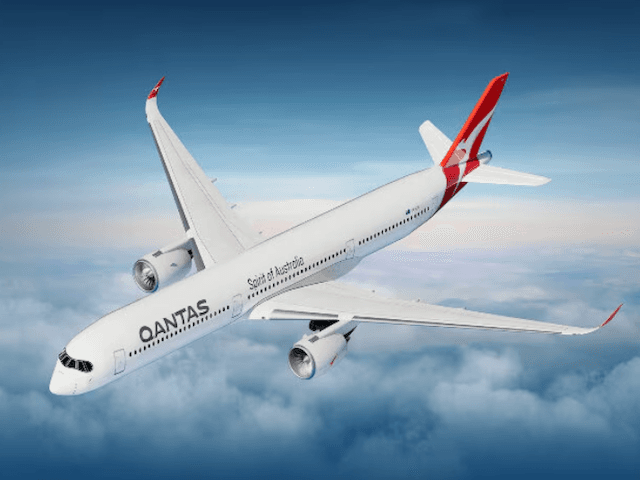
After years of anticipation and delays, Qantas has officially announced that its Project Sunrise will launch with a direct Sydney–London flight in October 2027, using specially modified Airbus A350-1000ULR aircraft. This route, covering nearly 10,000 nautical miles and lasting up to 22 hours, will become the world's longest regular commercial flight, replacing the traditional "Kangaroo Route" with a stopover. For ATPL and ATC students, this development is far more than a headline—it's a real-world case study in ultra-long-haul operations, crew fatigue management, and airspace coordination.
The A350-1000ULR is a bespoke variant featuring an additional 20,000-liter fuel tank in the cargo hold, upgraded fuel systems, and enhanced thermal management to sustain flights of up to 22 hours. Qantas has configured its cabins with only 238 seats across four classes—First, Business, Premium Economy, and Economy—prioritizing passenger comfort and crew rest areas. This low-density layout is a deliberate choice to mitigate the physiological effects of extreme flight durations, such as jet lag and fatigue. For ATPL students studying human factors, this aircraft offers a practical example of how design decisions impact crew performance and passenger well-being.
From an operational perspective, these ultra-long-haul flights impose stringent requirements on crew scheduling, fuel reserves, and contingency planning. Qantas has conducted experimental flights with Boeing 787-9s to gather biometric and operational data, which will inform procedures for the A350-1000ULR. ATC students should note that such flights will require specialized handling, including extended sector times, potential rerouting due to weather, and coordination across multiple FIRs. The certification process for the A350-1000ULR includes extensive flight tests to validate fuel system performance at all altitudes and phases of flight, a key topic for those studying aircraft systems and certification.
Regulatory challenges also come to the fore. Civil aviation authorities must approve crew rest schemes involving multiple pilots and cabin crew in rotation, with reinforced rest areas onboard. This aligns with current ATPL syllabus topics on flight time limitations and fatigue risk management. The Sydney–London route will also test airspace capacity and communication protocols, as it crosses numerous oceanic and continental sectors. For ATC trainees, understanding how such flights are integrated into global traffic flow is crucial.
In summary, Qantas's Project Sunrise is not just a commercial milestone—it is a living laboratory for the next generation of aviation professionals. ATPL and ATC students should study this development closely, as it encapsulates many of the advanced concepts they will encounter in their careers, from aircraft performance and human factors to airspace management and regulatory compliance.