**A New Era in Ultra Long-Haul Aviation**
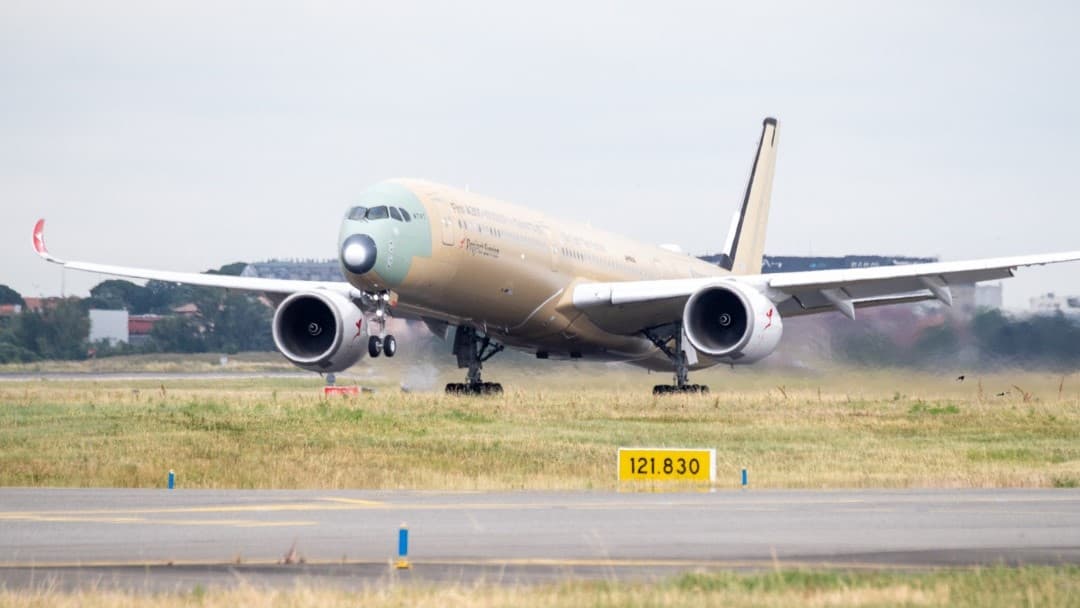
Airbus has taken a significant step forward in ultra long-haul aviation with the first flight of the A350-1000ULR (Ultra Long Range), a variant specifically developed for Qantas' ambitious Project Sunrise. The aircraft, MSN 707, took off from Toulouse for a 3-hour 43-minute maiden flight, reaching an altitude of over 41,000 feet. This marks the beginning of a two-month flight test campaign to certify modifications that will enable non-stop flights of up to 22 hours, connecting cities like Sydney to London—a distance of nearly 10,000 nautical miles (18,500 km).
**Technical Innovations for Extreme Range**
The A350-1000ULR's extended range is achieved through the addition of a Rear Centre Tank (RCT), which increases fuel capacity by approximately 1,000 nautical miles over the standard A350-1000. Beyond fuel, Airbus has introduced several technical enhancements tailored for ultra-long-haul operations: a lighter, more efficient galley cooling system, optimized cabin ventilation and thermal regulation, and a future four-class premium cabin designed by Qantas to maximize passenger comfort on flights lasting over 20 hours. For ATPL students, understanding these systems is crucial—they directly impact fuel planning, weight and balance calculations, and aircraft performance under extreme conditions.
**Operational and Regulatory Implications**
For air traffic controllers (ATC), ultra-long-haul flights present unique challenges. These flights will operate over vast oceanic airspace with limited diversion airports, requiring enhanced communication protocols and contingency planning. The aircraft's ability to fly at high altitudes for extended periods also affects airspace management, particularly in terms of vertical separation and route optimization. Additionally, the certification process for such modifications involves rigorous testing of fuel system architecture, structural integrity, and emergency procedures—all topics covered in ATPL and ATC training.
**Timeline and Fleet Plans**
The second A350-1000ULR for Qantas is already in advanced final assembly in Toulouse, with delivery expected in April 2027. The airline has ordered 12 ULR variants, plus 12 standard A350-1000s for its regular long-haul network. As of April 2026, the A350 family has accumulated 1,579 orders from 68 customers, with over 700 aircraft in service. The A350-1000ULR becomes the fourth passenger variant of the family, joining the A350-900, A350-900ULR, and A350-1000.
**Why This Matters for Aviation Students**
For ATPL candidates, this development underscores the importance of mastering long-range navigation, fuel management, and crew fatigue regulations. ATC trainees must understand how ultra-long-haul flights affect sector planning, handover procedures, and oceanic control. The Project Sunrise initiative is not just a commercial milestone—it is a testbed for the future of global aviation, pushing the boundaries of aircraft design, human factors, and air traffic management.