**Industry Context and the MyATPS Angle**
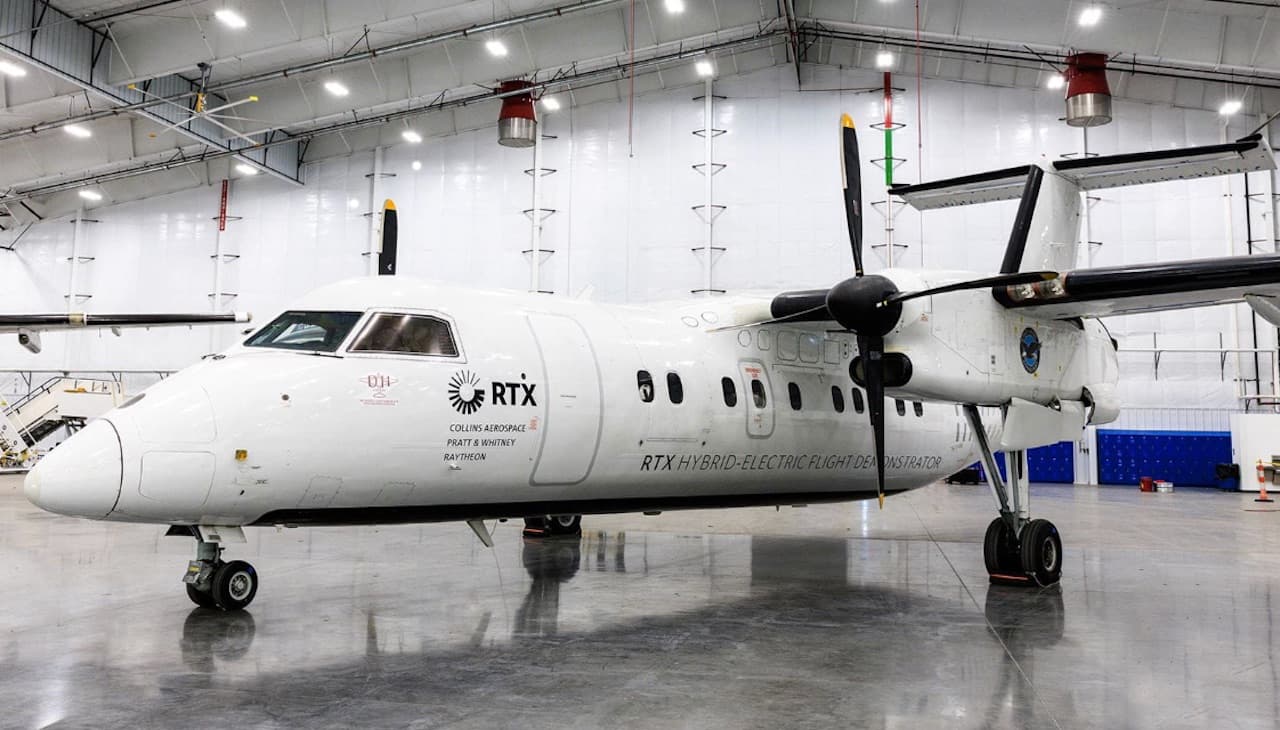
Pratt & Whitney Canada has announced the start of ground tests for its hybrid-electric flight demonstrator, a milestone that moves the technology from the lab toward the runway. The system, developed under RTX, combines an advanced Pratt & Whitney Canada thermal engine with a 1 MW electric motor and controller from Collins Aerospace, plus a certifiable battery from Swiss firm H55. The demonstrator will be installed on a modified De Havilland Canada Dash 8-100, with a first flight expected in 2027.
For ATPL and ATC students, this is not just a press release — it is a preview of the propulsion systems they will encounter in their careers. Hybrid-electric architectures are not science fiction; they are being tested now, and they will reshape how regional aircraft are operated, maintained, and managed. Understanding the parallel hybrid concept — where the electric motor provides extra power during takeoff and climb — is directly relevant to future pilots who will need to manage power settings, fuel planning, and emergency procedures for these new systems. Air traffic controllers, too, will see changes in performance profiles, noise footprints, and climb gradients.
**Technical Breakdown and Performance Targets**
The parallel hybrid architecture chosen by Pratt & Whitney Canada is a pragmatic choice for regional turboprops. The electric motor assists the thermal engine during high-demand phases — takeoff and climb — reducing fuel burn and emissions. RTX targets a 30% improvement in fuel consumption on a typical 250-nautical-mile regional mission. This is significant because regional routes are the backbone of short-haul aviation, where efficiency gains have the most immediate environmental and economic impact.
Jean Thomassin, executive director of New Products and Services Introduction at Pratt & Whitney Canada, stated: “Assembling the final propulsion system, compliant with the flight configuration, brings us one step closer to demonstrating hybrid-electric flight.” The company is developing both thermal and hybrid-electric technologies that could improve efficiency and performance across a wide range of future aviation applications.
**Industrial Ecosystem and Certification Challenges**
The project is a collaborative effort involving De Havilland Aircraft of Canada, GKN Aerospace, AeroTEC, Ricardo, the National Research Council of Canada, and the Innovative Vehicle Institute. This broad partnership underscores a key reality: hybrid-electric propulsion is no longer just a laboratory promise — it is a supply chain, certification, and system integration challenge. The program is supported by the governments of Canada and Quebec, with funding from the Initiative for Sustainable Aviation Technology (INSAT) through Strix.
For students, this highlights the importance of understanding certification pathways for novel technologies. The cautious timeline — ground tests now, aircraft integration next, flight in 2027 — reflects the incremental, safety-first approach that defines aviation. This is not a disruptive leap but a measured transition, and future professionals must be prepared for the regulatory and operational implications.
**What This Means for the Market and Training**
The demonstrator serves two purposes: industrially, it validates the feasibility of hybrid-electric propulsion on a regional turboprop, addressing weight and thermal constraints. Strategically, it positions Pratt & Whitney Canada against growing pressure from engine and airframe manufacturers seeking intermediate gains before more radical solutions emerge. The 2027 timeline shows that the industry is thinking in steps, not revolutions.
For MyATPS students, this is a case study in technology readiness levels, propulsion system design, and the real-world application of sustainable aviation goals. Whether you are studying for your ATPL or training as an ATC, understanding hybrid-electric systems will be part of your professional toolkit. The ground tests in Longueuil, Quebec, are a signal that the future is being built now.