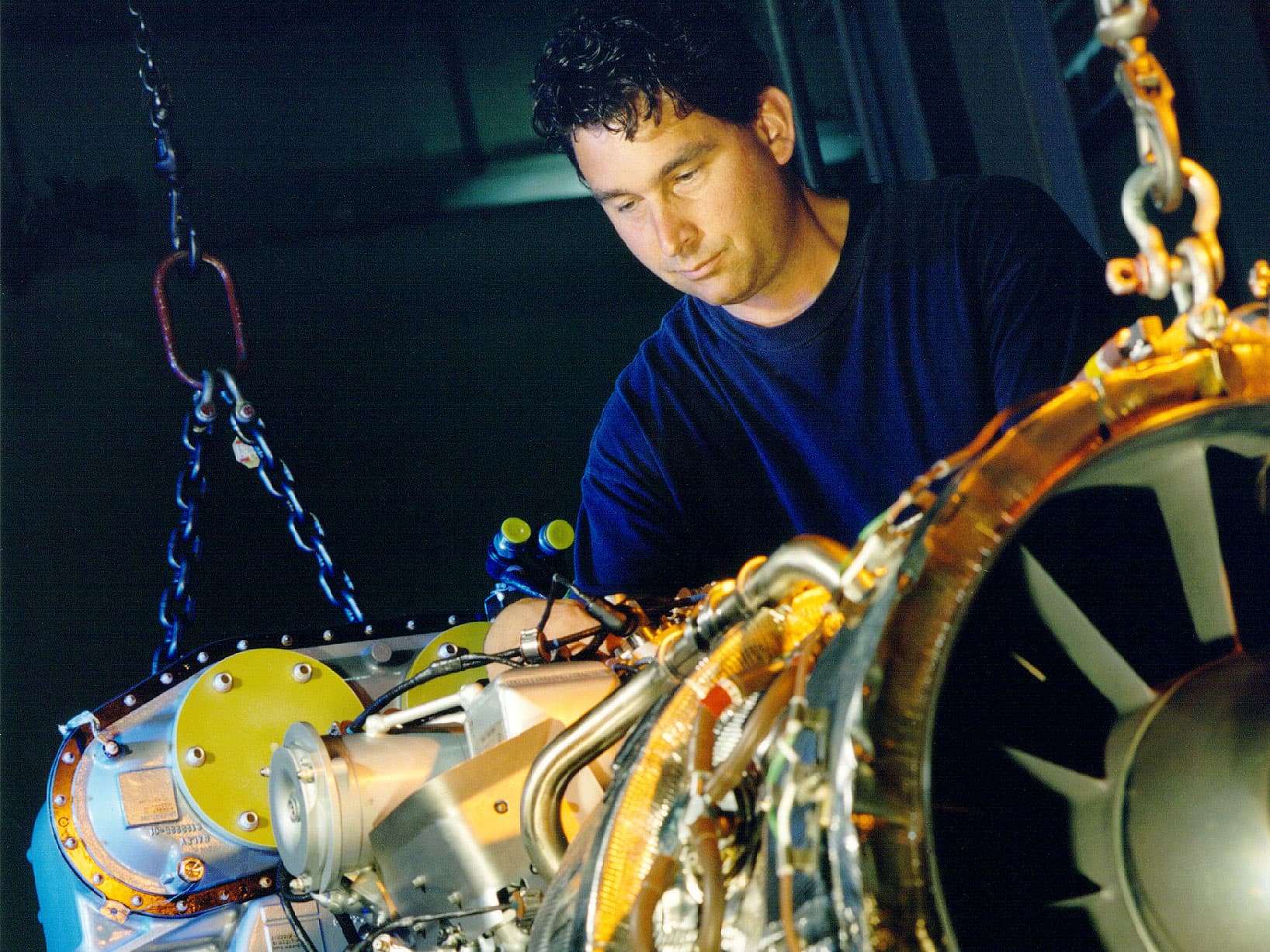
**Pratt & Whitney has acquired Dutch startup Aiir Innovations** to deploy AI-assisted endoscopic inspection software across its engine portfolio, including the V2500, GTF, and F135. The move, announced on July 15, 2026, is part of parent company RTX's strategy to digitalize and automate maintenance, repair, and overhaul (MRO) operations. While financial terms were not disclosed, the acquisition signals a major shift toward data-driven engine health monitoring.
**The Aiir Innovations software acts as a digital co-pilot for maintenance teams.** It analyzes real-time borescope video feeds, automatically counting blades, identifying uninspected areas, and flagging defects such as cracks, impacts, or deformations. Where manual review once took hours, the AI generates a standardized report in minutes. Early trials with KLM Engineering & Maintenance and MTU Maintenance showed significant time savings and improved defect detection rates compared to human-only inspection. In a 2019 project, Aiir estimated reducing a full borescope from 16 to 12 hours initially, with a long-term goal of cutting it to 20% of current time.
**Deployment has already begun on the V2500**, a common narrowbody engine, with pilots underway on the Geared Turbofan (GTF) family and the military F135 powering the F-35. Pratt & Whitney now aims to extend the technology across its global network supporting over 90,000 engines in service. Standardizing tools and reports will improve traceability, reduce variability between workshops, and enhance decision-making—whether for a GTF on an A320neo or an F135 in operational environments.
**The core promise is faster, more traceable inspections.** By adapting algorithms based on inspector feedback, the AI becomes more accurate over time, approaching expert judgment without replacing it. Pratt & Whitney emphasizes that this reduces missed defects, improves repeatability, and increases "time on wing"—the period an engine can remain in service before heavy maintenance. For aviation training students, this evolution means future MRO professionals will need to understand AI-assisted diagnostics, data interpretation, and the balance between automation and human expertise.
**Aiir Innovations, founded in 2016 in Amsterdam**, already counted KLM, MTU Maintenance, and several leasing companies among its clients, with deployments in over 20 countries. The startup was backed by the Mainport Innovation Fund II, supported by Amsterdam Airport Schiphol, KLM, Delft University, and other Dutch stakeholders. This acquisition underscores a broader industry trend: AI is becoming an indispensable tool in aviation maintenance, directly impacting aircraft availability and operational efficiency.