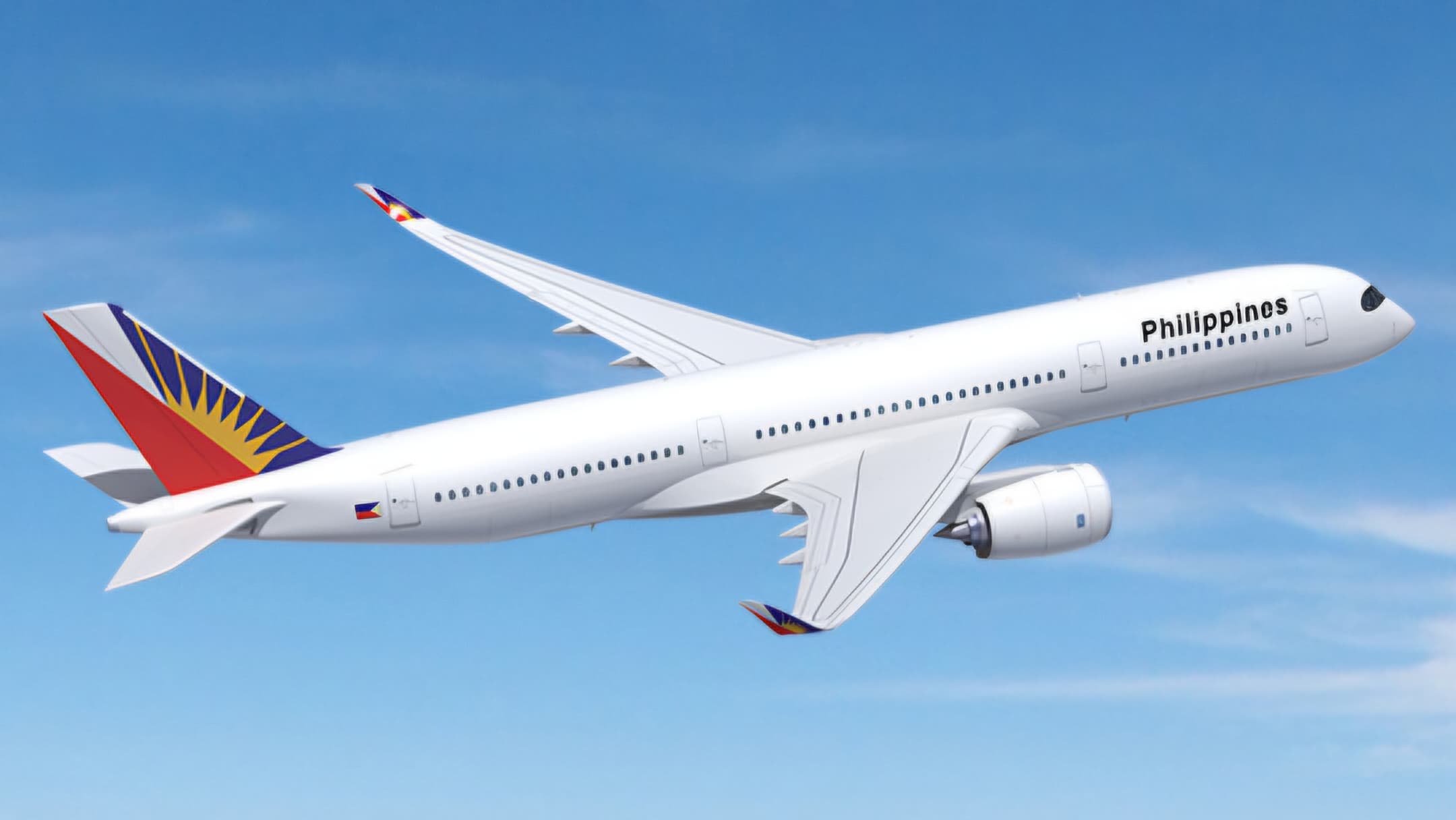
**Philippine Airlines (PAL) is reportedly on the verge of signing a major long-haul aircraft order split between Boeing and Airbus, comprising 15 Boeing 787-10 Dreamliners and 9 Airbus A350-1000s.** According to industry sources cited by Reuters and corroborated by Bloomberg, the agreement is expected to be formalized at the Farnborough Airshow this month. This would mark Boeing's return to PAL's order book for the first time in nearly two decades, while confirming the A350-1000 as a cornerstone of the carrier's transpacific capacity renewal.
**For ATPL and ATC students, this dual-source order is a textbook case of fleet planning under operational and competitive constraints.** The 787-10, the longest variant of the Dreamliner family, offers high capacity on medium-to-long-haul routes, competing internally with PAL's existing A330-300s and potentially the A330neo. The A350-1000, already in service with PAL since late 2025, targets ultra-long-haul routes to North America and Europe. Understanding the performance trade-offs between these two types—range, payload, fuel efficiency, and cabin configuration—is crucial for future pilots and controllers who will manage mixed fleets.
**PAL's current long-haul fleet is a mix of generations: 11 Airbus A330-300s, 10 Boeing 777-300ERs, 2 A350-900s, and 2 A350-1000s (with 7 more on order).** Adding the 787-10 introduces a new type to the airline's maintenance and training ecosystem. For ATC, this means new aircraft performance data to integrate into separation standards and airport slot planning, especially at Manila's Ninoy Aquino International Airport, where runway capacity is a known constraint.
**The strategic rationale behind splitting the order is twofold: it hedges against supply chain risks and leverages competitive pricing from both manufacturers.** PAL's president, Richard Nuttall, has emphasized that the A350-1000 will play a key role in strengthening long-haul operations and passenger experience. The 787-10, meanwhile, offers flexibility on regional and trans-Asian routes, with the ability to operate on some optimized transoceanic sectors. This dual-type approach mirrors trends seen at other major carriers, such as Singapore Airlines and Qantas, and provides a rich case study for aviation students on fleet commonality versus diversification.
**From a regulatory perspective, the introduction of the 787-10 will require PAL to obtain type-specific approvals from the Civil Aviation Authority of the Philippines (CAAP) and potentially the FAA or EASA for international operations.** ATPL students should note that each new aircraft type demands separate pilot type ratings, recurrent training, and simulator sessions, impacting crew scheduling and operational costs. ATC students will need to familiarize themselves with the 787-10's wake turbulence category and approach speeds, which differ from the A350-1000.
**In summary, PAL's split order is not just a commercial decision—it is a live example of the complexities of modern airline fleet management.** For those training to become ATPL pilots or ATCs, this news highlights the importance of understanding aircraft performance, regulatory requirements, and operational integration in a real-world context.