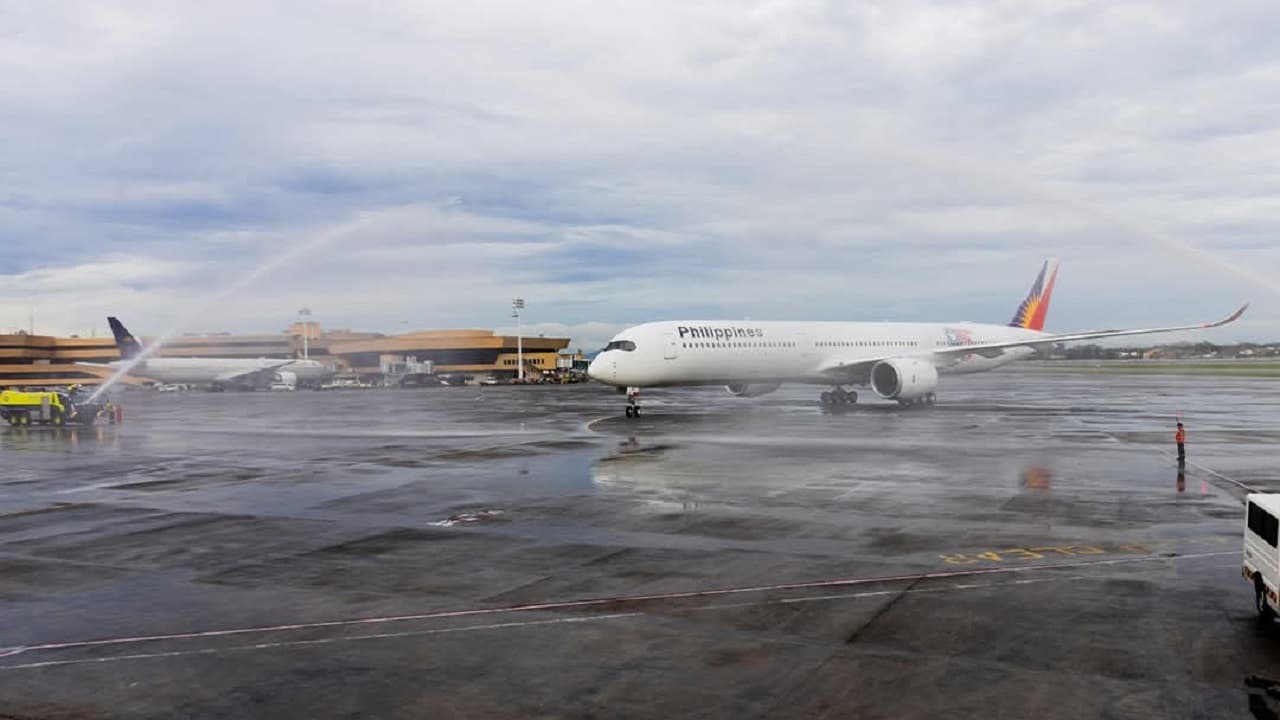
**Philippine Airlines (PAL) has signed a Memorandum of Understanding (MoU) with Airbus at the Farnborough Airshow for nine additional A350-1000s.** This order, once finalized, will bring PAL's total A350-1000 commitments to 18 aircraft, with two already delivered in late 2025 and integrated into its long-haul operations. The A350-1000 is designated as PAL's new flagship, set to anchor its ultra-long-haul network, particularly on transpacific routes between Manila and North America. Airbus highlights that these aircraft will enable non-stop services to East Coast US and Canadian cities, a premium segment with intense competition.
**In a parallel move, PAL has committed to up to 20 Boeing 787-10 Dreamliners (15 firm orders).** This marks the carrier's first purchase from Boeing in nearly two decades, signaling a deliberate rebalancing between Airbus and Boeing for its widebody fleet. The combined order of 24 long-haul aircraft—9 additional A350-1000s and 15 787-10s—will replace PAL's aging fleet of 11 Airbus A330-300s and 10 Boeing 777-300ERs over the next decade. This dual-supplier strategy offers a fascinating real-world example for ATPL and ATC students of how airlines manage fleet diversity, maintenance contracts, and crew training across two major manufacturers.
**PAL has configured its A350-1000s with a three-class layout of 382 seats, at the higher end of Airbus's typical range for this type.** The cabin includes 42 business-class suites with privacy doors and fully flat beds, 24 premium economy seats, and 316 economy seats, all equipped with the latest in-flight entertainment and connectivity systems. This configuration aligns with PAL's repositioning as a full-service carrier competing with North American and Asian majors. The A350-1000's advanced air management system, which renews cabin air every two to three minutes and maintains a lower cabin altitude, is highlighted for reducing passenger fatigue on flights exceeding 15 hours—a key consideration for future pilots and cabin crew.
**Beyond the A350, PAL already operates a substantial Airbus fleet.** Eleven A330-300s serve Asia, the Middle East, and Australia, while A321ceos and A321neos handle domestic and regional routes from Manila and Cebu. As of June 2026, Airbus has recorded 1,595 firm orders for the A350 family from 68 customers worldwide, underscoring its success in the widebody market. For ATPL students, this news illustrates the strategic importance of aircraft selection in network planning, while ATC trainees can consider the operational implications of integrating new aircraft types into a hub-and-spoke system like Manila's.