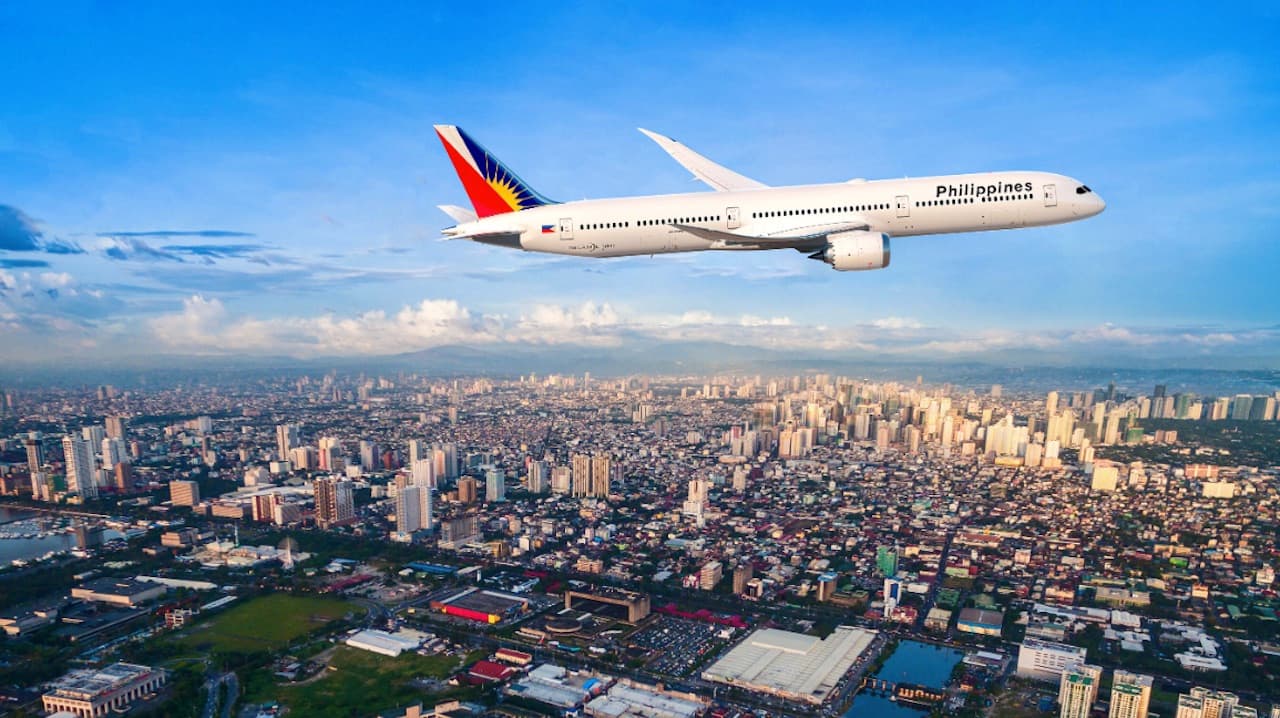
**Philippine Airlines (PAL) has placed a significant bet on the Boeing 787-10 Dreamliner**, announcing at the Farnborough Airshow a commitment for up to 20 aircraft, including 15 firm orders and five options. This marks PAL's first direct purchase from Boeing in nearly 20 years, signaling a strategic shift back to the American manufacturer after a period dominated by Airbus widebodies. The 787-10, the largest variant of the Dreamliner family, can carry 300–375 passengers over a range of up to 13,890 km (7,500 nm), making it ideal for PAL's medium- and long-haul routes across Asia and the transpacific network.
**The move comes as PAL also pursues a parallel mega-order for Airbus A350-1000s**, with industry sources suggesting a combined deal of 15 787-10s and 9 A350-1000s. In May 2023, PAL signed a memorandum of understanding for nine A350-1000s, with deliveries already underway: the first arrived in December 2025, a second in June 2026, and seven remain pending. The A350-1000, with its ultra-long-range capability (up to 16,100 km), is intended for non-stop flights to the US East Coast, Canada, and potentially Europe. This dual-fleet strategy gives PAL operational flexibility: the 787-10 will complement its ten Boeing 777-300ERs and compete internally with the A330-300, while the A350-1000 handles the longest sectors.
**For ATPL and ATC students, this news illustrates real-world fleet planning dynamics.** Understanding why an airline chooses a specific aircraft type—considering range, capacity, fuel efficiency, and network needs—is a core part of airline management studies. The 787-10's role as a medium-to-long-haul workhorse versus the A350-1000's ultra-long-haul specialization demonstrates how airlines segment their fleets. ATC students should note that the 787-10's range (7,500 nm) and passenger capacity affect airport slot planning, runway requirements, and airspace demand on transpacific routes. The 787-10 also features advanced avionics and composite structures, which are relevant to ATPL technical knowledge exams.
**The broader context: PAL's 85th anniversary and 80-year partnership with Boeing** underscore the long-term relationships in aviation. The airline's return to Boeing after two decades of Airbus dominance highlights how geopolitical and commercial factors influence fleet decisions. For students, this case study reinforces the importance of monitoring OEM competition, as it directly impacts aircraft availability, pricing, and maintenance networks. The potential combined order also shows how airlines balance manufacturer relationships to secure favorable terms and delivery slots.
**In summary, PAL's fleet modernization is a textbook example of strategic fleet planning.** The 787-10 will replace older aircraft on medium-haul routes, while the A350-1000 opens new ultra-long-haul markets. This dual approach offers resilience and growth, but also presents operational challenges in crew training, maintenance, and scheduling. For aviation trainees, analyzing such decisions builds critical thinking about airline economics, route planning, and regulatory compliance.