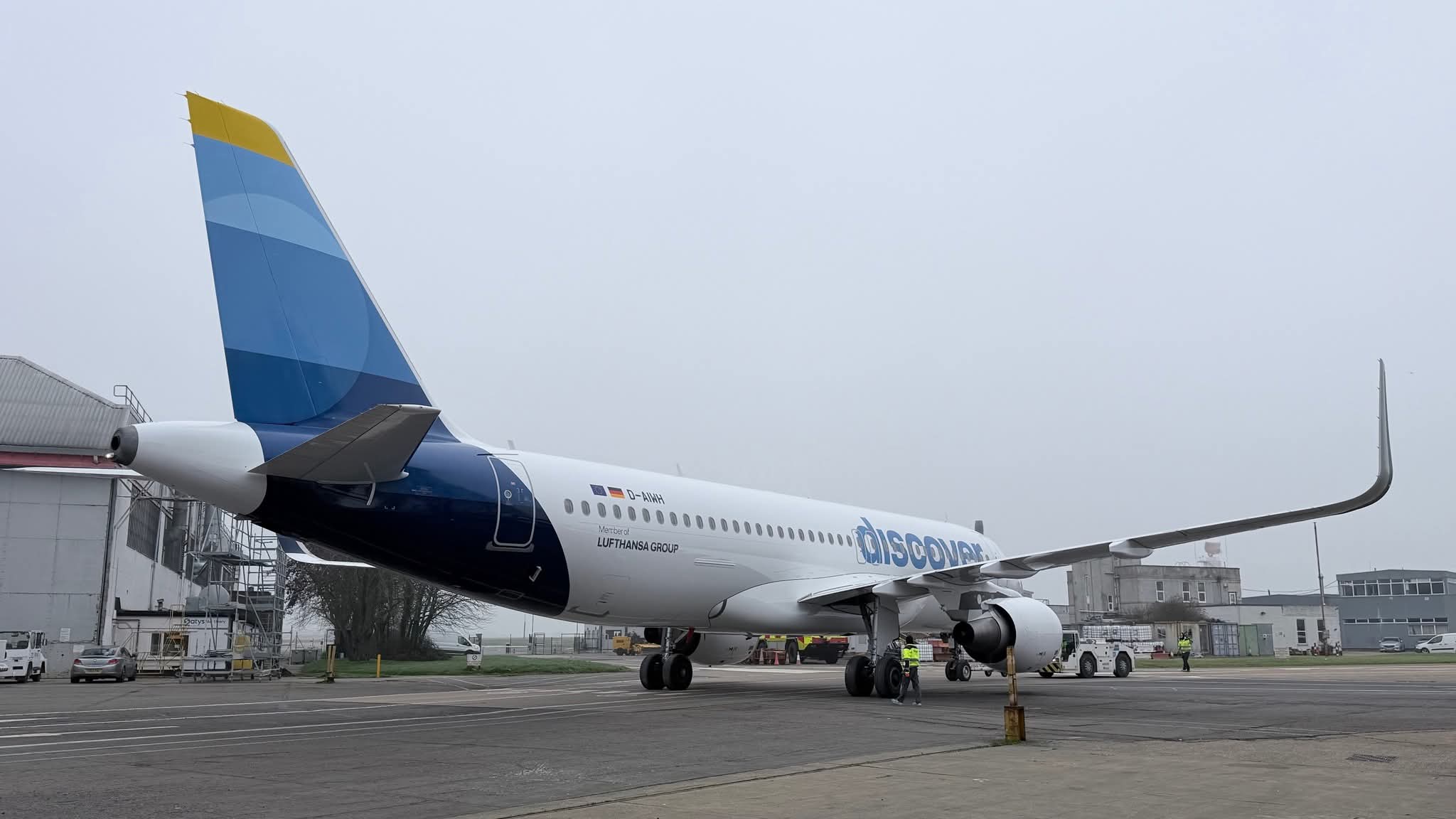
A Pennsylvania woman has filed a lawsuit against Lufthansa after a serious accident at Frankfurt Airport, following a transatlantic flight operated by Discover Airlines, the leisure subsidiary of the Lufthansa Group. The flight from Philadelphia to Frankfurt was uneventful, but upon arrival, the aircraft was parked at a remote stand, requiring passengers to disembark via mobile stairs in cold rain. The stairs, lacking any weather protection, became slippery. The elderly passenger paused at the top to discuss with her daughter how to descend safely. According to the complaint, a crew member observed the scene without offering assistance and urged them to hurry so as not to delay other passengers. After only a few steps, the passenger slipped and fell heavily onto the tarmac. She was rushed to Varisano Hospital in Frankfurt.
The medical diagnosis revealed severe injuries: a fractured clavicle and sternum, cardiac contusion, and multiple lesions. She was hospitalized for two weeks in Germany. Due to the severity of her condition, German doctors recommended repatriation to the United States for surgical care. However, her return was complicated. A first repatriation attempt on a medical stretcher provided by Lufthansa failed after several hours of waiting at the airport due to lack of medical clearance. The next day, December 14, 2025, she finally boarded. About an hour after takeoff, her condition deteriorated sharply. The crew declared a medical emergency and diverted the aircraft to Shannon Airport in Ireland. She was hospitalized again, diagnosed with a severe infection, and had to remain in care for an additional four weeks. The lawsuit attributes this deterioration to "intense physical and psychological stress resulting from the accident."
The passenger is seeking damages under Article 17 of the Montreal Convention, which governs airline liability for injuries occurring on board or during embarkation or disembarkation. This treaty imposes automatic liability on the carrier up to approximately 128,821 Special Drawing Rights (SDRs), roughly $160,000 to $175,000 at current IMF rates. Beyond this threshold, the airline can contest liability by proving no negligence or third-party intervention. In this case, the plaintiff argues that the accident resulted directly from Discover Airlines' failure to provide adequate assistance, potentially opening the door to higher compensation.
This incident underscores the sensitivity of ground operations, especially during disembarkation at remote stands. The use of mobile stairs, still common at many major European hubs, exposes passengers to weather conditions and increases risks, particularly for elderly or mobility-impaired individuals. Airlines are required to provide appropriate assistance under international and European regulations, including Regulation (EC) No 1107/2006 on the rights of passengers with reduced mobility. For ATPL and ATC students, this case serves as a stark reminder that safety does not end when the aircraft parks. Ground handling procedures, crew communication, and passenger assistance are all critical components of aviation safety. Understanding the legal framework of the Montreal Convention is also essential for future pilots and controllers, as it shapes operational responsibilities and liability.
In summary, this lawsuit highlights the need for rigorous ground safety protocols and crew training. ATPL candidates should note that crew members must balance operational efficiency with passenger safety, especially in adverse weather. ATC students should understand that remote stands and mobile stairs introduce additional risks that require clear communication and coordination with ground handling teams. This case is a valuable lesson in the real-world application of safety regulations and the legal consequences of negligence.