**A wake-up call for aviation’s carbon footprint**
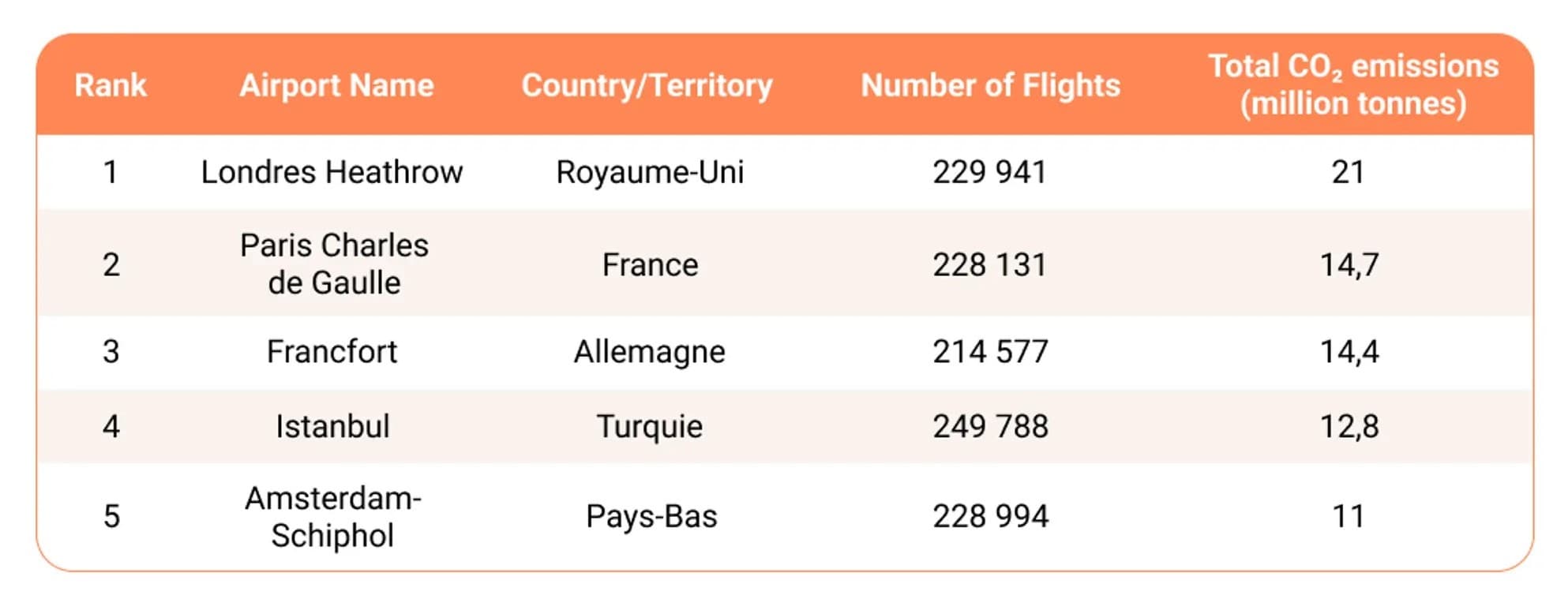
A recent study by the NGO Transport & Environment (T&E) has ranked Paris-Charles de Gaulle (CDG) as the seventh most CO2-emitting airport in the world, based on 2023 data from the Overseas Development Institute and the International Council on Clean Transportation. The report states that flights to and from CDG generated approximately 14.7 million tonnes of CO2 last year, placing it second among European hubs. When combined with Paris-Orly, the two airports make Île-de-France one of Europe’s largest aviation emission hotspots, with a trajectory that T&E argues is incompatible with national and EU climate targets.
**Why this matters for ATPL and ATC students**
For those studying for their ATPL or ATC ratings, this report is more than just an environmental headline. It directly touches on subjects like aviation law, environmental regulations, and operational planning. Understanding the debate around airport expansion and emissions is crucial for exams that cover topics such as the European Union Emissions Trading System (EU ETS), CORSIA, and sustainable aviation fuels (SAF). Moreover, future pilots and controllers will operate in an industry where carbon constraints increasingly shape route planning, airport slots, and even aircraft selection.
**The expansion debate: growth vs. decarbonisation**
T&E specifically criticises Groupe ADP’s plans to increase CDG’s annual capacity from 82 to 105 million passengers by 2050. According to the NGO, this would lead to a 28% rise in emissions compared to a no-expansion scenario, undermining the sector’s own decarbonisation roadmap. The report warns that relying too heavily on future technological gains and SAF, without capping traffic growth, amounts to greenwashing. Groupe ADP, however, defends its strategy, pointing to its commitment to net-zero direct emissions by 2035 for its Paris airports and by 2050 for all activities. It argues that modernisation, electrification of ground equipment, and increased use of SAF can decouple traffic growth from emissions.
**Practical takeaways for aviation trainees**
For ATPL students, this case study illustrates the real-world application of environmental performance metrics and the challenges of balancing economic connectivity with climate commitments. ATC trainees, meanwhile, can see how emission reduction targets might influence future airspace design, flow management, and airport operations. The debate also underscores the importance of staying updated on regulatory changes, as future aviation professionals will need to adapt to stricter environmental standards.
**Conclusion**
Whether you agree with T&E’s conclusions or Groupe ADP’s counterarguments, one thing is clear: the aviation industry is under increasing pressure to decarbonise. For those entering the field, understanding these dynamics is not optional—it’s essential for both exams and your future career.