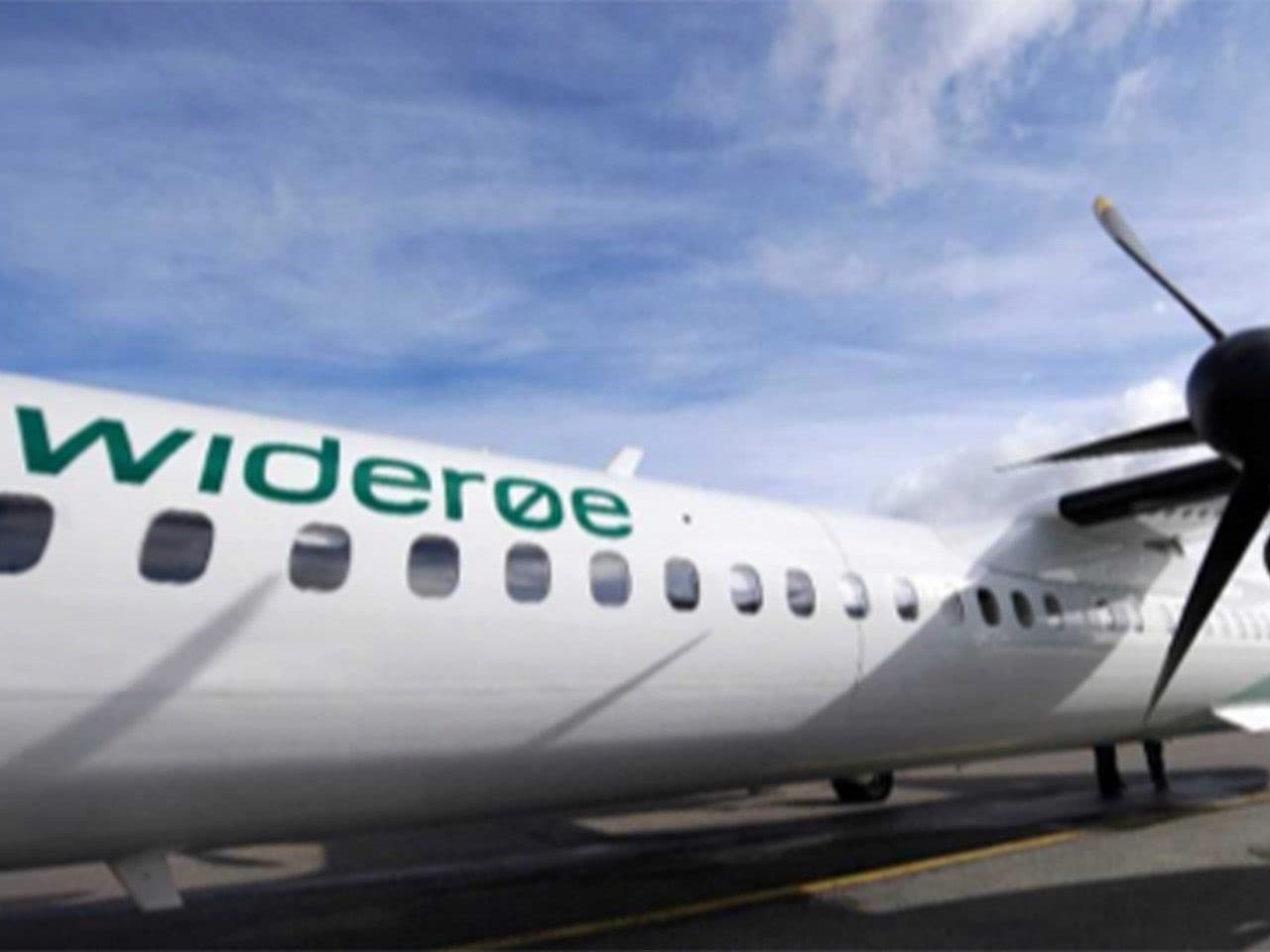
Norwegian Air Shuttle has published sharply improved results for the first quarter of 2026, typically the weakest period for airlines. The group, which includes regional carrier Widerøe, significantly reduced its operating loss and achieved a record load factor for the start of the year.
**A Much Less Loss-Making First Quarter**
For the first three months of 2026, the Norwegian group reported an operating loss (EBIT) of NOK 220 million (about €20 million), compared to NOK 611 million (€55 million) a year earlier. The pre-tax result (EBT) came in at NOK -459 million (just over €40 million), also a marked improvement from 2025. This reduction is attributed to the appreciation of the Norwegian krone, gains on fuel hedges, and lower costs for CO₂ emission allowances under the EU ETS system. According to several financial agencies, the operating loss was much better than market expectations, which had anticipated a deficit close to NOK 954 million (around €85 million). "We are pleased to see that overall demand remains encouraging, even in a complex and unpredictable environment," said CEO Geir Karlsen in the results statement.
**Strong Demand and Record Load Factor**
The group carried 5.2 million passengers in Q1, including 4.2 million on Norwegian and 0.9 million on Widerøe. Despite a capacity reduction – measured in available seat kilometers (ASK) – of about 6% for Norwegian and 2% for Widerøe, demand remained robust. Norwegian achieved an average load factor of 87.6% for the quarter, up 5.2 percentage points from the same period in 2025, a record for a first quarter historically marked by lower traffic. Widerøe, focused on Norwegian regional routes, posted a load factor of 70.2%. Operationally, punctuality remained solid with 78.8% of flights on time for Norwegian and 87.2% for Widerøe.
**Strengthened Financial Position**
As of March 31, 2026, the group's liquidity reached NOK 14.2 billion (about €1.3 billion), compared to around NOK 10.5 billion (€950 million) a year earlier. This increase reflects both better operational performance and disciplined cash management, a crucial point for an actor emerging from several years of deep restructuring. The group's fleet now totals 145 aircraft, including 95 for Norwegian and 50 for Widerøe, confirming the stabilization of the industrial tool after major fleet and debt rationalization moves in recent years. Norwegian operates a network linking the Nordic countries to many European destinations with a fleet of Boeing 737-800s and 737 MAX 8s, while Widerøe, with a fleet mostly composed of Dash-8s (and some Embraer E190-E2s), provides a fine mesh of domestic Norwegian routes. The Norwegian Reward loyalty program continued to grow, surpassing 8.5 million members during the quarter, strengthening the group's ability to retain leisure and business customers, especially in Scandinavian markets.
**Uncertain Market Context**
Despite encouraging signals, the group's management remains cautious in an environment described as "complex and unpredictable," marked by currency volatility, fuel price fluctuations, and geopolitical tensions. Norwegian has suspended some routes to the Middle East for security reasons, illustrating the network's sensitivity to regional risks. At the same time, the company continues its environmental upgrade strategy. It launched the first Danish domestic line powered by 40% sustainable aviation fuel (SAF), a symbolic initiative in a European market where regulatory and societal pressure on aviation emissions is increasing.