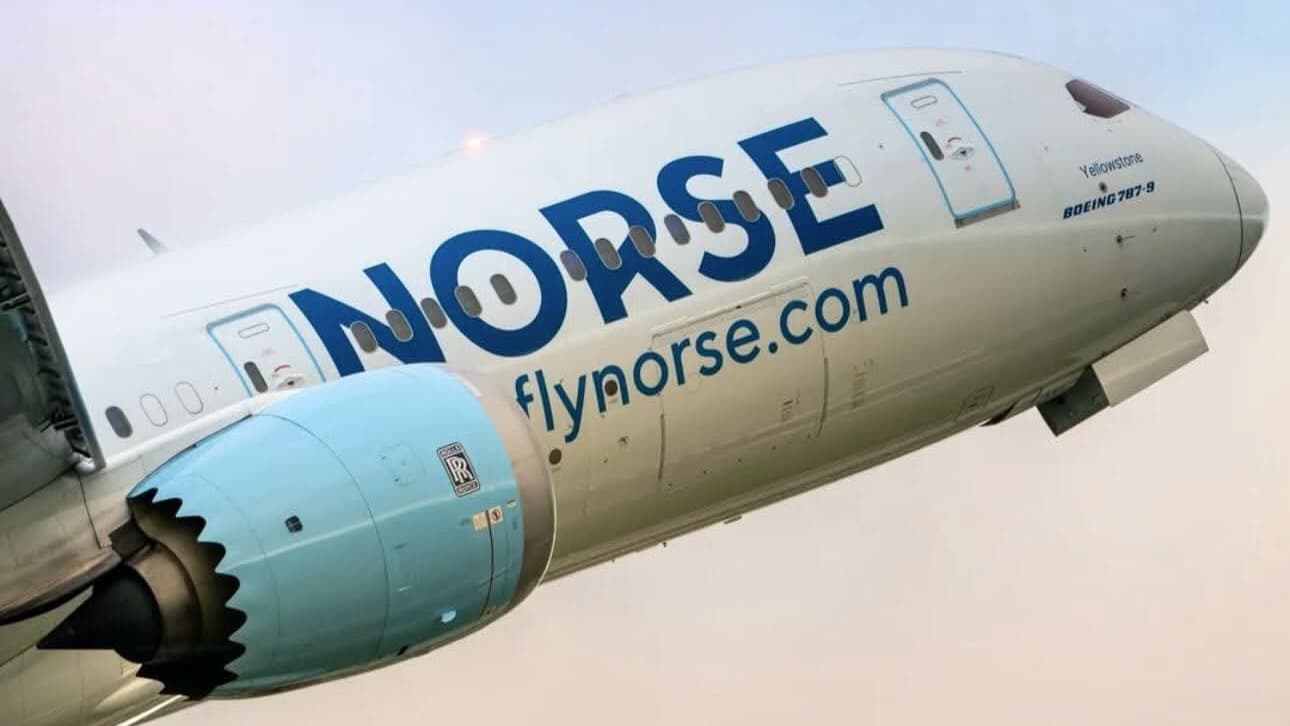
Norse Atlantic Airways has announced a major expansion of its winter 2026-2027 schedule to Thailand, with new routes and increased frequencies from the United Kingdom, Norway, and Sweden. The low-cost long-haul carrier is responding to sustained leisure demand for Southeast Asia, while simultaneously accelerating its "Project Falcon" restructuring program aimed at improving efficiency and moving closer to profitability.
**New routes and frequencies**
From the UK, the headline addition is a new three-times-weekly service between London Gatwick and Phuket, complementing the existing London-Bangkok route. Norse Atlantic will also increase Manchester-Bangkok to four weekly flights from December 2026, up from a weekly service introduced in winter 2025/26. In Scandinavia, Oslo-Bangkok will operate up to five times weekly, Oslo-Phuket up to twice weekly, Stockholm-Bangkok up to five times weekly, and Stockholm-Phuket up to twice weekly. All flights are operated by Boeing 787-9 aircraft configured with 338 seats in two classes, offering a modern long-haul product at competitive unit costs.
**Strategic shift towards year-round leisure markets**
This expansion is part of a broader strategy to rebalance Norse Atlantic's network away from highly seasonal transatlantic routes and towards more consistent year-round leisure destinations like Thailand and Southern Africa. The carrier has moved from a single Oslo-Bangkok route last winter to a comprehensive network linking London, Manchester, Oslo, and Stockholm to both Bangkok and Phuket. This shift reduces dependency on North American markets and positions Norse Atlantic as a lower-cost alternative to legacy carriers on popular European-Asia leisure corridors.
**Project Falcon: cost cuts to support growth**
Alongside the network expansion, Norse Atlantic is intensifying its "Project Falcon" cost-reduction program, targeting annualized savings of up to $50 million compared to 2025 levels. Measures include a 35% reduction in administrative staff, relocation of headquarters from Arendal to Oslo, temporary pay cuts for non-flying staff, more flexible crew bases, and IT system rationalization. CEO Eivind Roald noted that record unit revenues and high load factors in early 2026 provide momentum, but rising fuel prices and geopolitical uncertainties make cost discipline essential for achieving profitability.
**Implications for ATPL and ATC students**
For ATPL students, this case illustrates how low-cost long-haul carriers are reshaping network planning, fleet utilization, and crew scheduling. Understanding the balance between seasonal demand, cost control, and route profitability is critical for future airline managers and pilots. ATC students should note the increased traffic flows to Bangkok and Phuket, which may affect slot coordination and airspace management during winter peaks.