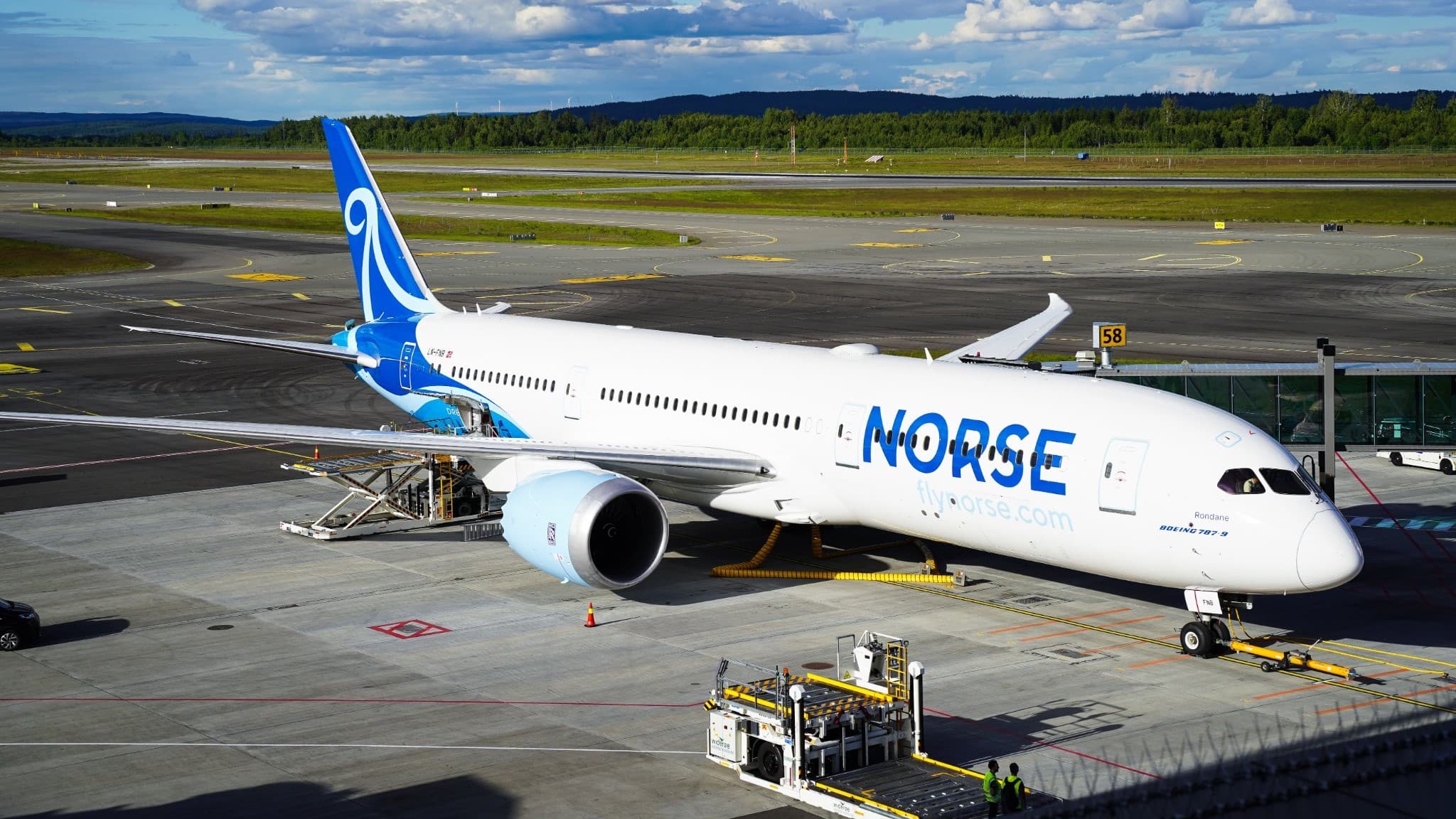
**Norse Atlantic Airways has officially put itself up for sale**, just a few years after launching its transatlantic low-cost operations. The airline has mandated U.S. bank JPMorgan to lead a sale process expected to open in the coming months. Norse Atlantic was founded in 2021 to fill the gap left by Norwegian Air Shuttle, which abandoned its long-haul routes during the COVID-19 pandemic. Operating a fleet of Boeing 787 Dreamliners, the carrier connects Europe with North America, offering low fares to destinations like New York, Miami, Orlando, and Los Angeles.
**The low-cost long-haul model has proven notoriously fragile**, with previous casualties including Primera Air, Wow Air, and Norwegian's own retreat from the transatlantic market. Norse Atlantic now faces the same headwinds: rising fuel costs, increasing airport charges, and volatile demand on certain routes. To stabilize its finances, the airline has already launched a $110 million rights offering and secured a $70 million credit facility to cover short-term cash needs. The company states it needs "more leeway to continue its operations smoothly."
**Restructuring efforts are underway** to make the airline more attractive to potential buyers. Norse Atlantic has cut several seasonal routes and reduced capacity on underperforming lines. It is increasingly focusing on wet leasing its Boeing 787s to other airlines—a less visible but more stable revenue stream. The summer schedule has been reorganized to concentrate capacity on the most popular routes, particularly between London, Paris, Oslo, and major U.S. airports. While this flexibility is an asset, it also reveals the difficulty of building a sustainable low-cost network across the Atlantic.
**For ATPL and ATC students**, this case offers a real-world lesson in airline business models and risk management. The fragility of low-cost long-haul operations demonstrates how external factors like fuel prices and geopolitical shocks can quickly destabilize even well-funded carriers. Understanding the role of wet leasing and fleet optimization is crucial for future pilots and controllers who may work in such environments. Moreover, the sale process itself—with JPMorgan involved—illustrates how investment banks and corporate finance intersect with aviation operations.
**The sale could attract interest from larger airline groups** seeking available aircraft and slots at congested airports. Norse Atlantic's relatively young and fuel-efficient Boeing 787 fleet is a key asset. No bids have been confirmed yet, but the process underscores the ongoing challenge of making low-cost long-haul work in a volatile industry.