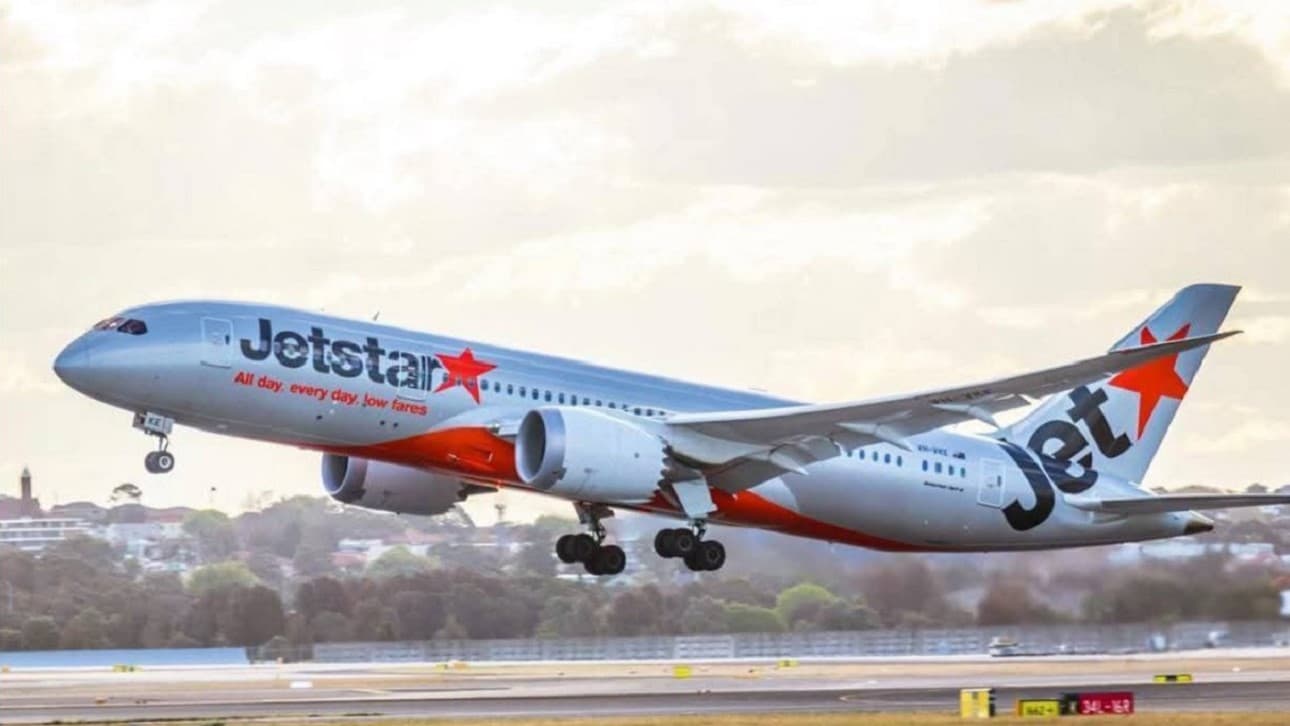
A serious ground safety incident occurred at Sydney Kingsford Smith Airport on Sunday morning when a Jetstar Airbus A320, taxiing for departure to Gold Coast, was forced to brake abruptly to avoid a Boeing 777 of Qatar Airways being towed across its path on an intersecting taxiway. The sudden deceleration injured a cabin crew member, and the Australian Transport Safety Bureau (ATSB) has opened an investigation. The incident took place around 7 a.m. local time, as flight JQ402 was proceeding to the runway. The crew spotted the towed 777 at very close range on a crossing taxiway, and both aircraft came to a halt before any collision occurred.
According to preliminary information from the ATSB, the cabin crew member was injured while moving through the cabin during the braking, and the connection between the Boeing 777's nose gear and the tow vehicle was damaged. Jetstar confirmed that the injured employee was treated by emergency services, and no passengers were harmed. This event is classified as a ground near-collision, not a runway incursion, since both aircraft were on taxiways. However, it highlights the often-underestimated complexity of ground movements, which require precise coordination between flight crews, ground control, towing operations, and airport vehicles.
Jetstar, a low-cost subsidiary of the Qantas Group, has launched its own internal investigation. A spokesperson emphasized that the aircraft was following air traffic control instructions when the pilots had to brake firmly after another aircraft came into immediate proximity. The Qatar Airways Boeing 777 was reportedly empty and under tow at the time. The exact circumstances remain to be determined: investigators will reconstruct taxi clearances, radio communications, the towing sequence, and the situational awareness of all parties involved. The ATSB will review data including air traffic control exchanges and surveillance footage, and will interview relevant personnel.
This near-miss comes amid operational strain at Sydney Airport. The day before, Airservices Australia had implemented increased departure spacing due to staffing constraints in the control tower, a measure that disrupted many flights. The agency acknowledged that such flow management could affect airline schedules but affirmed it was enhancing training to increase controller numbers. After Sunday's incident, Airservices Australia again applied departure spacing, described as a measure to safely manage anticipated demand in the air and at departure. The agency declined to comment on the causes while the investigation is ongoing.
For aviation trainees, this incident underscores the critical importance of ground operations and the human factors involved in taxiway safety. It serves as a real-world reminder that runway and taxiway incursions remain a top safety priority, and that effective communication and adherence to ATC instructions are vital, even during seemingly routine ground movements. Understanding the dynamics of ground control, towing operations, and crew coordination is essential for future pilots and air traffic controllers.