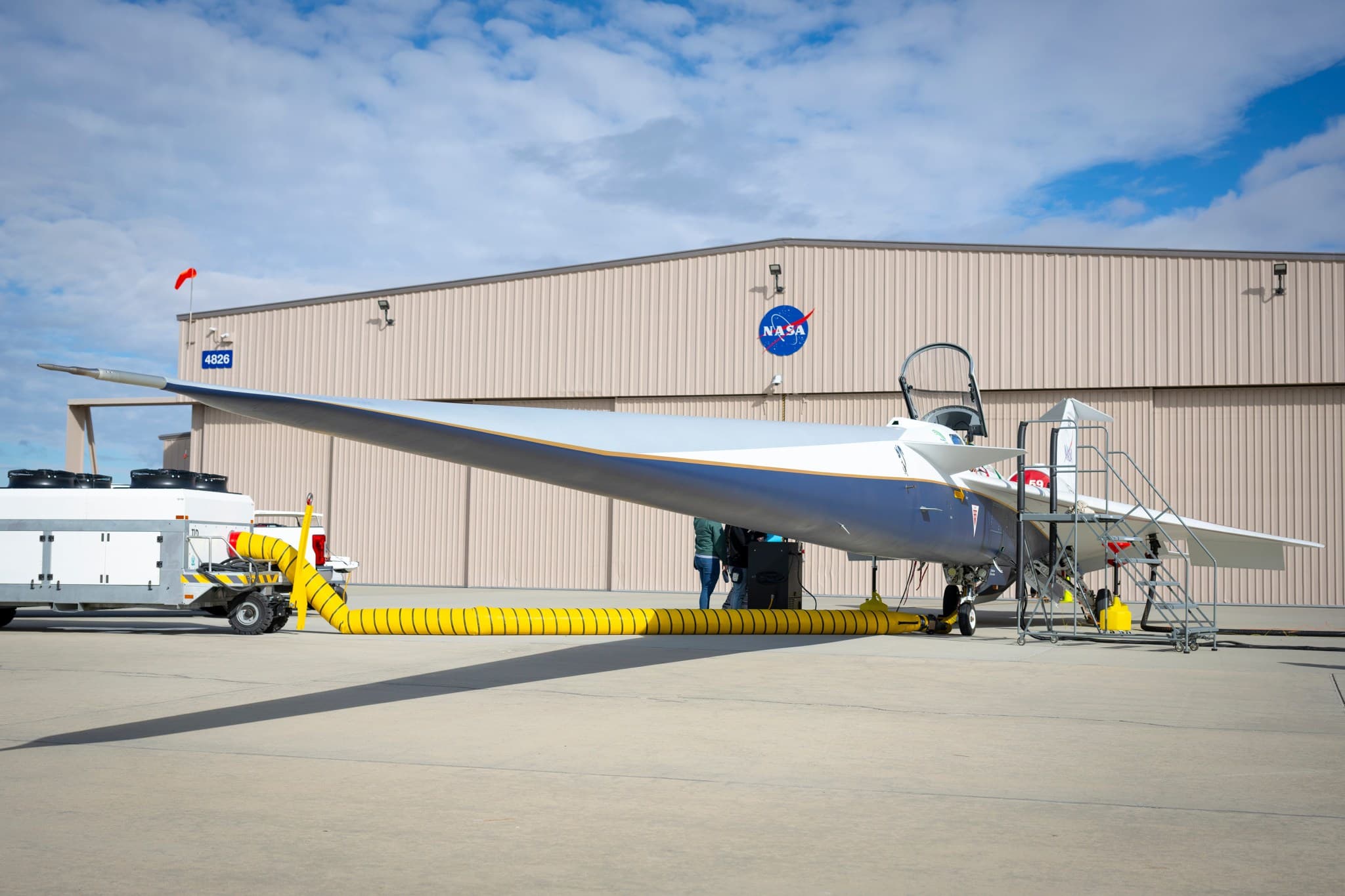
NASA's X-59 quiet supersonic aircraft has found its permanent home at the Armstrong Flight Research Center in Edwards, California, after a comprehensive renovation of a hangar originally built in 1968. The facility, designated Building 4826, was gutted and modernized with new electrical wiring, a fire suppression system, air conditioning, and office space to accommodate the unique needs of the X-59, which measures nearly 100 feet long and 30 feet wide. The renovation, led by NASA project manager Bryan Watters, faced challenges including supply chain issues from the COVID-19 pandemic but ultimately succeeded in creating a state-of-the-art home for the experimental aircraft.
The X-59 is the centerpiece of NASA's Quesst mission, which aims to enable commercial supersonic air travel over land by reducing sonic booms to a quieter thump. After its first flight on October 28, 2025, from Lockheed Martin's Skunk Works in Palmdale to Armstrong, the aircraft has been undergoing test flights. The hangar's new epoxy-coated floor, covering over 32,000 square feet, prevents spills from seeping into concrete, and its office windows offer views of F-15 research jets used as chase planes.
For ATPL and ATC students, this development highlights the importance of infrastructure in supporting advanced aircraft testing. The X-59's noise reduction technology could reshape supersonic flight regulations, impacting future airspace management and flight planning. Understanding the Quesst mission's progress provides insight into emerging aviation technologies that may soon enter commercial service.