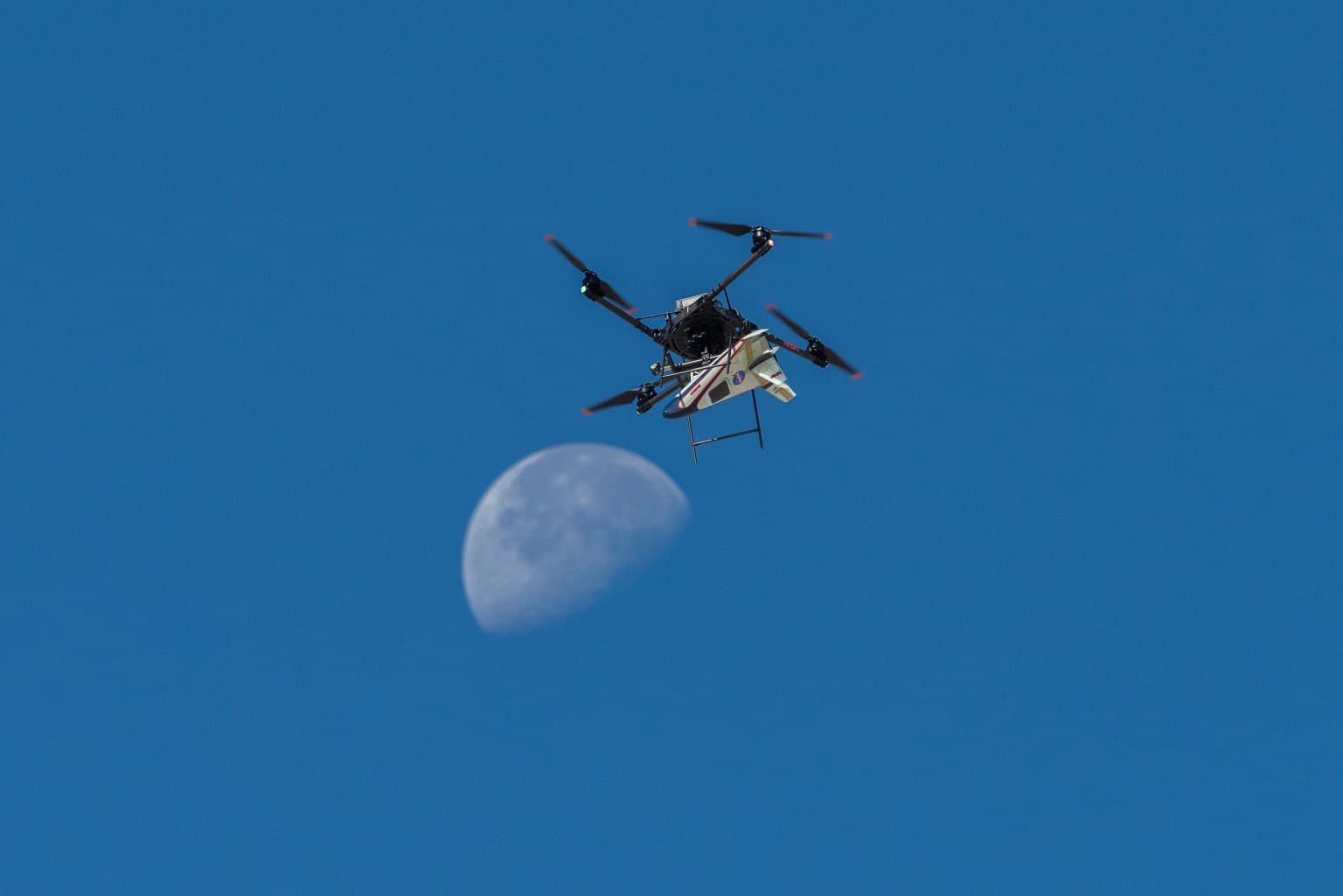
NASA's Aeronautics Research Mission Directorate has long relied on flight testing to push the boundaries of aerospace technology. The Dale Reed Subscale Flight Research Laboratory at NASA's Armstrong Flight Research Center in Edwards, California, takes this a step further by using small, remotely piloted and autonomous aircraft as cost-effective platforms to mature innovative ideas. This approach accelerates learning and reduces risk before transitioning to full-scale flight, making it a critical component of modern aviation research.
For ATPL and ATC students, understanding these subscale testing methods is essential. The lab operates several remotely piloted aircraft, including the Alta-X quadrotor, the Dryden Remotely Operated Integrated Drone (DROID) with a 10-foot wingspan, and the Multi-Use Cub, a 14-foot-span fixed-wing aircraft. These platforms are used to test everything from electric vertical takeoff and landing (eVTOL) concepts to advanced sensor systems. The FireSense project, for example, used an Alta-X drone to gather localized weather data during prescribed burns in Alabama, demonstrating how drones can improve wildfire decision-making—a skill relevant to ATCs managing airspace during emergencies.
One of the most significant projects is the Automatic Ground Collision Avoidance System (Auto-GCAS), which was tested on the DROID. This technology, originally developed for military jets, has been simplified for general aviation and autonomous aircraft. It provides alerts and steering cues to prevent ground collisions, directly impacting safety for ATPL pilots and ATCs who must manage traffic in complex environments. The lab also contributed to the Enhancing Parachutes by Instrumenting the Canopy (EPIC) project, which tested flexible sensors on supersonic parachutes for Mars missions. Such innovations highlight the importance of subscale testing in reducing risks and validating designs.
For students, the key takeaway is the iterative process of flight testing. The lab's rapid prototyping capabilities—using 3D printing and composite fabrication—allow quick design changes, mirroring the real-world challenges pilots and controllers face when adapting to new technologies. The Prandtl-D flying-wing glider, which demonstrated drag reduction through twisted wing design, is now part of the Smithsonian collection, showing how subscale research can lead to museum-worthy breakthroughs. This hands-on approach to innovation is a model for future aviation professionals who will work with increasingly autonomous systems.
In conclusion, NASA's subscale aircraft program is not just about advancing aeronautics; it's about training the next generation of pilots and controllers to think critically about flight testing and safety. By studying these projects, ATPL and ATC students gain insights into how small-scale experiments can solve big problems, from wildfire management to supersonic parachute deployment. This knowledge is invaluable for anyone pursuing a career in aviation.