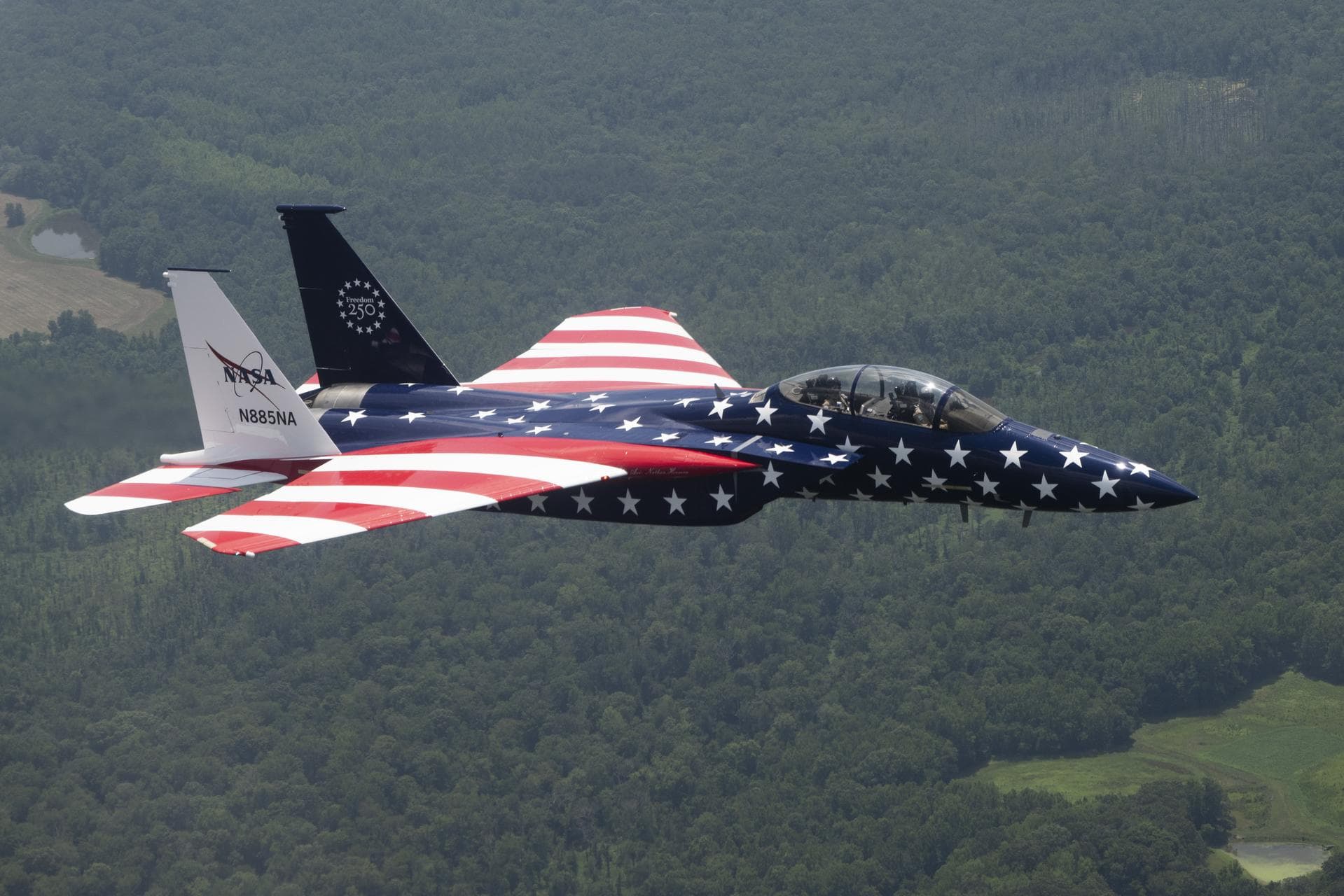
**A Patriotic Paint Job with a Purpose**
In July 2026, NASA marked America’s 250th birthday by repainting two of its most recognizable research aircraft — an F-15 and an F/A-18 — in red, white, and blue. The jets, based at NASA’s Armstrong Flight Research Center in California, participated in a flyover over Washington, D.C., on July 4, and will appear at events like EAA AirVenture in Oshkosh and the Pacific Airshow in Huntington Beach throughout the year.
**Why This Matters for Aviation Students**
For ATPL and ATC trainees, these aircraft are far more than ceremonial showpieces. NASA’s F-15 and F/A-18 are workhorses of flight research, used to test new aerodynamics, avionics, and handling qualities that eventually find their way into commercial and military fleets. The fact that they remain operational — even after a commemorative paint job — underscores a key principle: flight testing never stops. Every airshow appearance is also a data-gathering opportunity, and every maneuver flown contributes to the safety knowledge base that underpins modern aviation.
**From Airshows to the Cockpit**
When you see these jets at an airshow, you’re watching the same aircraft that have helped validate stall characteristics, high-angle-of-attack behavior, and control system upgrades. For a future airline pilot or controller, understanding that research platforms like these directly influence the procedures and limitations you’ll encounter in daily operations is invaluable. The red, white, and blue paint may be a tribute to history, but the science inside those airframes is shaping the future of flight.
**A Learning Opportunity**
MyATPS encourages students to look beyond the spectacle. Next time you spot a NASA jet, ask yourself: What flight test program is it supporting? How does that data affect the aircraft you’ll fly or control? The answer is often closer than you think — and it’s a reminder that aviation progress is built on continuous experimentation, not just routine operations.