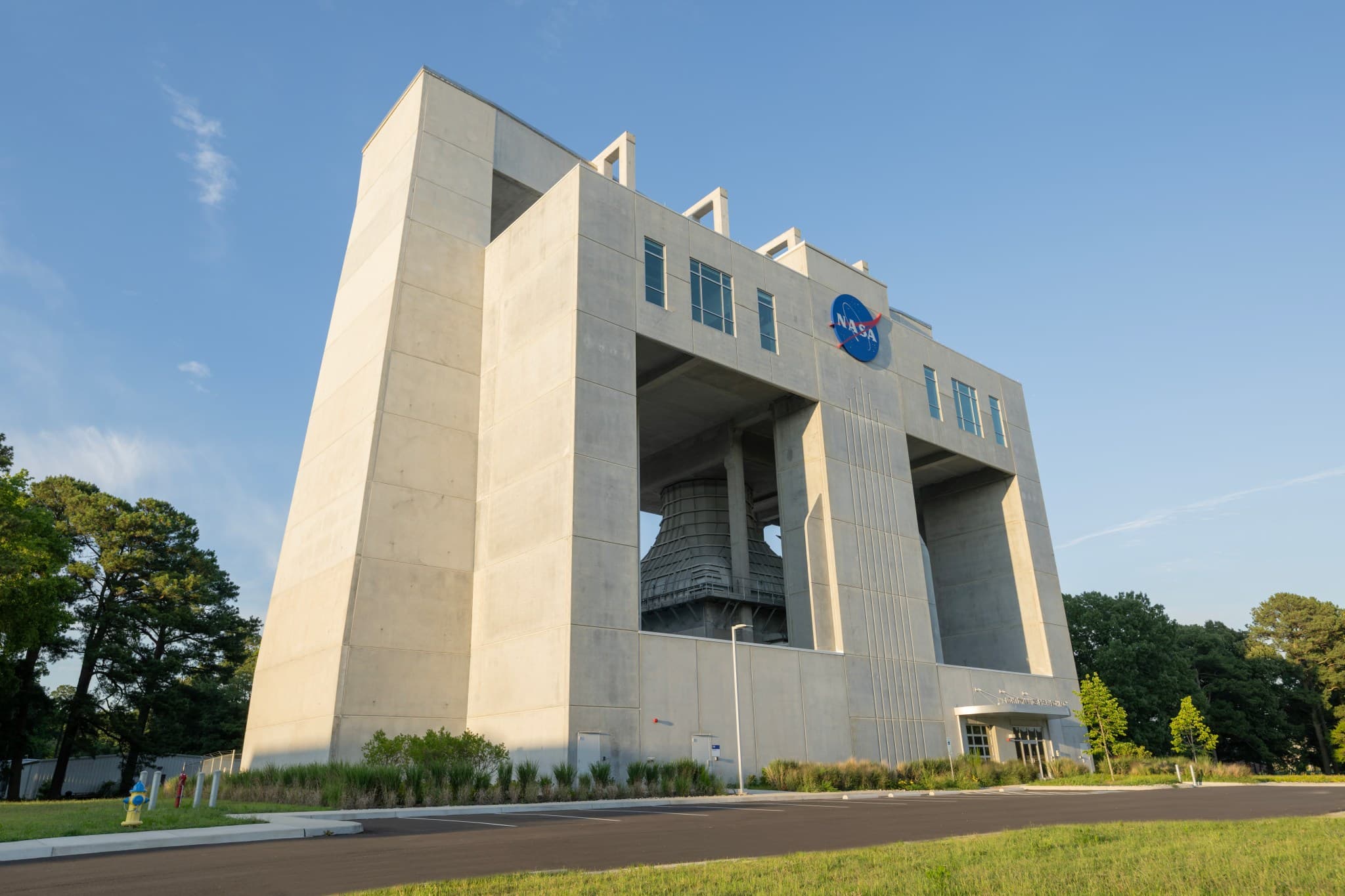
NASA’s Langley Research Center is about to open its first major wind tunnel in over 40 years: the Flight Dynamics Research Facility (FDRF). This new facility replaces two legendary tunnels—the 12-Foot Low-Speed Tunnel and the 20-Foot Vertical Spin Tunnel—that together served aviation for over eight decades. For ATPL and ATC students, this development is far from a dry engineering update. It represents a leap forward in how aircraft behaviour is understood, tested, and ultimately taught.
**Why this matters for ATPL students**
The FDRF is a vertical wind tunnel with a large test section that can simulate spins, stalls, and free-flight dynamics—including re-entry from space. For future airline pilots, understanding spin recovery is a core part of upset prevention and recovery training (UPRT). The data generated by the FDRF will refine the aerodynamic models used in flight simulators and training manuals. When you study aircraft stability and control in your ATPL theory, you are learning from decades of wind tunnel research. The FDRF ensures that knowledge stays current, especially for next-generation aircraft and spaceplanes.
**Impact on ATC operations**
Air traffic controllers don’t fly aircraft, but they must anticipate how aircraft behave in abnormal situations. The FDRF’s spin and free-flight tests will improve the understanding of loss-of-control scenarios, which directly influences emergency procedures and controller training. Knowing that a particular aircraft type has been thoroughly tested in the FDRF gives controllers confidence when handling unusual requests or emergencies.
**A legacy of innovation**
The 12-Foot tunnel tested everything from bi-planes to the X-59 supersonic jet and the Dragonfly rotorcraft for Titan. The 20-Foot Vertical Spin Tunnel was instrumental in making aviation safer by studying spins—a leading cause of fatal accidents in the early days of flight. The FDRF inherits their equipment and expertise, but with modern instrumentation and data systems. For students, this continuity means that the principles you learn are built on proven, real-world testing.
**What this means for your training**
The FDRF will produce new data on aircraft dynamics that will eventually filter into training syllabi. ATPL candidates should pay attention to updates in aircraft performance and handling characteristics, especially for emerging technologies like electric vertical take-off and landing (eVTOL) aircraft and supersonic transports. ATC students will benefit from improved safety margins and more accurate emergency response guidelines. In short, the FDRF is not just a NASA facility—it is a tool that will shape the next generation of aviation professionals.