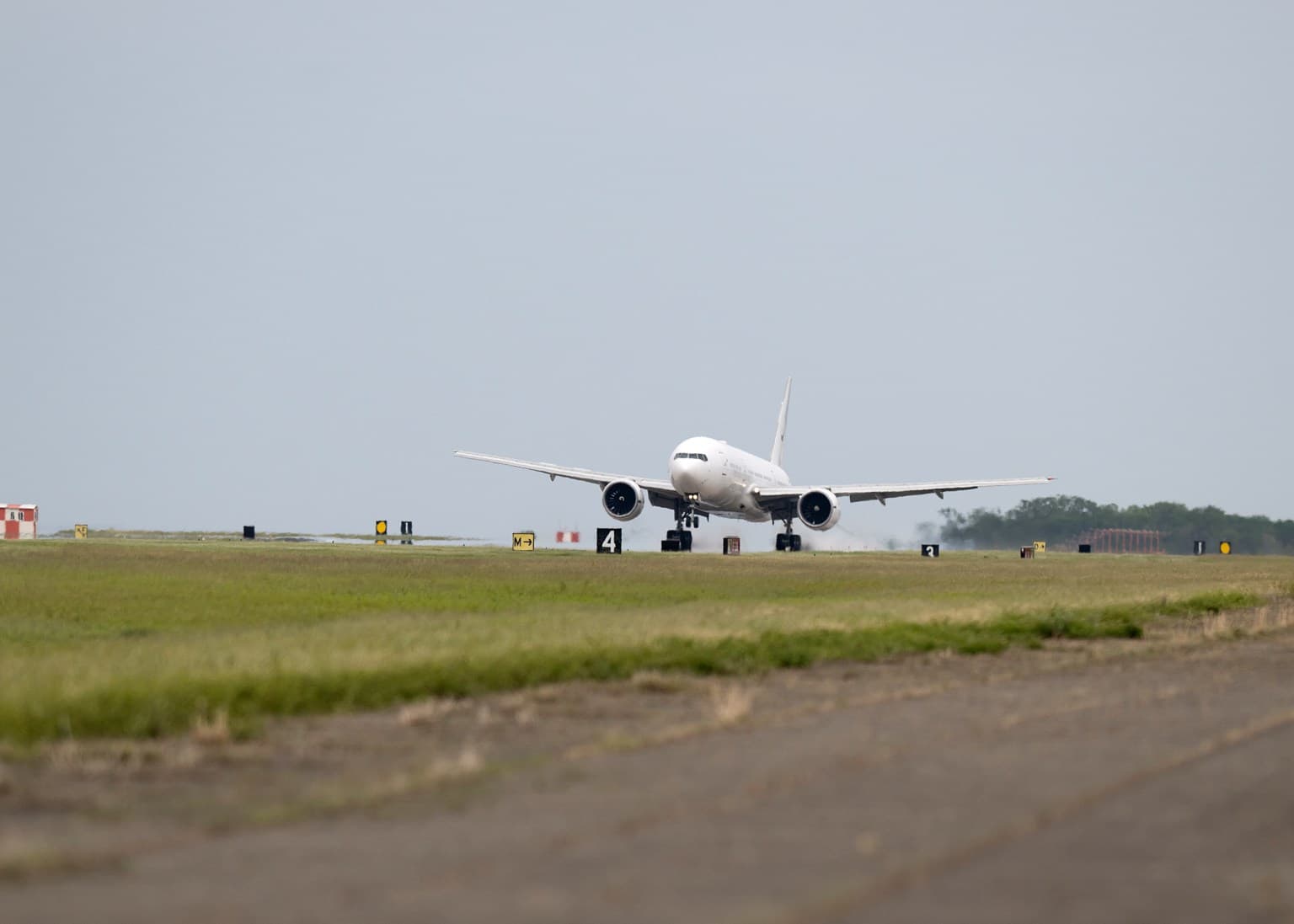
NASA's Boeing 777 has returned to Langley Research Center after extensive structural modifications in Waco, Texas, transforming it from a passenger jet into the agency's largest airborne science laboratory. This aircraft, acquired in 2022 to replace the retired DC-8, represents a significant leap in airborne research capability. For ATPL and ATC students, understanding the operational and technical aspects of such specialized aircraft is crucial, as they may encounter similar platforms in their careers.
The modifications include enlarged cabin windows, open portals on the fuselage belly, and extensive wiring to support advanced sensors like lidar and infrared imaging spectrometers. The aircraft can accommodate 50 to 100 operators and carry 75,000 pounds of equipment for flights lasting up to 18 hours. This level of integration requires meticulous planning and coordination, skills that are directly applicable to aviation professionals.
The first science mission, NURTURE, is slated for January 2027 and will study high-impact winter weather events across North America, Europe, Greenland, and the Arctic. This mission will collect detailed atmospheric observations, providing valuable data for improving weather prediction models. For ATC students, understanding how such data influences aviation weather forecasts is essential for safe and efficient air traffic management.
NASA's Airborne Science Program manages the 777, emphasizing its role in advancing Earth science and satellite data validation. The aircraft's ability to host multiple instruments and researchers simultaneously makes it a unique platform for collaborative research. Aspiring pilots and controllers should note the importance of such platforms in enhancing our understanding of the atmosphere, which directly impacts flight safety and planning.
In summary, NASA's 777 is not just a science platform; it is a testament to the evolving nature of aviation technology. For students, staying informed about such developments is key to adapting to future roles in aviation, whether in commercial operations, research, or air traffic control.