**A Unique Perspective on High-Performance Flight**
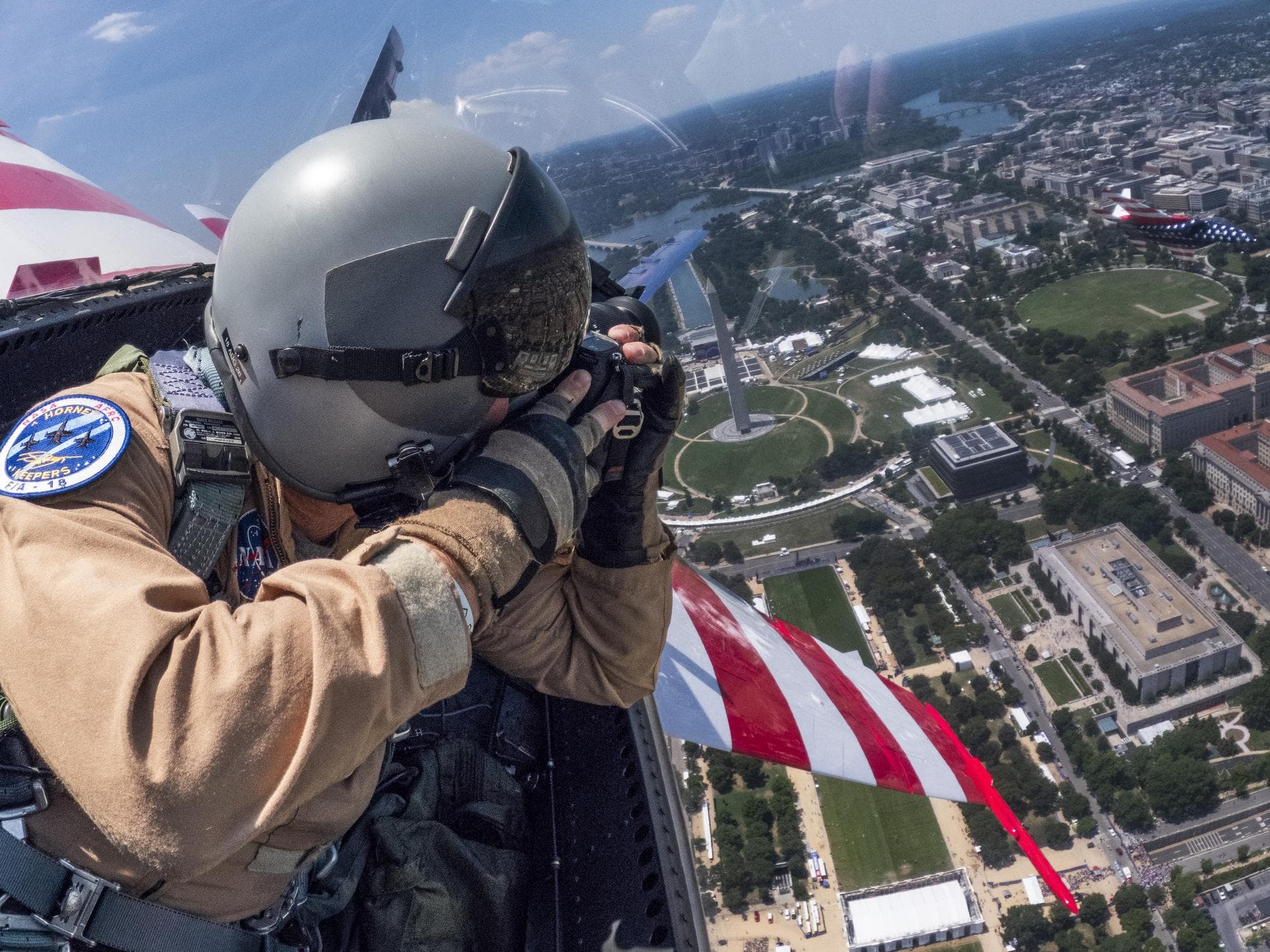
On July 4, 2026, NASA photographer Jim Ross captured stunning images from the rear seat of an F-18 during a flyover over Washington D.C., celebrating America’s 250th birthday. The aircraft, based at NASA’s Armstrong Flight Research Center in Edwards, California, joined other NASA and military planes in a formation that included an F-15. For aviation students, this event is more than a patriotic spectacle—it is a real-world demonstration of the coordination, precision, and safety protocols required when operating high-performance aircraft in congested airspace.
**The Role of Flight Photography in Aviation Training**
Ross’s career, spanning nearly 37 years, includes documenting milestones such as SR-71 flights and the X-59 quiet supersonic research aircraft. His work highlights a critical but often overlooked aspect of aviation: the need for accurate visual records. For ATPL and ATC trainees, understanding how flight photographers operate—often in the same aircraft as test pilots—provides insight into crew resource management (CRM) and the importance of maintaining situational awareness even when performing secondary tasks. The F-18 flyover required precise timing and communication between the photographer, pilot, and air traffic control, mirroring the teamwork essential in commercial aviation.
**Implications for ATPL and ATC Students**
This mission also underscores the operational challenges of flying in restricted airspace, such as the National Mall in Washington D.C. For ATC students, managing a flyover involving multiple aircraft types (F-18, F-15, and others) demands careful sequencing and separation. ATPL students can learn from the flight planning involved: fuel calculations, weather considerations, and contingency procedures for a cross-country flight from California to D.C. Additionally, the use of an F-18—a twin-engine, high-performance fighter—offers a case study in aircraft systems, handling characteristics, and the physiological effects of high-G maneuvers on crew members.
**A Lesson in Aviation History and Innovation**
Ross’s photographs are not just souvenirs; they are tools for education. They document the evolution of flight technology, from the SR-71 to the X-59, and remind us that aviation progress relies on both pilots and support personnel. For students aspiring to become airline pilots or controllers, this story illustrates that every flight—whether a routine commercial trip or a ceremonial flyover—is a complex operation requiring discipline and expertise. By studying such events, trainees can better appreciate the broader context of their future careers.
**Conclusion**
The NASA F-18 flyover over Washington is a vivid example of how aviation intersects with history and public engagement. For ATPL and ATC students, it offers practical lessons in flight operations, airspace management, and the value of documentation. As you prepare for your exams and simulators, remember that every flight tells a story—and it is your job to ensure it is a safe one.