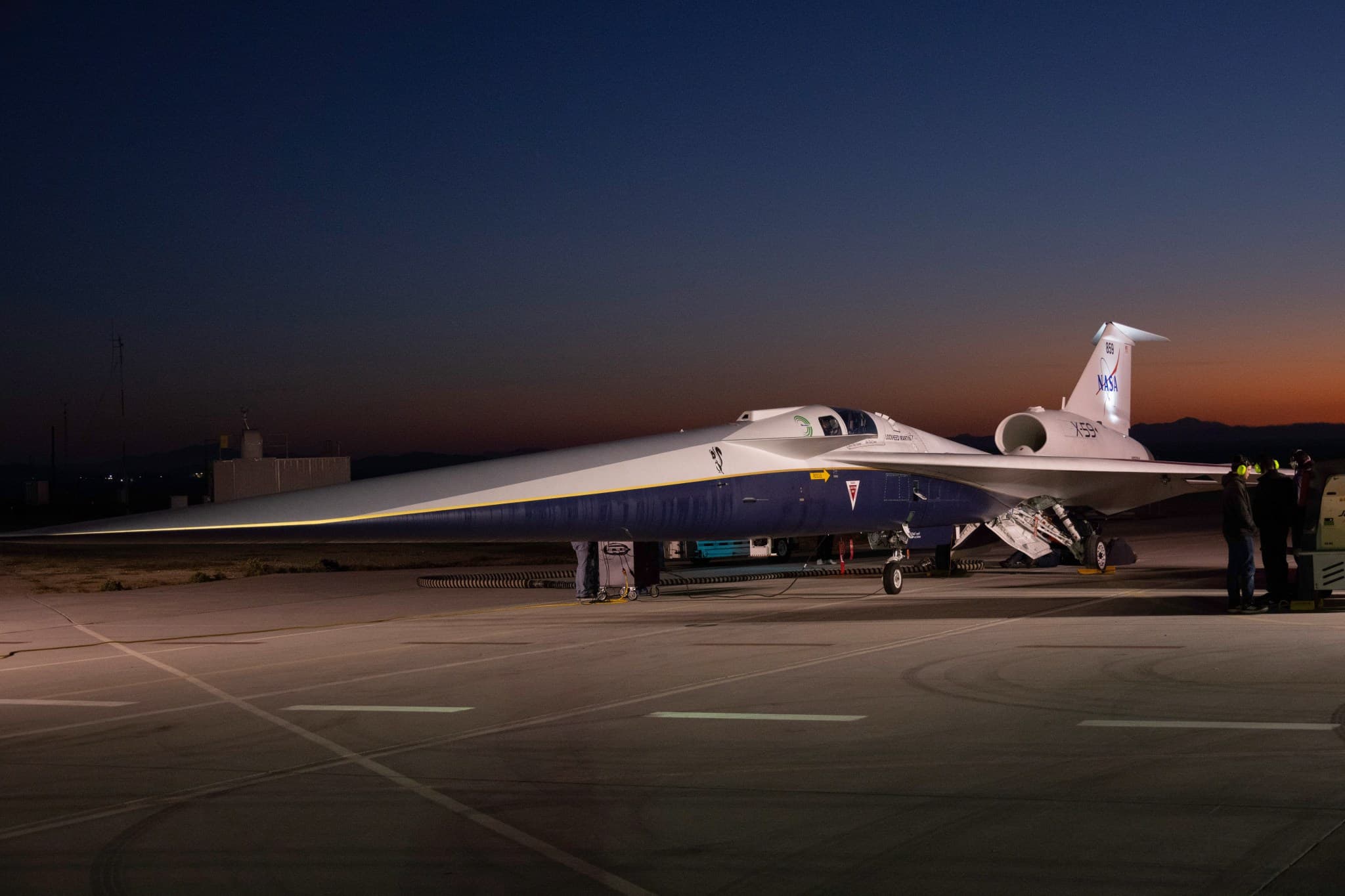
The X-59, a supersonic aircraft developed by NASA, is preparing for its flight tests. The primary goal of this aircraft is to fly at supersonic speeds without producing sonic booms, which could revolutionize air travel. The X-59's flight tests are a crucial step in the development of this innovative aircraft. The tests are scheduled to begin soon, with the first flight consisting of a series of tests to evaluate the aircraft's performance. The X-59 will fly at different altitudes and speeds to test its limits and assess its safety. The test pilots will be available to answer media questions about their experience flying this unique aircraft. The X-59 is the result of a NASA research project called Quesst, which aims to develop supersonic aircraft for commercial travel. The project's objective is to reduce travel times and make air travel more efficient. The X-59 is designed to fly at supersonic speeds without generating sonic booms, which could pave the way for new developments in the aviation industry. The X-59's flight tests will be closely monitored by the media and aviation industry experts. The test results will be crucial in determining the future of supersonic aviation and evaluating the potential for developing new silent aircraft. The X-59 is an example of the innovation and creativity that characterizes the aviation industry, and its flight tests will be followed with interest by all those interested in the future of aviation. The Quesst project and the development of the X-59 are concrete examples of the importance of research and development in the aviation industry. Aviation students, such as pilots and air traffic controllers, can learn from these projects and understand the importance of innovation and creativity in their future careers.