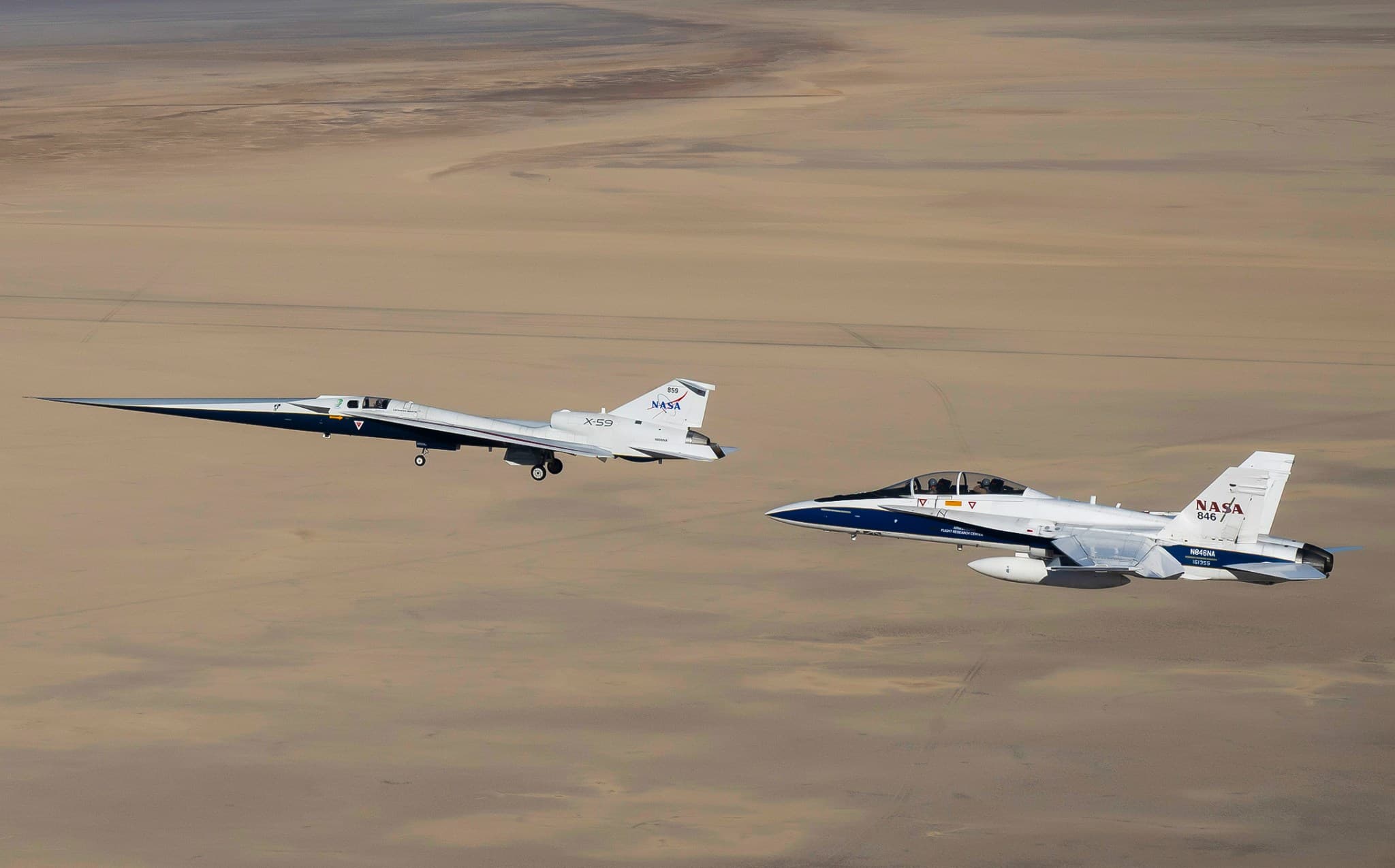
NASA's Armstrong Flight Research Center in Edwards, California, has recently expanded its already impressive fleet with the addition of two F-15 supersonic jets, a Pilatus PC-12 utility aircraft, and a T-34 turboprop trainer. This move underscores the center's ongoing commitment to pushing the boundaries of flight research, a legacy that began with the Bell X-1 and continues today with the X-59 quiet supersonic aircraft. For ATPL and ATC students, understanding the operational environment of such a diverse fleet is crucial. Armstrong's aircraft range from low-altitude gliders to high-altitude ER-2s, each requiring specialized handling and airspace management. The center's location on Rogers Dry Lake, a 44-square-mile natural runway, provides a unique testbed for emergency procedures and experimental flight profiles that are rarely encountered in commercial aviation.
The addition of these aircraft is not just about expanding numbers; it's about enhancing capabilities. The F-15s will support supersonic research, including the X-59's mission to reduce sonic booms to a quiet thump. This directly ties into future regulatory changes for supersonic flight over land, a topic that ATPL students should monitor as it may impact future airline operations. The Pilatus PC-12 and T-34 will serve as versatile platforms for airborne science missions, carrying sensors and scientists to measure air pollution, glacier melt, and wildfire mapping. For ATC trainees, coordinating such missions—often involving low-level flights or dynamic altitude changes—requires a deep understanding of airspace integration and real-time decision-making.
What sets Armstrong apart is its team's ability to modify and maintain these aircraft in-house, sourcing rare components and machining custom parts. This level of technical expertise is a reminder that aviation is not just about flying; it's about engineering, maintenance, and continuous innovation. For students pursuing ATPL or ATC careers, the lesson is clear: the industry demands versatility. Whether it's understanding the performance limits of a supersonic jet or managing the airspace around a research center, the skills developed at Armstrong are directly applicable to real-world aviation challenges.
The center's history, from the X-1 to the Space Shuttle Carrier Aircraft, highlights the importance of flight testing in advancing aviation safety and technology. Every new aircraft type that enters service—whether commercial or experimental—undergoes rigorous testing that often begins at facilities like Armstrong. For ATPL students, this means that the procedures and limitations they learn in the classroom are born from decades of such research. For ATC students, the ability to handle non-standard aircraft and emergency scenarios is honed by studying how test flights are conducted.
In conclusion, NASA Armstrong's fleet expansion is a testament to the enduring value of flight research. For aviation trainees, it offers a window into the future of flight—where supersonic travel, environmental monitoring, and advanced air mobility become routine. By staying informed about these developments, students can better prepare for the evolving landscape of aviation, whether they aim to fly the next generation of aircraft or manage the airspace they operate in.