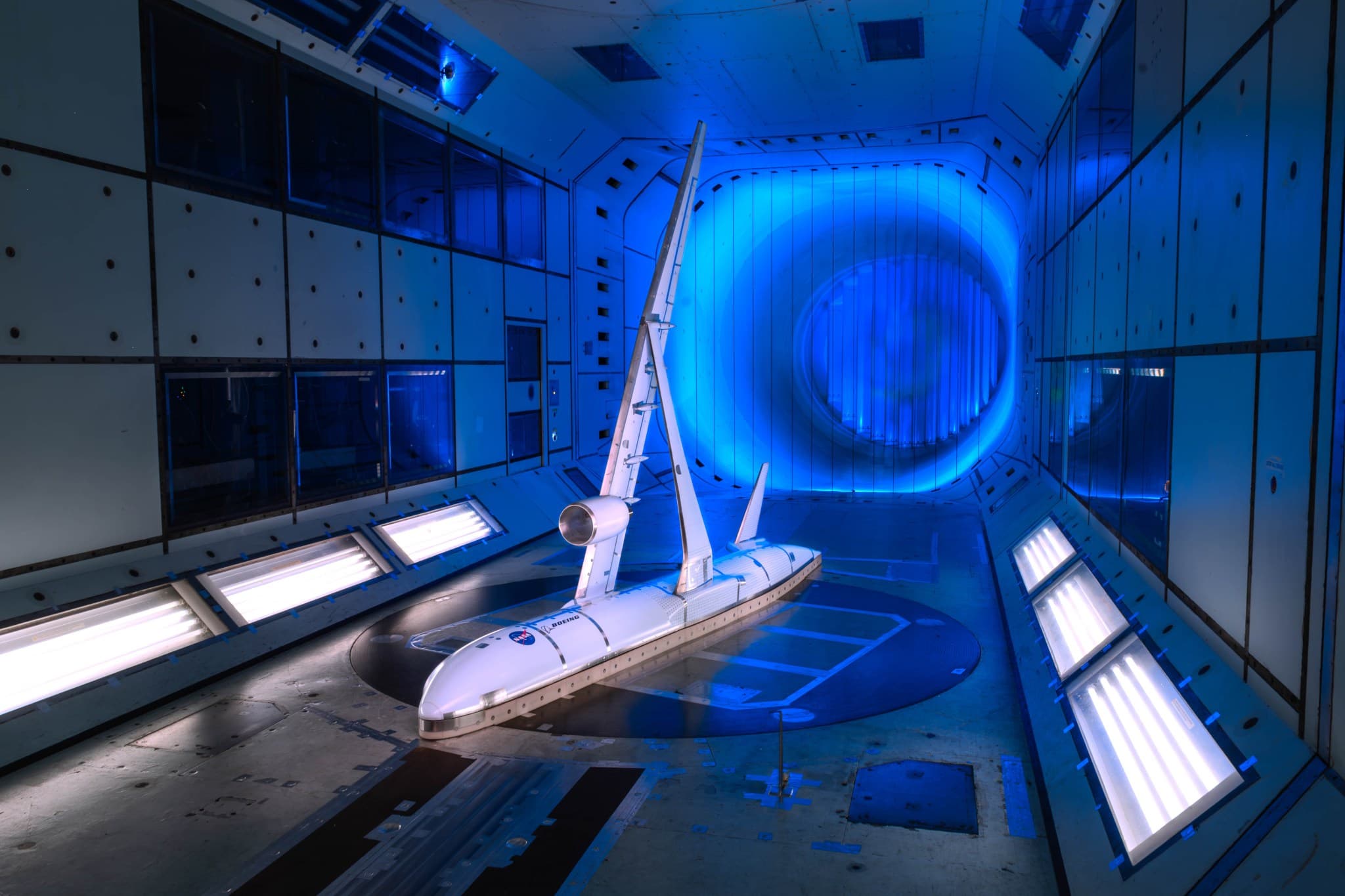
NASA and Boeing have completed a key round of wind tunnel testing on a truss-braced wing configuration, a design that could significantly improve aerodynamic efficiency and reduce fuel consumption for future commercial aircraft. The tests, conducted in December 2025 at QinetiQ's 5-meter pressurized wind tunnel in Farnborough, England, used a semispan model of Boeing's Subsonic Ultra Green Aircraft Research (SUGAR) concept. The model included adjustable slats, flaps, and control surfaces to simulate high-lift conditions during takeoff and landing.
For ATPL and ATC students, this development is a window into the future of airliner design. The truss-braced wing—a long, thin wing supported by aerodynamically shaped struts—differs fundamentally from the cantilevered wings on today's jets. It promises lower drag and better lift-to-drag ratios, which could translate into reduced fuel burn and lower operating costs. Understanding such innovations is crucial for pilots who will eventually fly these aircraft and for controllers who will manage them in increasingly congested airspace.
The testing is part of a long-standing collaboration between NASA and Boeing under the Subsonic Flight Demonstrator project. Previous tests at NASA facilities have built a comprehensive database on the concept's behavior. The pressurized wind tunnel allowed the team to gather high-fidelity data on aerodynamic forces and flow patterns, essential for validating computer models and moving toward a full-scale demonstrator.
From an ATPL perspective, the truss-braced wing's impact on performance parameters—such as climb, cruise, and approach speeds—will require updated training materials and procedures. ATC students should note that changes in aircraft performance could affect separation minima and traffic flow management. The SUGAR concept also aligns with industry goals for sustainable aviation, a topic increasingly covered in ATPL exams.
While full results are still being analyzed, the test has already added valuable data to the growing body of research aimed at ultra-efficient aviation. NASA's role as an incubator for breakthrough technology underscores the importance of staying informed about such advancements. For aviation trainees, this is not just a news item—it's a glimpse into the aircraft they will operate or control in the coming decades.