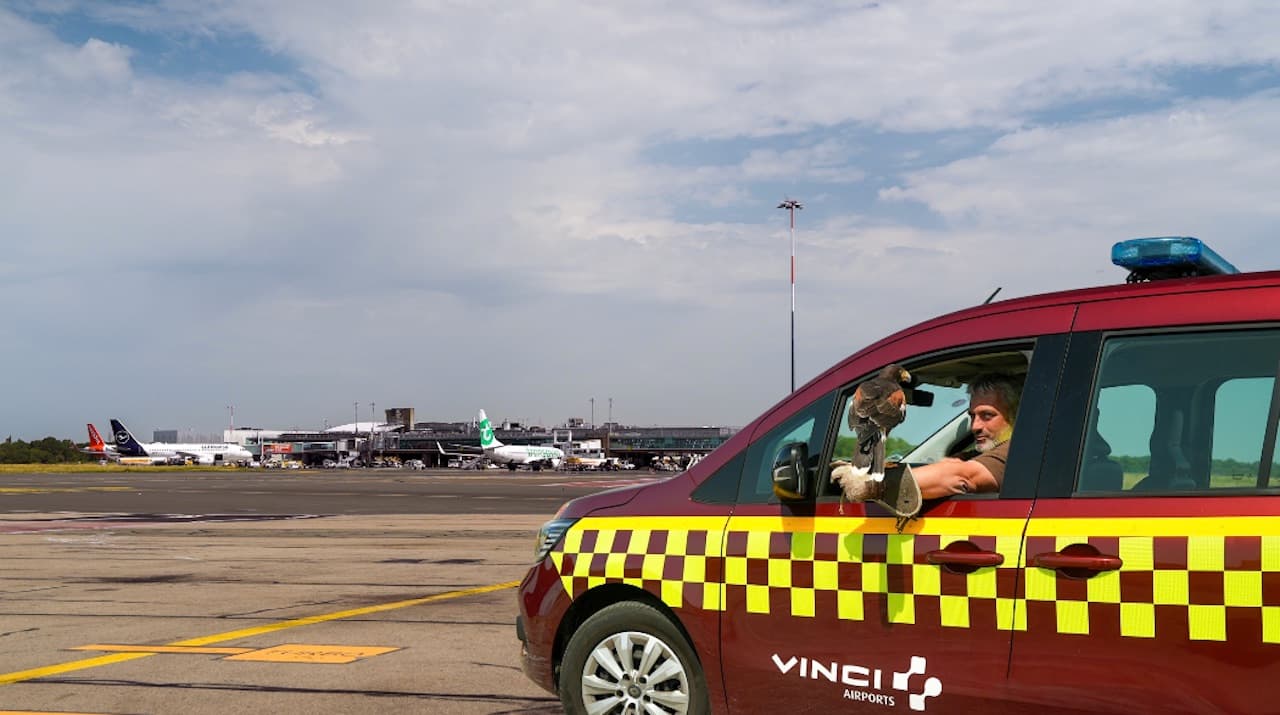
**Nantes Atlantique Airport: Falconry as a Key Tool in Aviation Safety**
Nantes Atlantique Airport, the only civil airport in France to operate its own falconry unit, has released a video documentary showcasing its innovative approach to wildlife hazard management. The airport uses three Harris's hawks (soon to be four) and, since 2025, a saker falcon to deter birds from the airfield, complementing traditional methods like pyrotechnics and sound devices. This initiative is part of the airport's broader strategy to balance flight safety with biodiversity preservation, as highlighted in the "Voyage à Nantes 2026" cultural program.
**How Falconry Works at Nantes Atlantique**
The falconry team conducts approximately 1,500 interventions per year, focusing on peak bird activity periods—early morning and late afternoon. The birds of prey are released from a falconer's glove to chase away birds near runways, then return to their handler. This method is particularly effective against species that pose a high risk of bird strikes, such as gulls and crows. The airport's 250-hectare site includes 155 hectares of natural areas (grasslands, woodlands, and retention basins) that attract wildlife, making proactive management essential.
**Regulatory and Operational Context**
The French Civil Aviation Authority (DGAC) recognizes falconry as a recommended tool for reducing wildlife hazards. For ATPL and ATC students, this case illustrates how airports integrate non-lethal wildlife control into their safety management systems (SMS). It also highlights the importance of understanding local ecosystems and the need for continuous monitoring—skills relevant to both pilots and controllers who must anticipate and report bird activity.
**Broader Implications for Aviation Training**
While Nantes Atlantique is unique in France, other airports in the VINCI Airports network, such as those in Portugal, are adopting similar methods. This trend underscores a shift toward sustainable aviation practices that minimize environmental impact while maintaining safety. For students, this is a practical example of how regulatory requirements (e.g., ICAO Annex 14 on wildlife hazard management) are implemented on the ground, blending biology, technology, and operational procedures.
**Conclusion**
The Nantes Atlantique falconry program demonstrates that innovative, nature-based solutions can enhance aviation safety. As future aviation professionals, understanding such approaches will help ATPL and ATC students appreciate the complexity of airport operations and the importance of cross-disciplinary collaboration in risk management.