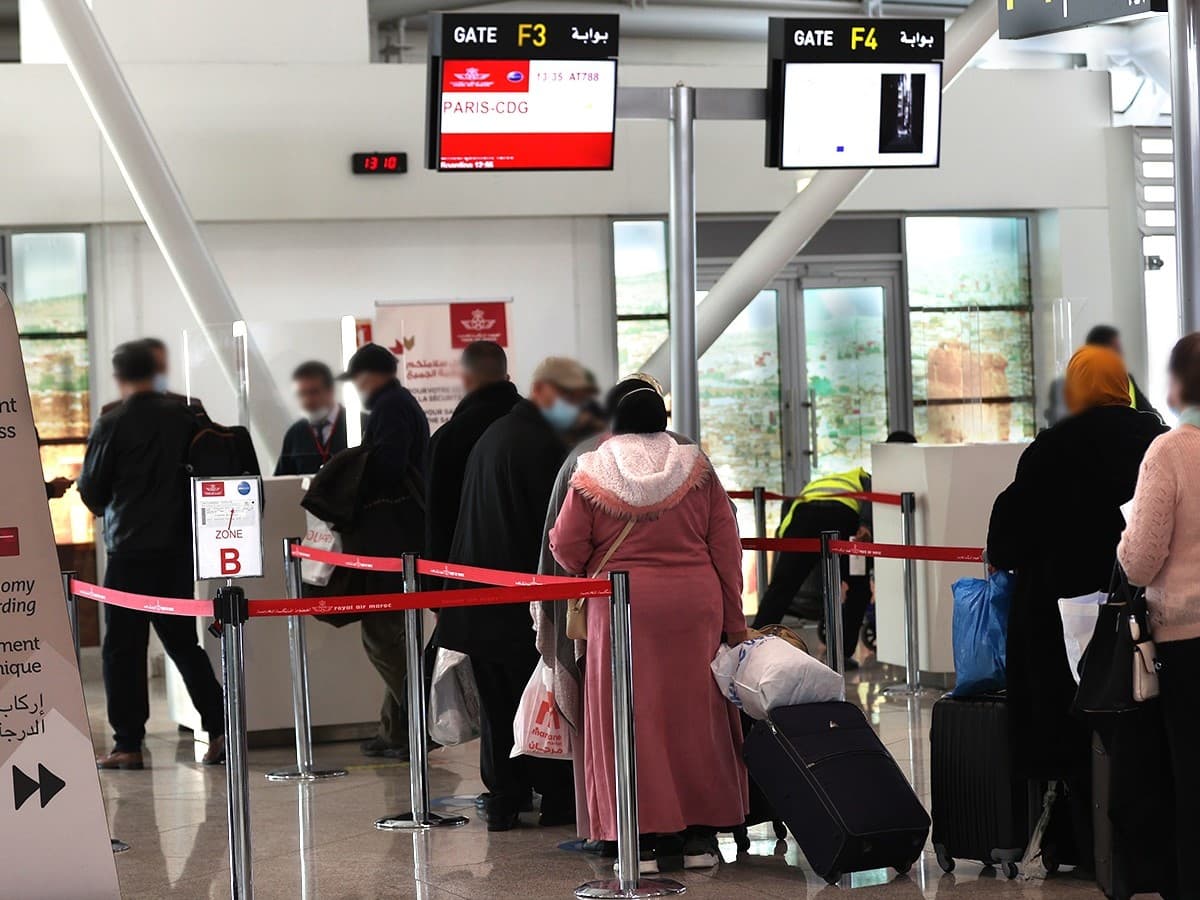
**Morocco's airports are embracing a fully digital future.** Airports of Morocco, the former National Airports Office (ONDA), has introduced Pax Check, a smartphone-based digital boarding pass solution designed to smooth the passenger journey. With air traffic in the country surging, this initiative promises to reduce friction at every step, from security checks to boarding gates.
**How Pax Check works.** After checking in online via their airline's app, passengers receive a secure QR code on their phone. This code is then presented at security controls, automated gates, and the boarding gate. According to Airports of Morocco, the system eliminates the need for paper boarding passes while maintaining the same regulatory checks. Document verification remains the responsibility of airlines, ensuring compliance with national and international rules. The goal is to reduce document handling and facilitate passenger movement in terminals and at control points, without compromising safety or security standards.
**A phased rollout.** The deployment will be gradual, starting with airlines that meet the necessary technical, operational, and regulatory prerequisites. This digital boarding pass is seen as the first step toward a fully paperless airport experience, which will expand in the coming years. It aligns with the broader push for digital services for travelers, driven by the operational demands of growing traffic.
**Record traffic growth.** In the first half of 2026, Moroccan airports welcomed 18.83 million passengers, an 8.8% increase compared to the same period in 2025. Marrakech-Menara Airport saw a 10.4% rise, handling 5.64 million travelers in six months. These figures underscore Morocco's rising prominence in tourism and international travel. Pax Check is part of the 'Aéroports 2030' strategy, which aims to boost national capacity to 80 million passengers annually by 2030, coinciding with Morocco's co-hosting of the FIFA World Cup alongside Spain and Portugal. Casablanca's Mohammed V Airport, the country's largest and Royal Air Maroc's hub, is slated to expand from 15 to 35 million passengers with a new terminal.
**Implications for aviation professionals.** For ATPL and ATC students, this shift highlights the increasing digitization of airport operations. Understanding how digital boarding passes integrate with security protocols and passenger flow is becoming essential knowledge. As airports worldwide adopt similar technologies, future pilots and controllers must be prepared to work in environments where paper documents are obsolete, and digital systems streamline every aspect of the journey.