**A New Hub on the South Shore**
Montreal has officially gained a second commercial airport with the opening of the MET – Aéroport métropolitain de Montréal, located in Longueuil on the south shore of the St. Lawrence River. The facility, built on the site of the former Saint-Hubert airport at a cost of approximately CAD 500 million, is positioned as a complementary hub to Montreal-Trudeau (YUL). Porter Airlines, the Toronto-based carrier, has taken the lead as the primary tenant, launching 11 domestic routes within days of the opening. The airport retains the IATA code YHU, ensuring continuity for operators and distribution systems.
**Operational Details and Fleet**
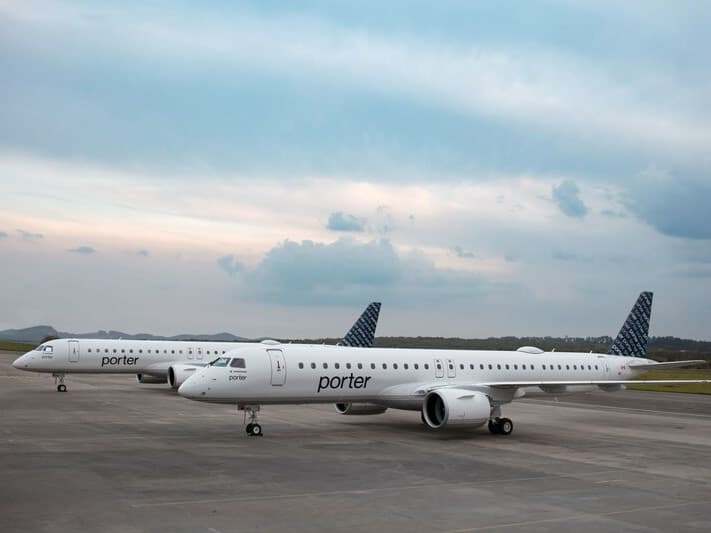
The MET is currently configured exclusively for domestic Canadian flights, with no customs or border control facilities. The terminal features nine gates, designed to handle up to 4 million passengers annually once fully ramped up. Porter is deploying two aircraft families: the De Havilland Dash 8-400 (78 seats) and the Embraer E195-E2 (132 seats). The Dash 8-400s are ideal for shorter regional routes and shorter runways, while the E195-E2s are touted as among the quietest and most fuel-efficient in their class, with a 2–2 configuration (no middle seat) that enhances passenger comfort. Porter emphasizes a premium product with complimentary snacks, beer and wine served in glassware, and free high-speed Wi-Fi on the E195-E2s.
**Impact on Montreal's Aviation Ecosystem**
For ATPL and ATC students, this development is a real-world case study in airport planning, airspace management, and airline network strategy. The MET's opening introduces a second commercial airport in a major metropolitan area, which will require careful coordination of airspace between YHU and YUL to avoid conflicts. Students should note the operational constraints: the MET is domestic-only for now, and its runway length and terminal capacity dictate the types of aircraft that can operate there. Porter's decision to use both turboprops and narrow-body jets illustrates how airlines match fleet types to route characteristics and demand.
**Broader Implications for Canadian Aviation**
This expansion also highlights the competitive dynamics in Canadian aviation. Porter is positioning itself as a premium alternative to both legacy carriers and low-cost airlines, and the MET gives it a dedicated base to grow its network without being constrained by slot availability at YUL. For ATC trainees, the increased traffic between YHU and other Canadian hubs will add complexity to en-route and terminal control sectors. The partnership with Pascan Aviation further feeds regional connectivity, creating new flows of passengers and aircraft movements.
**Conclusion**
The MET represents a significant investment in Montreal's air transport infrastructure, with Porter Airlines as the driving force. For aviation students, it offers a tangible example of how secondary airports can relieve congestion at primary hubs, how fleet planning aligns with airport capabilities, and how airspace design must adapt to multiple airports in close proximity. As the MET grows, it will be a valuable case study for years to come.