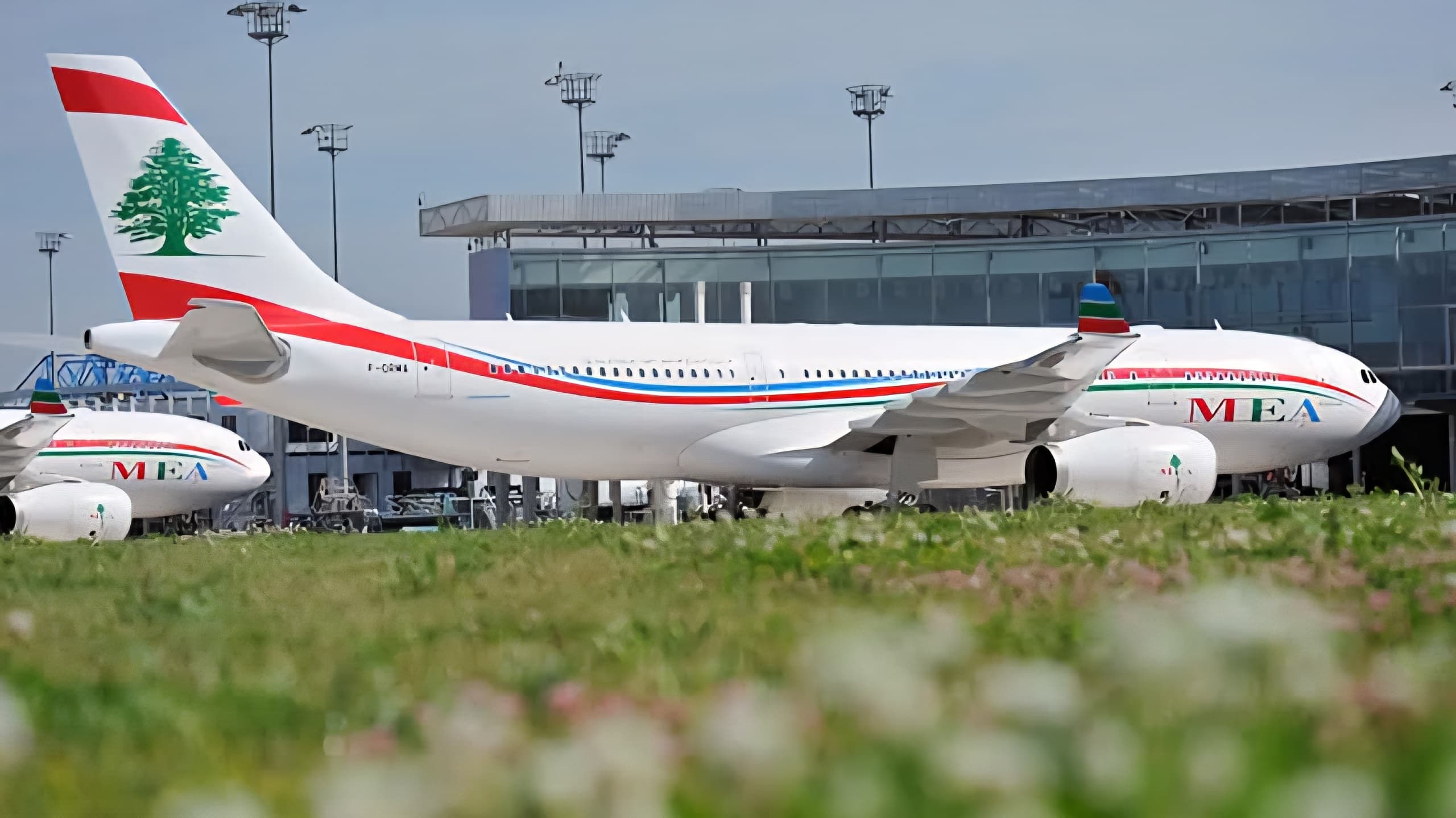
**A New Link in the Sky: Beirut–Berlin Returns**
On June 26, 2026, Middle East Airlines (MEA) relaunched a direct route between Beirut–Rafic Hariri International Airport and Berlin Brandenburg Airport (BER), ending a 16-year hiatus. The service operates four times per week (Tuesday, Friday, Saturday, Sunday) with an Airbus A320 configured for 180 passengers in an all-economy layout. Flight ME245 departs Beirut at 09:05, arriving Berlin at 12:05; the return leg, ME246, leaves BER at 13:05 and lands in Beirut at 17:55. The schedule is designed to accommodate both weekend getaways and longer visits, targeting the large Lebanese diaspora in Germany and connecting travelers onward to the Middle East, including Syria.
**Why This Matters for ATPL and ATC Students**
For ATPL candidates, this route restart is a textbook case in airline network planning. MEA’s decision to use an A320—a narrowbody workhorse—on a 4-hour sector reflects careful capacity management: 180 seats in economy only, no business class initially, aiming to fill seats with price-sensitive diaspora traffic. Students should note how airlines balance load factors, frequency, and aircraft utilization when reopening a long-dormant route. The 16-year gap also highlights how geopolitical instability (Lebanon’s economic crisis, regional tensions) can disrupt air links, and how carriers must reassess demand before re-entering a market.
For ATC trainees, the route adds complexity to European airspace. Berlin Brandenburg is a growing hub, and new flights from the Middle East require coordination with Eurocontrol and neighboring ACCs (e.g., Munich, Vienna, and Ankara). The A320’s flight level and routing over Eastern Europe or the Mediterranean will involve standard IFR procedures, handovers, and potential rerouting due to airspace restrictions (e.g., over Syria or Iraq). Understanding how airlines file flight plans for such routes—and how ATC manages traffic flows—is directly relevant to your training.
**Operational and Geopolitical Context**
MEA is a SkyTeam member and Lebanon’s flag carrier, operating a fleet of Airbus narrowbodies and A330s. The Beirut–Berlin route is part of a broader strategy to rebuild its European network after years of contraction. The airline emphasizes connectivity beyond Beirut, particularly to Syria, via onward flights or surface transport. For ATC students, this raises questions about overflight rights, security clearances, and NOTAMs for airspace near conflict zones. For ATPL students, it’s a reminder that route profitability depends on more than just point-to-point demand—it’s about feed traffic, alliances, and geopolitical risk.
**Conclusion**
This route restart is not just a news item; it’s a live case study in airline economics, network strategy, and airspace management. Whether you’re studying for your ATPL or preparing for an ATC rating, understanding the factors behind such decisions will sharpen your professional judgment. Keep an eye on MEA’s load factors and schedule adjustments—they’ll tell you whether this route becomes a permanent fixture or a temporary experiment.