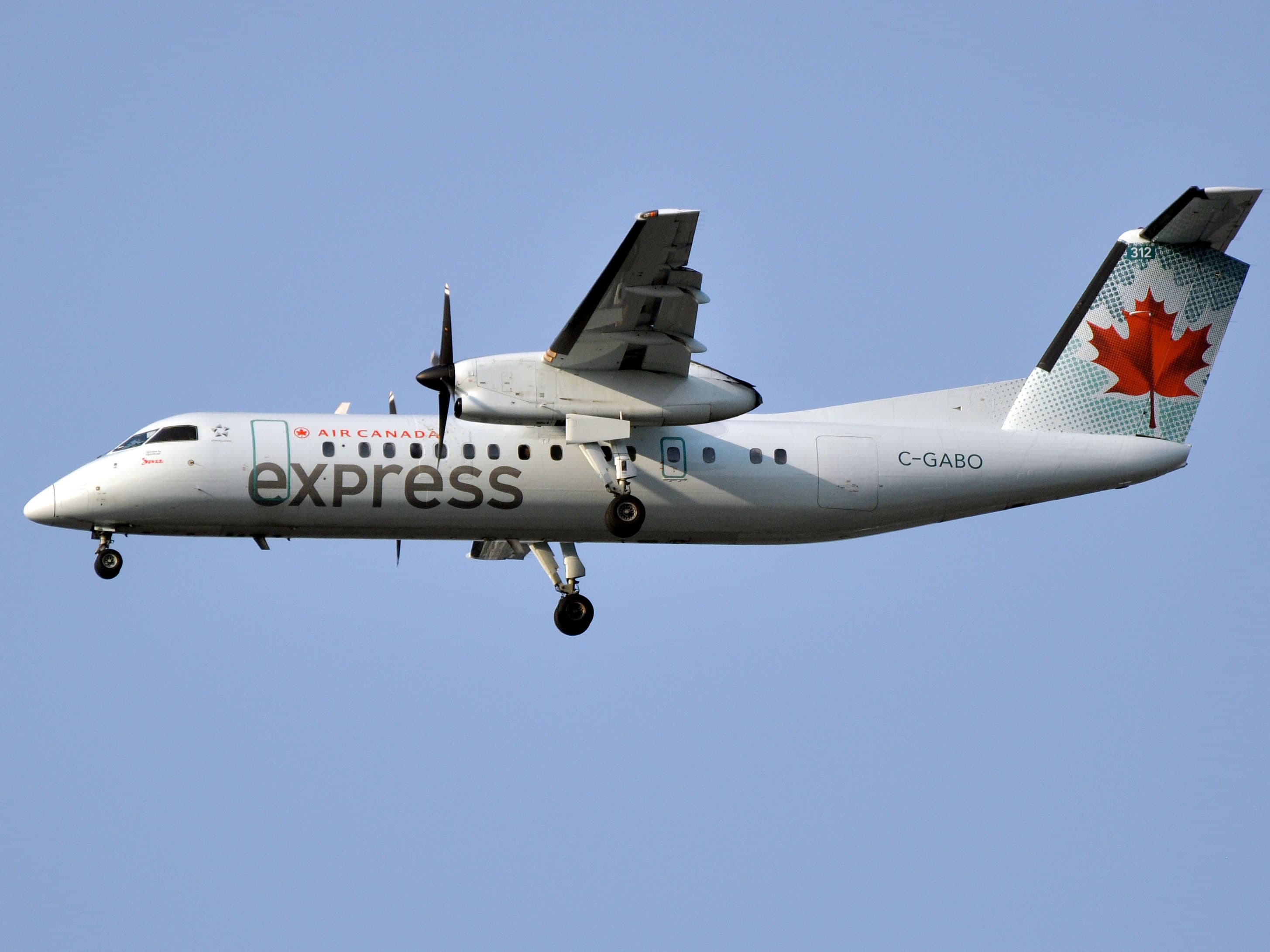
On June 25, an Air Canada regional flight operated by PAL Airlines experienced a serious in-flight emergency when the captain became incapacitated mid-flight. The aircraft, a De Havilland Canada Dash 8-400 (Q400), was en route from Newark (New Jersey) to Halifax (Canada) with 61 passengers on board when the captain suddenly showed signs of disorientation and unresponsiveness. The first officer immediately took sole command of the aircraft and initiated a diversion to Boston Logan International Airport.
Passengers reported unusual aircraft movements and cabin crew rushing to the cockpit. The captain was removed from the cockpit to allow the first officer to manage the aircraft under optimal conditions. Despite the gravity of the situation, the first officer maintained control and executed a normal landing at Boston, where emergency medical services were waiting. The captain was transported to Massachusetts General Hospital; his condition has not been publicly disclosed.
This incident is a textbook example of the principles taught in ATPL and ATC training: crew resource management (CRM), redundancy of skills, and the importance of maintaining composure under pressure. In commercial aviation, every pilot is trained to handle the flight alone if the other becomes incapacitated. For ATPL students, this reinforces the need for rigorous simulator training on incapacitation scenarios. For ATC trainees, it highlights the critical role of clear communication and coordination during a diversion, especially when medical emergencies are involved.
The event also underscores the importance of standard operating procedures (SOPs) and the "sterile cockpit" rule, which minimizes distractions during critical phases of flight. The first officer's ability to calmly manage the situation while coordinating with cabin crew and ATC demonstrates the value of recurrent training and teamwork. Air Canada quickly arranged re-routing for passengers to Halifax, showing the operational resilience of airlines in handling such events.
For aviation students, this case is a powerful reminder that emergencies can happen at any time, and the difference between a safe outcome and a disaster often lies in the professionalism and training of the crew. It also illustrates the importance of human factors in aviation safety—a key topic in both ATPL and ATC curricula.