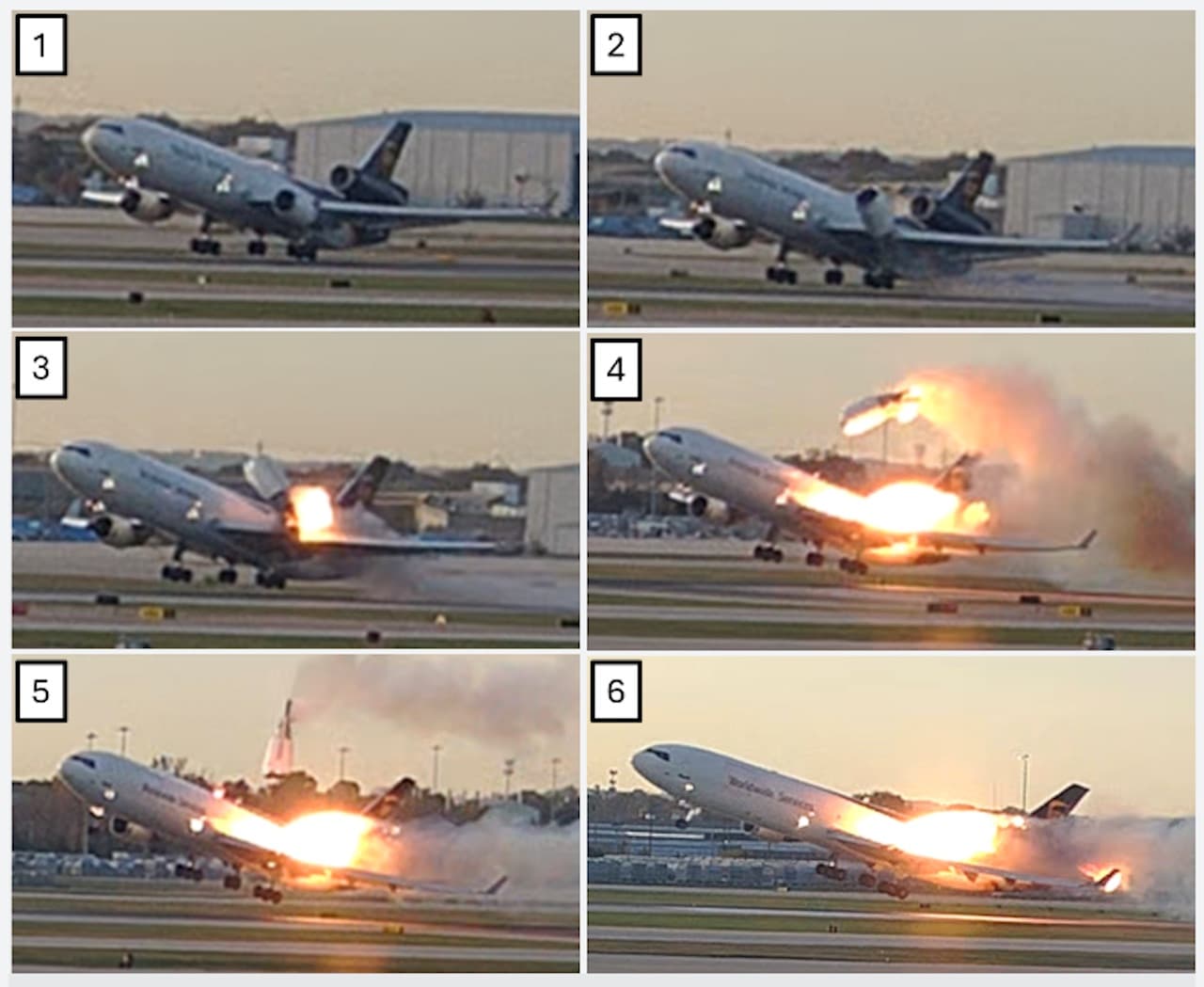
**The MD-11 is back in the air.** After more than six months of grounding following the catastrophic crash of a UPS cargo MD-11 in Louisville in November 2025, the Federal Aviation Administration (FAA) has lifted the flight ban on McDonnell Douglas's trijet. FedEx immediately returned its first MD-11F to commercial service, while rival UPS has chosen to permanently retire the type.
**The FAA's decision** follows the approval of a protocol developed with Boeing for a safe return to service, based on a campaign of inspections and structural calculations triggered by the UPS Flight 2976 accident. Under this protocol, operators must replace a structural component on the engine pylon before any return to flight, and each aircraft must undergo a dedicated maintenance and inspection cycle. FedEx has also planned crew refresher training modules specific to the MD-11 and its emergency management.
**The accident at the heart of the matter** occurred on November 4, 2025, when UPS Airlines Flight 2976, an MD-11F, crashed shortly after takeoff from Louisville, Kentucky. The aircraft never exceeded 30 feet of altitude before banking left and bursting into flames, with the left engine and its pylon separating and being thrown over the wing. The crash killed all three crew members and eleven people on the ground, with over twenty injuries. The NTSB's preliminary report identified fatigue cracks in the pylon support structure, specifically a metal ring around a spherical bearing at the rear pylon attachment. About 75% of the fracture surface showed fatigue signs, consistent with repeated stress.
**For ATPL and ATC students**, this case is a textbook example of how airworthiness directives (ADs) are issued and lifted, the role of the NTSB and FAA in safety investigations, and the operational decisions airlines make in response to grounding orders. It also highlights the importance of structural inspection programs and the human factors involved in emergency situations. Understanding the timeline from accident to return to service is crucial for future pilots and controllers who will manage such events.
**FedEx's strategy** contrasts sharply with UPS's exit. FedEx plans to keep its 29 MD-11s in service until 2032, with phased retirements starting in 2027. The company cites the aircraft's volumetric capacity and range as still relevant for express cargo growth, complementing its 777 and 767 fleets. This decision underscores the economic pressures airlines face when balancing safety, fleet renewal, and market demand.