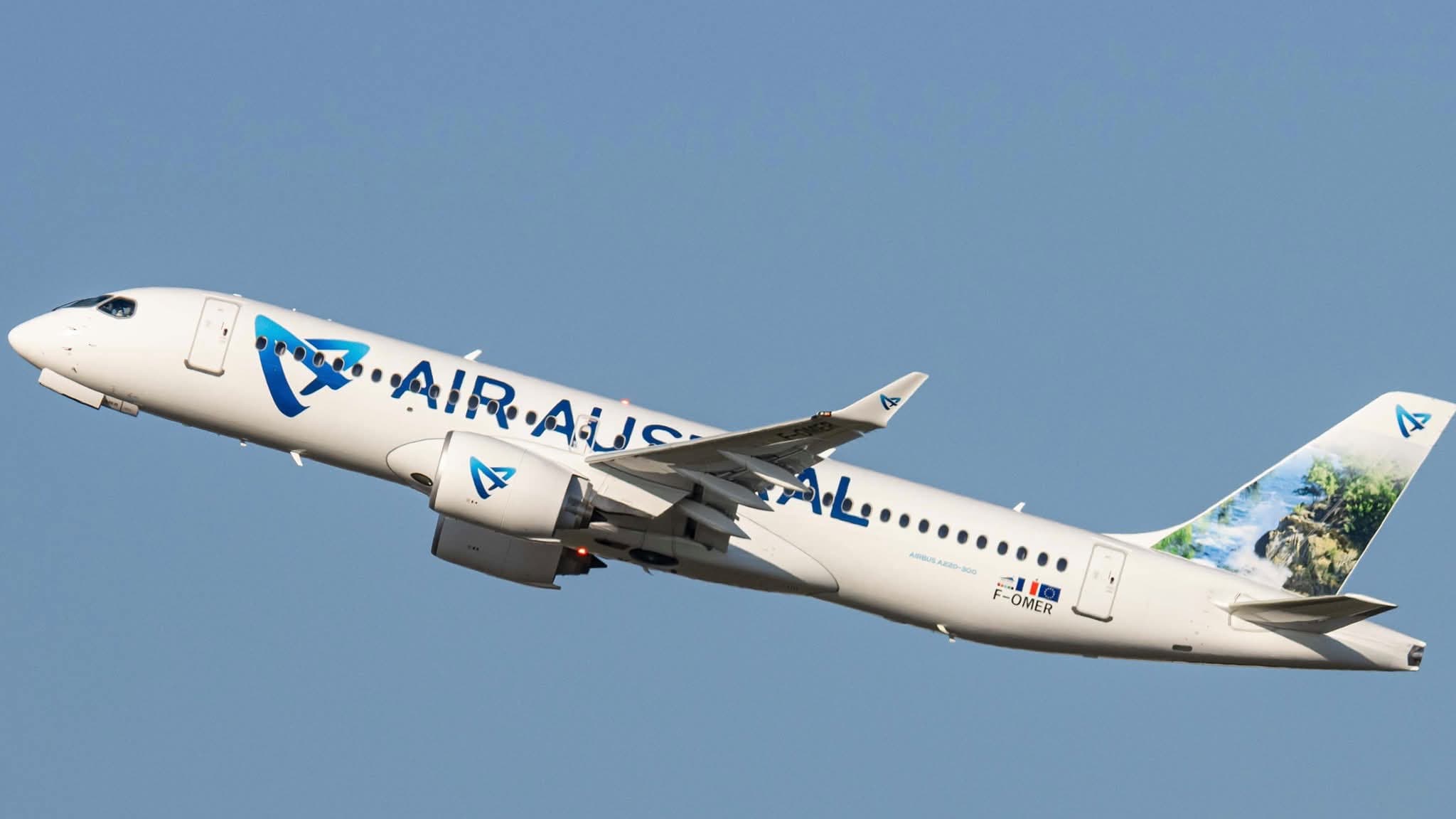
**A decade of connecting a French overseas department**
On 10 June 2016, Air Austral launched the first regular nonstop flight between Dzaoudzi (Mayotte) and Paris-Charles-de-Gaulle, a route that had long been considered technically challenging due to the island’s short runway. Ten years on, the airline reports nearly 950,000 passengers carried, over 17,000 tonnes of freight, and up to nine weekly frequencies during peak season. For ATPL and ATC students, this operation is a textbook example of how aircraft performance, regulatory constraints, and operational planning come together to serve a remote territory.
**The short-runway challenge**
Dzaoudzi-Pamandzi Airport has a runway just 1,930 metres long, bordered by the sea and hills, making it one of the shortest runways in the world to handle scheduled long-haul flights. The Boeing 787-8 Dreamliner, with its advanced aerodynamics and efficient engines, was chosen precisely because it could operate from this constrained strip while still reaching Paris nonstop. However, wet-runway conditions still force occasional fuel stops, typically in Nairobi. For ATC trainees, this route highlights the importance of performance calculations, weight-and-balance limits, and contingency planning for alternate airports. ATPL students will recognise the real-world application of take-off distance, climb gradient, and payload restrictions that are often studied in theory but rarely seen so starkly in daily operations.
**Cargo and connectivity**
Beyond passengers, the direct link has transformed freight flows to Mayotte, a department heavily dependent on imports from mainland France. The 787-8’s belly cargo capacity has carried over 17,000 tonnes in ten years, supporting local supply chains and economic activity. This dual role — passenger and cargo — is a recurring theme in airline network planning, and one that ATPL candidates should understand when studying aircraft economics and route profitability.
**Fleet and frequency evolution**
Air Austral initially tried a Boeing 777-200LR for the route but found it too large and too constrained by the short runway. The 787-8, configured with 262 seats in two classes, proved the right fit. Frequencies grew from two per week in 2016 to as many as nine in high season, reflecting sustained demand and load factors often above 90%. The airline also offers a Train + Air product connecting passengers to French regions. For students, this case illustrates how fleet selection directly impacts route viability, and how airlines adapt capacity to demand over time.
**Looking ahead: the long-runway project**
The French government and DGAC are studying an extension of Dzaoudzi’s runway to about 2,600 metres, which would reduce operational restrictions and open the airport to more aircraft types and operators. For now, Air Austral remains the sole operator of the direct link, and the 787-8 continues to be the backbone of Mayotte’s long-haul connectivity. This ongoing infrastructure debate is a reminder that aviation is never static — regulatory and political decisions shape the operational environment that pilots and controllers must navigate.
**What this means for your training**
This anniversary is not just a marketing milestone. It is a live case study in operational constraints, aircraft performance, and the socio-economic role of air transport. ATPL students should pay attention to the weight-and-balance implications of short-runway operations, while ATC trainees can study the coordination required for flights that may need technical stops or face payload restrictions. The Mayotte–Paris route is a perfect example of how theoretical knowledge from the classroom translates into real-world decision-making.