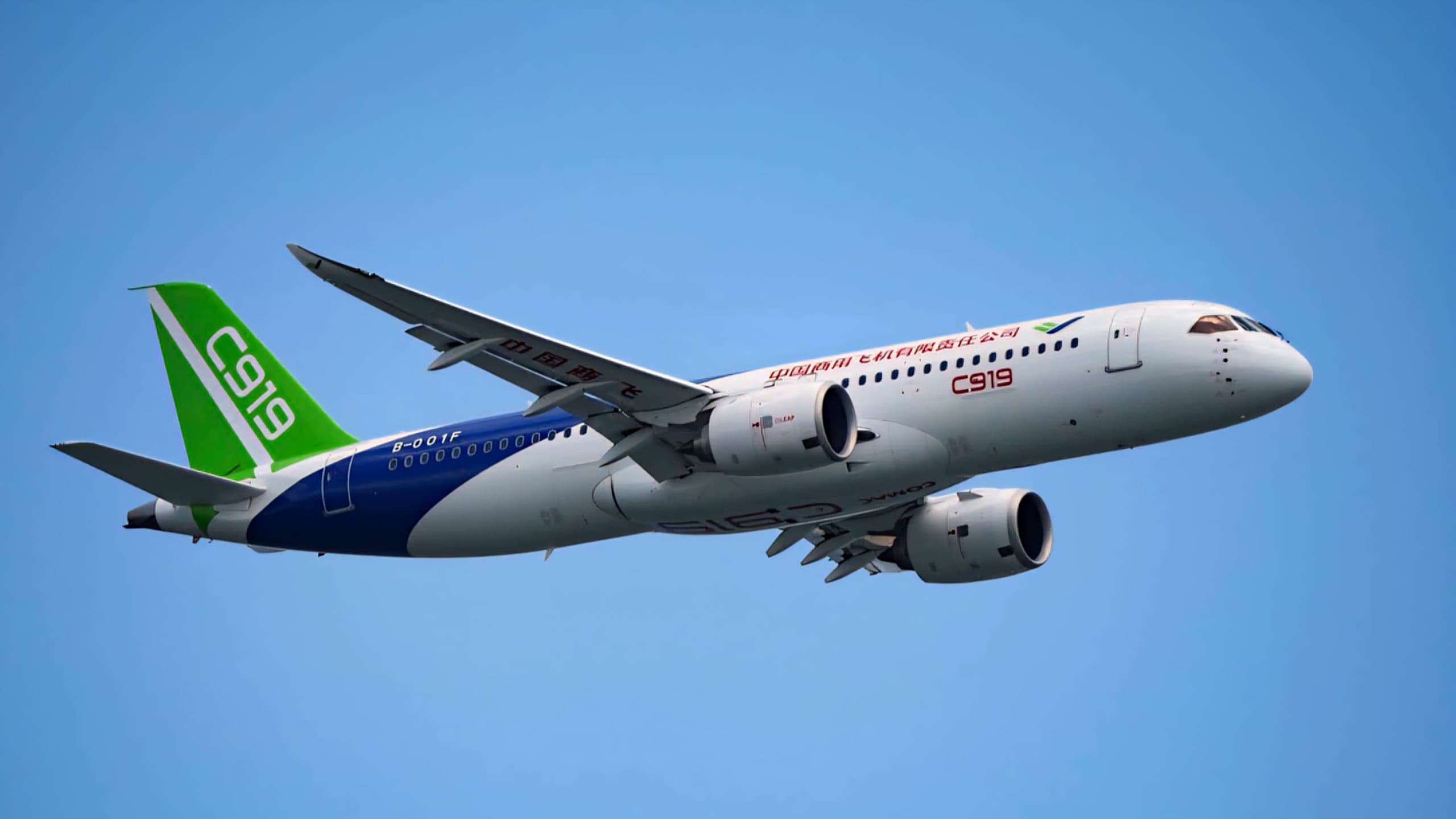
**Malaysia Airlines keeps the C919 in its sights, but with a clear condition: Western certification first.**
In an interview with the *South China Morning Post*, Bryan Foong, director of airline business at Malaysia Aviation Group (MAG), confirmed that the COMAC C919 is under long-term evaluation. However, he stressed that the aircraft has "missed the window" for the current narrowbody renewal cycle, which was locked in two to three years ago with orders for Airbus and Boeing aircraft, including the 737 family. As a result, Malaysia Airlines does not expect to place any new single-aisle orders until around 2035, pushing any potential C919 deal to the next decade.
The key hurdle remains certification by Western regulators. Foong stated that EASA and FAA validation is "preferred" because many countries rely on these agencies' safety assessments. Without it, the C919 cannot operate in Europe, and most Asian authorities will wait for a positive signal before granting access. COMAC has been pursuing EASA validation since 2019, with test flights in Shanghai involving European pilots since early 2026. The EASA executive director has indicated that full validation could take three to six more years, meaning European certification may not come before the end of the decade.
**Why this matters for ATPL and ATC students**
This development is directly relevant to your training. As future pilots or controllers, you will operate in an environment where aircraft certification standards (EASA, FAA, CAAC) determine which types can fly where. Understanding the C919's certification journey illustrates how regulatory frameworks shape fleet planning, route networks, and operational procedures. For ATC students, the introduction of a new aircraft type like the C919 may require new handling procedures, performance data, and coordination with Chinese authorities. For ATPL students, knowing the certification status of emerging competitors helps you anticipate future job markets and fleet compositions.
**Commercial stakes in Southeast Asia**
Malaysia is not indifferent to COMAC's ambitions. Transport Minister Anthony Loke has encouraged the manufacturer to be more aggressive internationally, while Tony Fernandes of Capital A (AirAsia's parent) confirmed "active discussions" with COMAC for a potential C919 order. COMAC has opened a representative office in Singapore to target the ASEAN market, and its regional jet, the ARJ21 (now C909), already operates in Vietnam, Laos, and Cambodia. However, Malaysia Airlines insists that beyond certification, the C919 must prove its operational performance, cost efficiency, and the robustness of COMAC's support and maintenance network in Southeast Asia—essential to compete with the Airbus-Boeing duopoly in a cost-sensitive market.
For ATPL and ATC students, this means staying informed about new aircraft types and their certification timelines. The C919 represents a potential shift in the narrowbody market, and its eventual entry into service outside China could affect route planning, crew training, and airspace management. As the aviation industry evolves, your ability to adapt to new technologies and regulatory changes will be a key asset.