**Luxair’s 2025 performance and 2026 expansion plans offer a practical case study for ATPL and ATC students on how regional airlines manage network growth, fleet modernisation, and competitive pricing in a volatile market.**
Luxair carried over 2.6 million passengers in 2025, a volume stable compared to 2024 despite a slight reduction in flight numbers. This indicates improved load factors — a key metric for airline profitability and operational efficiency. The leisure-driven demand, particularly to Portugal and the Balearic Islands, underpinned the carrier’s resilience. For students, this highlights the importance of route profitability analysis and seasonal demand forecasting, core topics in ATPL performance and planning modules.
**Network expansion and pricing strategy**
For 2026, Luxair will launch nine new routes, bringing its total network to 101 destinations — the largest in its history. New destinations include Alicante, Girona, Bilbao, Porto Santo, Zakynthos/Araxos, Tunis, Helsinki, and Edinburgh. The airline explicitly aims to keep fares competitive against low-cost carriers and rising fuel costs. This dual focus on network growth and price discipline mirrors real-world challenges faced by airline planners: how to add capacity without eroding yield. ATC students can relate to the operational complexity of integrating new city pairs into slot-constrained airports like Luxembourg Findel.
**Fleet modernisation and operational impact**
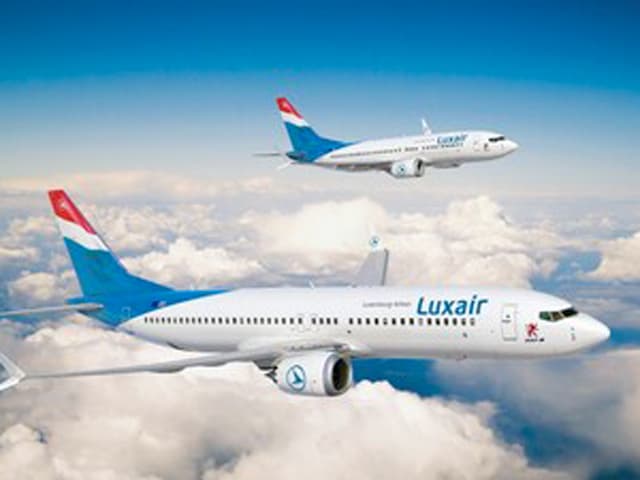
Luxair is renewing its fleet with six Embraer E195-E2s (first delivered late 2025) and two Boeing 737 MAX-8s (delivery in 2026), plus leased MAX-8s and orders for MAX-10s. The E195-E2, configured in a 2–2 layout with no middle seat, offers 136 seats and improved fuel efficiency. This transition from Dash 8-Q400s to modern jets affects runway performance, fuel planning, and noise profiles — all relevant to ATPL performance calculations and ATC separation standards. Students should note how fleet commonality (e.g., 737 MAX family) simplifies crew training and maintenance, a key consideration in airline operations.
**Broader industry context**
Luxair’s strategy reflects a wider trend among European regional carriers: leveraging leisure demand to offset business travel decline, while investing in fuel-efficient aircraft to manage environmental regulations and cost pressures. For ATPL candidates, understanding these commercial drivers is essential for airline management exams. For ATC trainees, the expansion of routes — especially to secondary airports like Girona or Porto Santo — illustrates how traffic distribution affects airspace demand and slot coordination.
**Conclusion**
Luxair’s 2025–2026 plan is a textbook example of balanced growth: stable traffic, targeted network expansion, fleet renewal, and price discipline. It provides a concrete scenario for aviation students to apply theoretical knowledge in route planning, load factor optimisation, and fleet management.