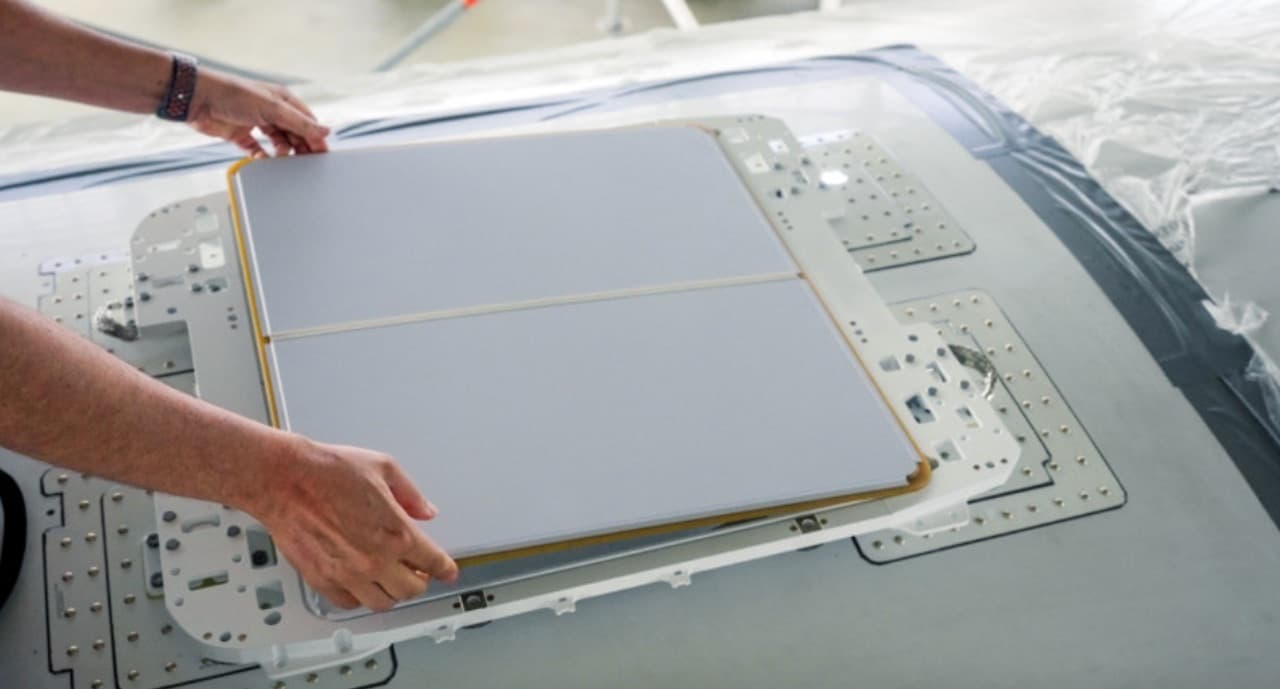
**Lufthansa Group is set to transform in-flight connectivity.** On August 19, an Airbus A320neo will become the first aircraft to operate with the new "Lufthansa Group Wi-Fi powered by Starlink" service. This marks the beginning of a massive rollout that will see approximately 850 aircraft across the group's airlines equipped with high-speed satellite internet by 2029. The service leverages Starlink's low Earth orbit satellite constellation, promising bandwidth that often exceeds what passengers experience at home or in the office.
**The deployment strategy is ambitious.** After Lufthansa, the service will extend to SWISS, Austrian Airlines, and Brussels Airlines, followed by ITA Airways, Edelweiss, Discover Airlines, Air Dolomiti, Lufthansa City Airlines, and Eurowings. This phased approach aims to minimize operational disruption while ensuring a consistent experience across short, medium, and long-haul fleets. For aviation professionals, this rollout highlights the growing importance of satellite-based connectivity in modern airline operations.
**Passenger access and usage rules are clearly defined.** The Wi-Fi will be free for Miles & More members and Travel ID users, with the portal sponsored by Mastercard. However, voice calls, video calls, and live streaming from the cabin remain prohibited to preserve passenger comfort. This balance between connectivity and cabin tranquility is a key consideration for airlines, and it reflects broader industry trends that ATPL and ATC students should understand.
**For ATPL and ATC trainees, this news is more than a passenger perk.** It underscores the need to understand how satellite communications (SATCOM) integrate with aircraft systems, from cockpit data links to passenger connectivity. As airlines adopt such technologies, future pilots and controllers must be aware of potential impacts on communication procedures, spectrum management, and operational efficiency. The Lufthansa initiative is a prime example of how technological advancements reshape the aviation ecosystem, making it essential for students to stay informed about industry developments beyond traditional flight training.
**The industrial challenge is significant.** Retrofitting hundreds of aircraft without disrupting schedules requires meticulous planning, a skill that aviation professionals will recognize as critical in their own careers. This rollout also signals a shift in passenger expectations, where high-speed internet becomes a standard amenity, influencing how airlines design their services and how crews manage onboard environments.