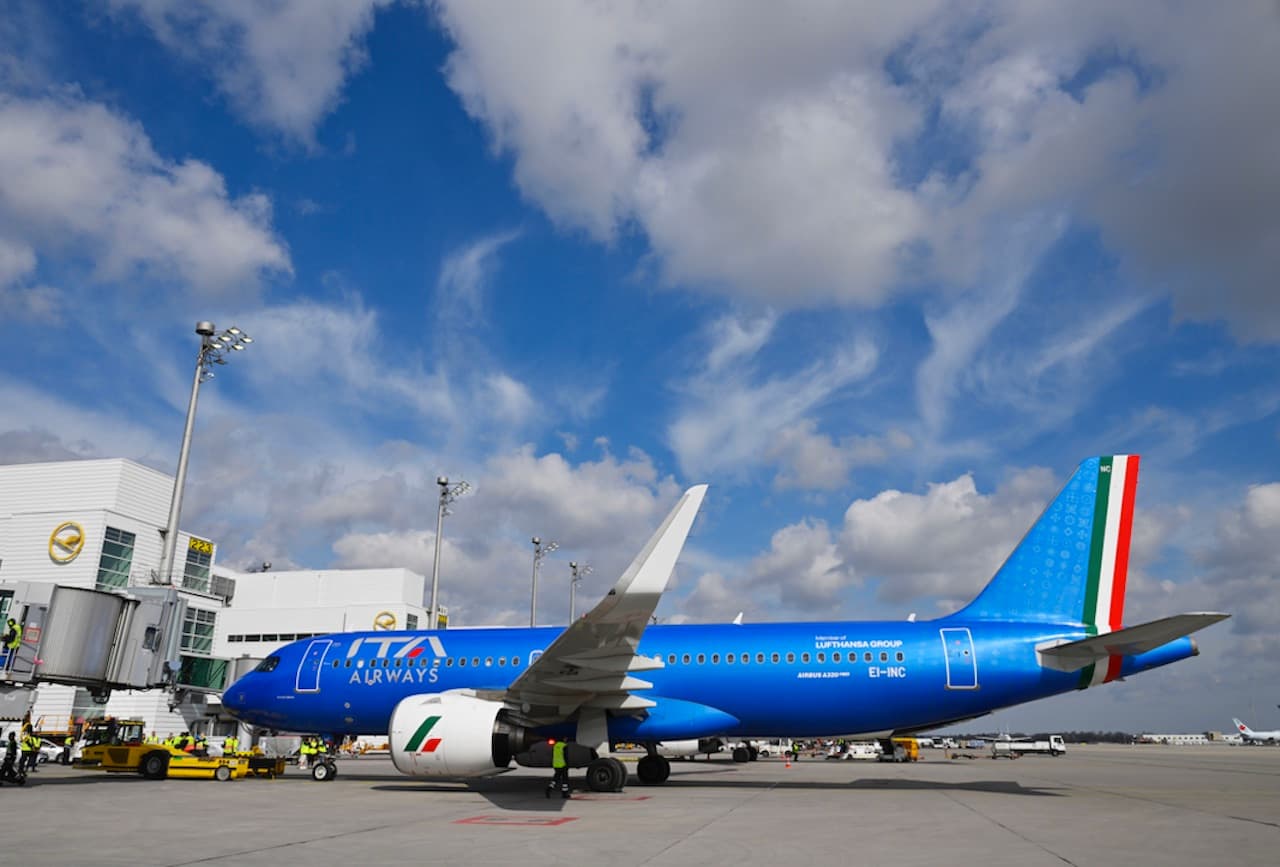
**Lufthansa Group has announced its intention to exercise an option in June 2026 to acquire an additional 49% of ITA Airways, raising its total stake from 41% to 90% by early 2027.** The transaction, valued at €325 million, is subject to approval from the European Commission and the U.S. Department of Justice. The Italian Ministry of Economy and Finance will retain a 10% stake initially, with a potential full buyout from Lufthansa starting in 2028.
This move follows the initial acquisition of 41% in January 2025, which already integrated ITA Airways as the group's fifth network carrier alongside Lufthansa, SWISS, Austrian Airlines, and Brussels Airlines. CEO Carsten Spohr highlighted that the integration has been the fastest in the group's history, with reservation systems, loyalty programs (Miles & More), and premium lounges already harmonized. The only exception remains transatlantic routes, where regulatory clearance is still pending.
**For aviation students, this consolidation has direct implications for route planning and hub dynamics.** Rome-Fiumicino is being positioned as a strategic hub for connections to Africa, the Middle East, and Latin America, complementing Lufthansa's existing hubs in Frankfurt, Munich, Zurich, and Vienna. This creates new opportunities for crew scheduling, aircraft allocation, and network optimization—topics central to ATPL and ATC training.
On the cargo side, Lufthansa Cargo has already begun marketing ITA's belly capacity, equivalent to adding three Boeing 777 freighters. Rome-Fiumicino is expected to see a 20% increase in cargo capacity, making it a key southern European hub. For ATC students, this means increased traffic complexity at Rome, with more wide-body movements and cargo operations requiring careful slot coordination.
The deal also intensifies competition on the Italian market against Ryanair, easyJet, Air France-KLM, and IAG. For ATPL students, understanding how such mergers affect route networks, code-sharing, and slot allocation at congested airports like Milan-Linate is essential for future airline management or operational roles.