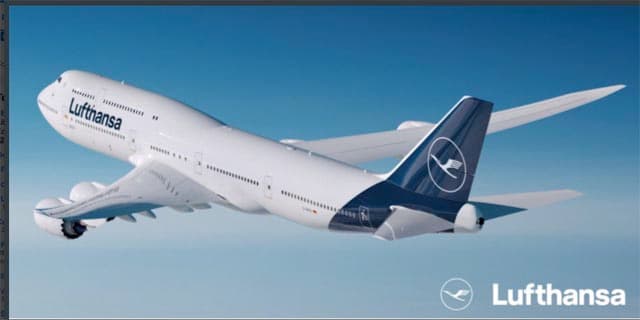
Lufthansa has announced an accelerated retirement of its four-engine aircraft, citing persistently high fuel prices and ongoing labor disputes. The German airline group will withdraw its remaining four Airbus A340-600s by the end of the summer 2026 schedule, ending over two decades of service for this iconic long-haul quadjet. Simultaneously, the Boeing 747-400 fleet will begin its phased exit, with two aircraft grounded from October for the 2026/2027 winter season, and full retirement expected by 2027. This leaves the Boeing 747-8 as the sole remaining "Jumbo Jet" in Lufthansa's passenger fleet.
The decision is driven by fuel costs that have more than doubled since pre-conflict levels, making quadjets economically unsustainable. Lufthansa notes that while 80% of its fuel needs are hedged, the remaining 20% are exposed to volatile market prices. Early retirement of the most fuel-thirsty aircraft is expected to reduce this exposure by about 10%. The airline emphasizes that the measures aim to achieve a disproportionate impact on fuel savings.
For ATPL and ATC students, this news underscores a major industry trend: the decline of four-engine aircraft in favor of more efficient twin-engine models like the Airbus A350-900 and Boeing 787. Understanding the economic drivers behind fleet decisions—fuel costs, maintenance, crew training, and route profitability—is crucial for future pilots and controllers who will operate in an increasingly twin-engine-dominated environment. The shift also affects airport operations, as ATC must adapt to changing traffic patterns and aircraft performance characteristics.
Beyond long-haul operations, Lufthansa is also restructuring its regional network. All 27 CRJ aircraft operated by Lufthansa CityLine will be retired due to high operating costs, with routes transferred to the low-cost subsidiary Lufthansa City Airlines. An additional five aircraft will be cut from short- and medium-haul operations during winter 2026/2027. Capacity will be redistributed to more efficient entities like Discover Airlines, which will receive nine additional A350-900s.
This fleet simplification strategy reflects a broader industry push toward cost efficiency and environmental sustainability. For students, it highlights the importance of fleet planning, fuel hedging, and operational flexibility—key topics in ATPL and ATC training that directly impact career decisions and operational awareness.