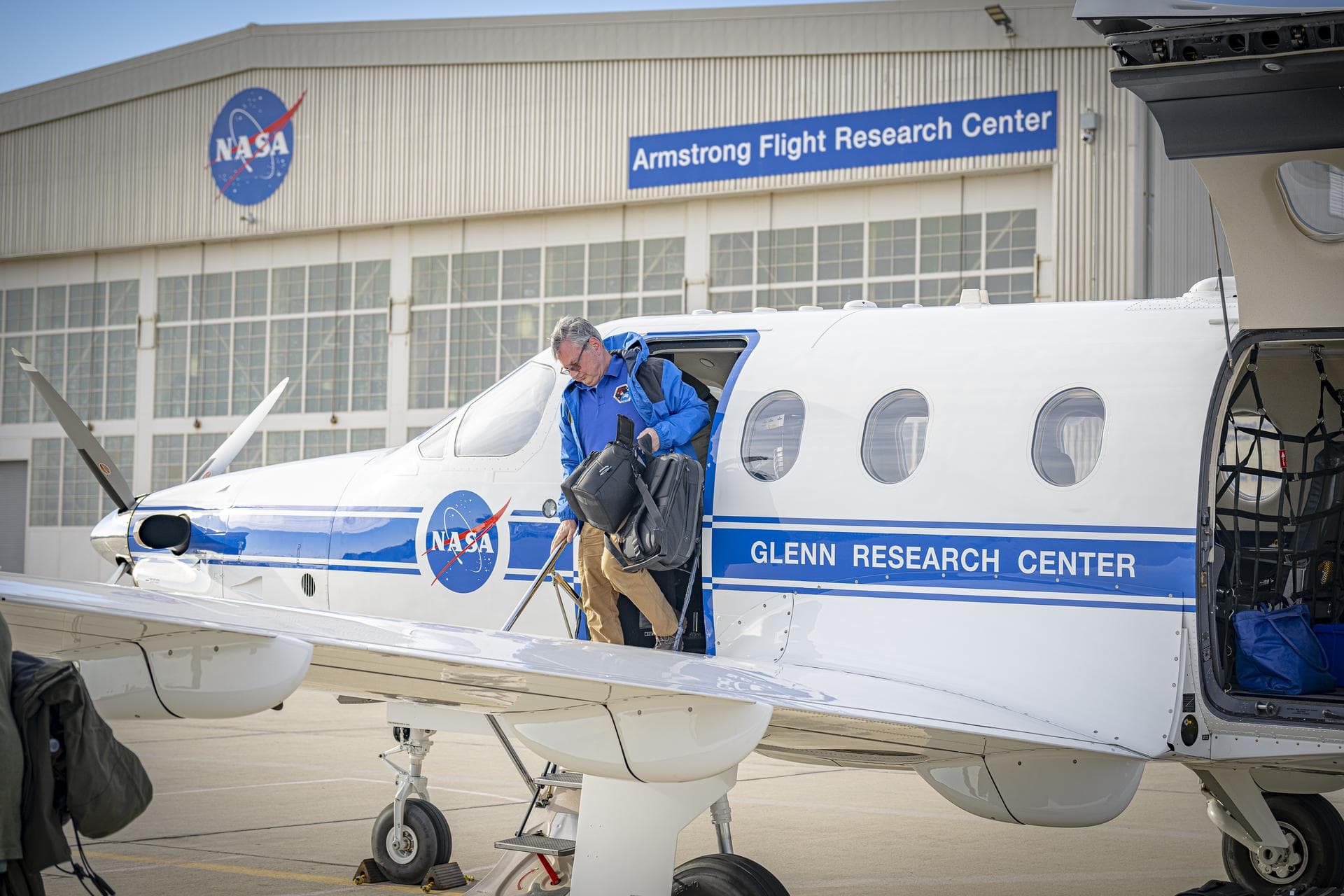
The Pilatus PC-12, a NASA research aircraft, has been transferred to the Armstrong Flight Research Center in California. Previously based at the Glenn Research Center in Cleveland, this aircraft will continue to support Glenn's research efforts while expanding NASA's flight research capabilities. The PC-12 has already proven its value as a research asset, notably by supporting a communications relay experiment with the International Space Station. Using a portable laser terminal, the PC-12 sent a 4K video stream relayed by a ground network and a satellite to the space station, which was able to send information back. The system helped to effectively penetrate clouds. The aircraft has also been used to study surveillance systems that could help manage future air taxi traffic in cities. From its new home at Armstrong, the aircraft will support a variety of research conducted by the agency, industry, and universities, including the continuation of research and development led by the Glenn Research Center. The PC-12 will be joined by another aircraft, the T-34, which has also been transferred to Armstrong for evaluation for research and pilot training purposes. The T-34 will allow NASA pilots to conduct flight research or train to fly the PC-12 when the larger aircraft is in maintenance or modification. The aircraft are supported by NASA's Aeronautics Research Mission Directorate. The transfer of the PC-12 to Armstrong is a significant step for NASA's aeronautics research, as it will enable the expansion of flight research capabilities and support a variety of innovative research projects. Aeronautics students, such as those pursuing ATPL or ATC training, can learn from this initiative, as it highlights the importance of research and development in the field of aviation. NASA's ability to innovate and adapt its resources to meet the changing needs of aeronautics research is a model to follow for future aviation professionals. The development of new technologies and the testing of new ideas are essential to improving the safety, efficiency, and sustainability of aviation, and aeronautics students should be aware of these efforts and their potential impact on the industry. In summary, the transfer of the PC-12 to Armstrong is a significant step for NASA's aeronautics research, and aeronautics students can learn from this initiative by understanding the importance of research and development in the field of aviation.