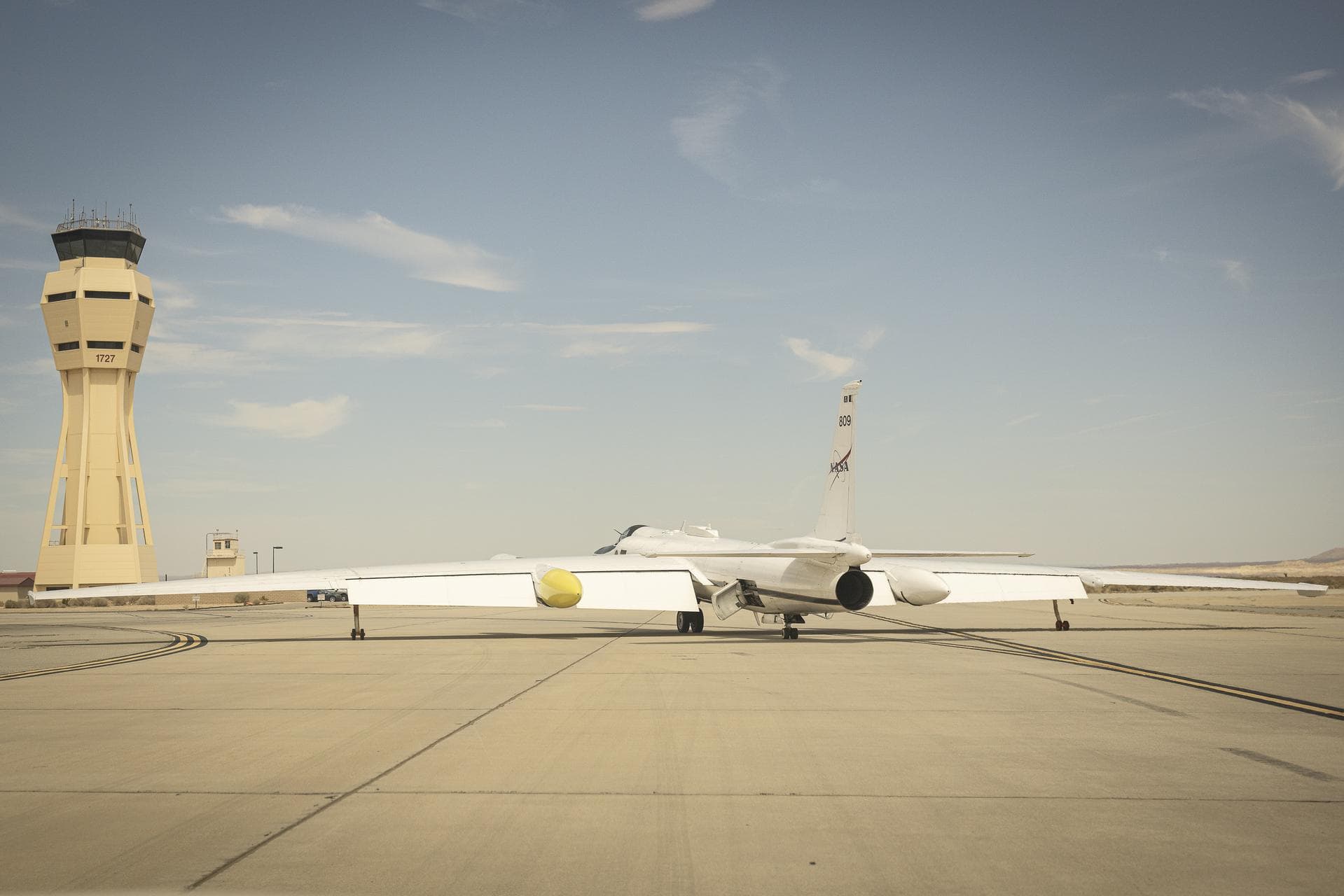
The NASA Armstrong Flight Research Center, situated in the Mojave Desert, California, is an iconic hub of aeronautic innovation. This is where Chuck Yeager broke the sound barrier, and where engineers are now working on the electric and autonomous aircraft of tomorrow. The Armstrong Center contributes to NASA's broader mission of innovation and collaboration by leveraging its unique location. The history of the Armstrong Center dates back to 1947, when 13 engineers and technicians from the National Advisory Committee for Aeronautics (NACA), the precursor to NASA, arrived at Muroc Army Airfield, now Edwards Air Force Base, to establish the Station for High-Speed Research. Their mission was to prepare for the first supersonic research flights of the X-1, the first aircraft to break the sound barrier in level flight. This historic moment marked the beginning of a new era in aviation and helped establish Edwards Air Force Base as a key element in NASA's flight research enterprise. Today, NASA's mission continues this tradition, supporting cutting-edge projects in aeronautics, such as the supersonic X-59 aircraft, hypersonic research, and emerging technologies in advanced air mobility. The Armstrong Center is at the forefront of these efforts, collaborating with other NASA centers and industry partners. The choice of Edwards as the location for the Armstrong Center was not coincidental. The base offers unique access to the country's largest secured flight test area, equipped with specialized test instruments. The base spans approximately 470 square miles of critical mission terrain, including the 44-square-mile surface of Rogers Dry Lake. This test area allows for complex and secure flight test scenarios for NASA teams, across multiple programs. The natural geography of the region played a crucial role in aeronautic advancements. As early as 1937, nearly the entire US Army Air Corp fleet conducted maneuvers over Rogers Dry Lake, which provides a flat and secure surface for emergency landings. With the United States' involvement in World War II, the region's importance grew, attracting more resources, new facilities, and a focus on research and experimentation with new aircraft designs. Today, the airspace above the region includes the supersonic Bell X-1 corridor, a designated restricted airspace section within the Edwards test area. This corridor provides a secure and controlled environment for supersonic and transonic flight tests, enabling high-speed precision maneuvers over the Mojave Desert. Combined with nearly perpetual flying weather and low population density, this unique airspace supports uninterrupted flight operations for NASA's aeronautics programs. The Armstrong Center is also at the forefront of innovation culture, with a rich history of X-planes designed to push the boundaries of flight and test new technologies. From critical body designs for space research and atmospheric reentry to digital flight control systems, now standard in commercial aviation, NASA teams have tested it all at Edwards. This innovation culture continues today, with advancements in advanced air mobility, electric propulsion, and autonomous flight systems. Finally, the Armstrong Center supports a wide range of missions, from Earth science missions to planetary research. Its aircraft, such as the ER-2 and the Gulfstream, carry instruments that study climate, meteorology, and atmospheric composition, contributing to NASA's scientific objectives in partnership with the agency's scientific teams. In summary, the NASA Armstrong Flight Research Center is a unique place where innovation and collaboration come together to push the boundaries of aeronautic technology. Students in aviation training can draw valuable lessons from the center's history and achievements, which continue to play a key role in the future of aviation.