**A Giant Takes Shape: Latécoère Joins the WindRunner Program**
French aerospace equipment manufacturer Latécoère has been chosen by US startup Radia to develop the Electrical Wiring Interconnection System (EWIS) for the WindRunner, a cargo aircraft billed as the largest in the world. This system encompasses all wiring harnesses, connectors, and the overall electrical architecture of the aircraft. In a press release, Latécoère highlighted its "deep expertise in aeronautical electrical systems acquired through civil and defense programs." The collaboration will cover the definition of the electrical architecture, system integration, and the establishment of a technical baseline capable of meeting the program's specific constraints. Latécoère teams will work from its design office in Toulouse, France, as well as on-site at Radia in Boulder, Colorado, to support the various stages of aircraft development.
**WindRunner: A Giant for Oversized Cargo**
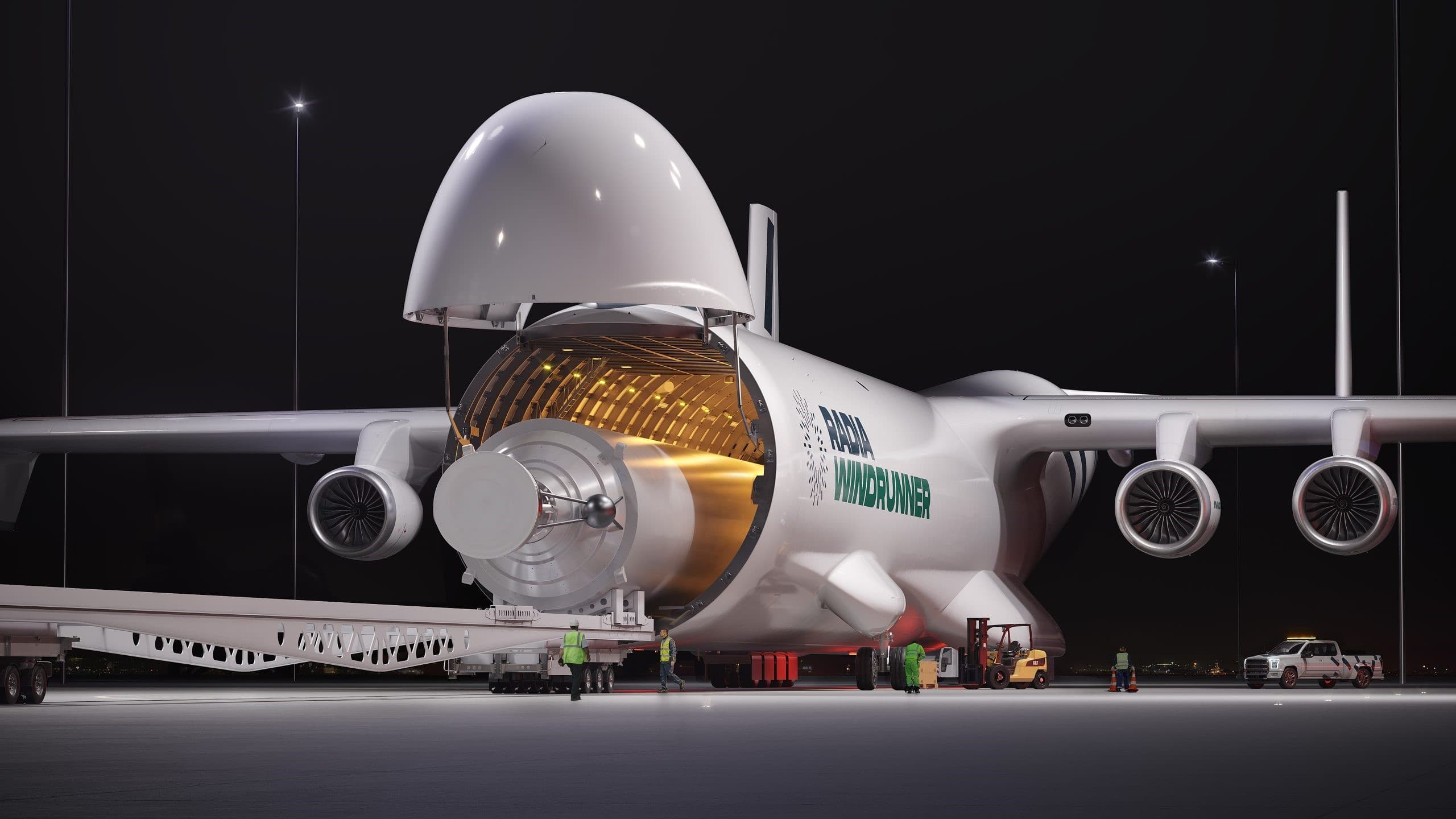
The WindRunner is a giant cargo aircraft project designed by Radia to directly transport very large components, particularly for the wind energy industry. The aircraft is touted as "the world's largest cargo aircraft," with extraordinary dimensions: approximately 109 meters long, 80 meters wingspan, and 24 meters high. According to Radia, the aircraft can carry up to 72.6 tonnes of payload, but crucially, it can accommodate pieces up to 105 meters long, 10 meters wide, and 9 meters high, thanks to a cargo hold offering a volume of about 6,800 to 7,700 m³—far larger than current freighters. The aircraft is designed to operate from runways as short as 1,800 meters, including unpaved surfaces, with a cruise speed around Mach 0.6 and a range of about 2,000 km at maximum payload. For comparison, a Boeing 747-400F offers a maximum payload of about 110 tonnes but with a significantly shorter fuselage and a much less voluminous hold, optimized for standard pallets and containerized freight rather than outsize pieces. The Boeing 777F has a capacity of around 100 tonnes of freight and much greater range, but its hold volume and dimensions remain far behind those announced for the WindRunner, which prioritizes the transport of XXL components over medium ranges rather than classic long-haul freight.
**An Industrial Ecosystem Under Construction**
The selection of Latécoère is part of a series of partnerships announced by Radia around the WindRunner program. The startup has also selected Stirling Dynamics for flight control systems and the integration of certain critical systems. "These partnerships aim to advance the development of the world's largest cargo aircraft and strengthen the program's industrial base," explains Radia, emphasizing the contribution of European suppliers in the aircraft's design. According to Aviation Week, this strategy allows the startup to "continue to highlight European suppliers" as WindRunner is also presented as a response to NATO's strategic transport needs. For Latécoère, this contract is an opportunity to consolidate its position as a preferred partner on major aerospace programs. The French equipment manufacturer believes this project "demonstrates the ability of its design office and teams to support complex programs, including entirely new aircraft architectures."
**A Timeline Yet to Be Refined**
Radia targets a first flight of the WindRunner in the second half of the decade, with commercial service envisioned around 2030, subject to development progress and certifications. The project remains a development program at this stage, but the arrival of partners like Latécoère strengthens its industrial credibility. "These collaborations reinforce critical capabilities in aircraft system integration, flight controls, and electrical architecture, as the WindRunner program enters a new phase of development," summarizes Radia in its official communication.