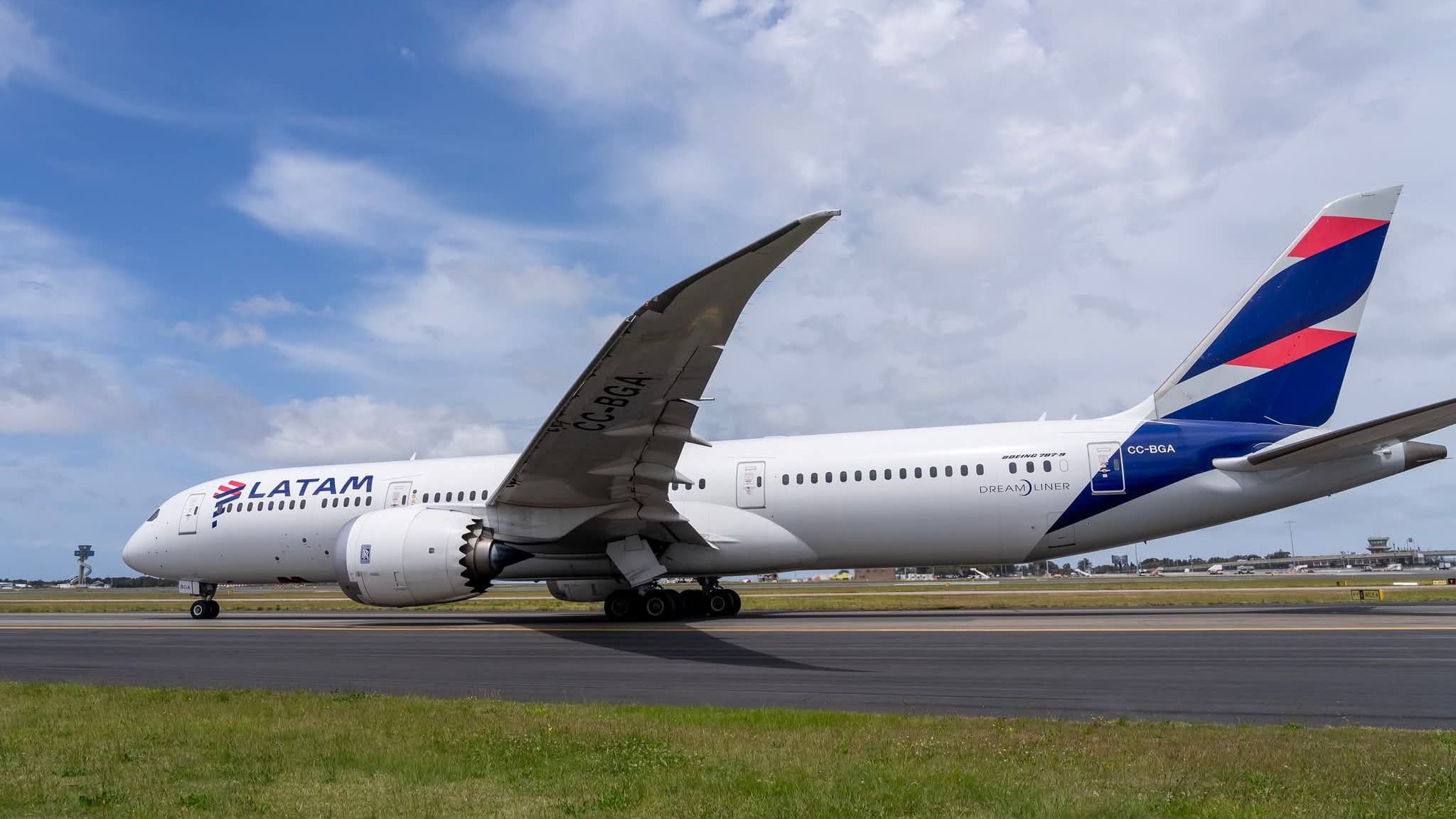
**LATAM Returns to Rolls-Royce for Three New Boeing 787s: A Lesson in Engine Strategy for ATPL and ATC Students**
On April 29, 2026, LATAM Airlines announced it had selected the Rolls-Royce Trent 1000 XE engine to power three additional Boeing 787 Dreamliners, marking a significant return to the British engine manufacturer after a period of technical uncertainty and a recent diversification to GE Aerospace's GEnx engines. This decision is rooted in a comprehensive durability improvement program for the Trent 1000 family, a strengthened global maintenance network, and operational experience gained from the Trent 7000, which has already accumulated over two million flight hours with redesigned high-pressure turbine blades.
For ATPL and ATC students, this news is far more than a corporate announcement—it is a real-world case study in engine selection strategy and its operational implications. The Trent 1000 XE incorporates a redesigned high-pressure turbine blade with a 40% increase in cooling airflow, aimed at more than doubling the "time on wing" before scheduled maintenance. This directly impacts flight planning and dispatch reliability, as engine durability reduces the risk of unscheduled maintenance events that can disrupt schedules and cause AOG (Aircraft on Ground) situations. ATC professionals will appreciate how improved engine reliability can reduce the frequency of last-minute flight cancellations or delays, smoothing traffic flow and reducing workload.
Rolls-Royce has also invested heavily in its MRO network, with new dedicated facilities in the UK, Singapore, and Germany, increasing annual shop visit capacity and reducing turnaround times. This is critical for airlines like LATAM, which operates a fleet of approximately 38 Dreamliners (10 787-8s and 28 787-9s), the vast majority powered by Rolls-Royce. The addition of three more Trent 1000 XE-powered aircraft rebalances LATAM's engine strategy, combining competition between suppliers with technical continuity. For ATPL students studying aircraft systems and performance, understanding the trade-offs between engine manufacturers—such as fuel efficiency, maintenance costs, and reliability—is essential for future decision-making in airline operations.
From an ATC perspective, the concept of "AOG-free fleets" mentioned by Rolls-Royce is particularly relevant. When an aircraft is grounded due to an engine issue, it can cause cascading delays across the network, affecting slot times, airspace capacity, and passenger connections. Improved engine durability and MRO support reduce these disruptions, contributing to more predictable operations. This aligns with broader industry goals of enhancing operational efficiency and reducing environmental impact through fewer diversions and less fuel waste.
In summary, LATAM's return to Rolls-Royce for the Trent 1000 XE underscores the importance of engine reliability and maintenance planning in modern aviation. For ATPL and ATC students, this case illustrates how technical improvements in engine design and MRO networks directly influence flight safety, schedule reliability, and air traffic management. Understanding these dynamics will be invaluable as they progress in their careers.