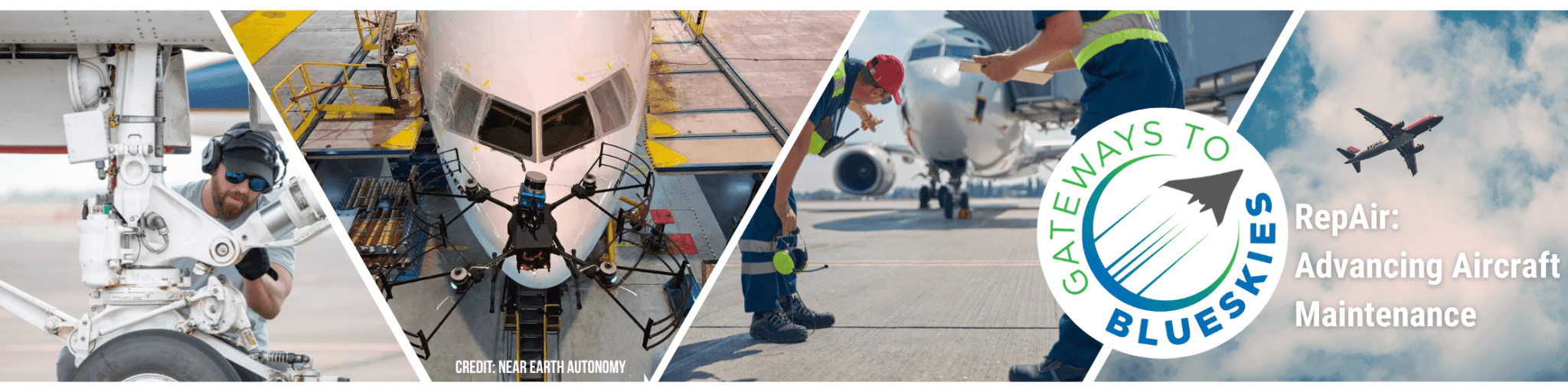
The NASA has selected eight student teams as finalists for the Gateways to Blue Skies competition, which aims to address a critical challenge for the US aviation industry: aircraft maintenance. The challenges facing the commercial aviation industry include a shortage of skilled maintenance workers and increasing requirements to keep increasingly complex aircraft operational for longer. With the Gateways to Blue Skies competition, NASA is leveraging student innovation to address some of the biggest issues in aviation. The current competition, RepAir: Advancing Aircraft Maintenance, is looking for solutions that can have an immediate impact. Teams were invited to design innovative systems and practices to improve commercial aircraft maintenance and repair operations. The eight finalist teams will receive a $9,000 prize and will proceed to the second phase of the competition. This phase will include a review of their final document, an infographic, and a presentation at the Gateways to Blue Skies 2026 forum, which will be held on May 18 at NASA's Langley Research Center in Virginia. The winning team members who meet the eligibility criteria will then be offered an internship with NASA's Aeronautics division. The finalists' projects represent a range of capabilities, including robotic inspections, augmented reality glasses, and sensor and machine learning architectures. The Gateways to Blue Skies competition is conducted by NASA's Transformative Aeronautics Concepts program under the Aeronautics Research Mission Directorate. This competition is important for the aviation industry as it encourages innovation and creativity among students, who could potentially bring innovative solutions to improve the efficiency, safety, and costs of aircraft maintenance. The outcomes of this competition could have a significant impact on the future of the aviation industry. For ATPL or ATC students, this competition is particularly relevant as it highlights the importance of aircraft maintenance in the industry. The innovative solutions proposed by the teams could eventually be integrated into maintenance operations, thereby improving the safety and efficiency of flights.