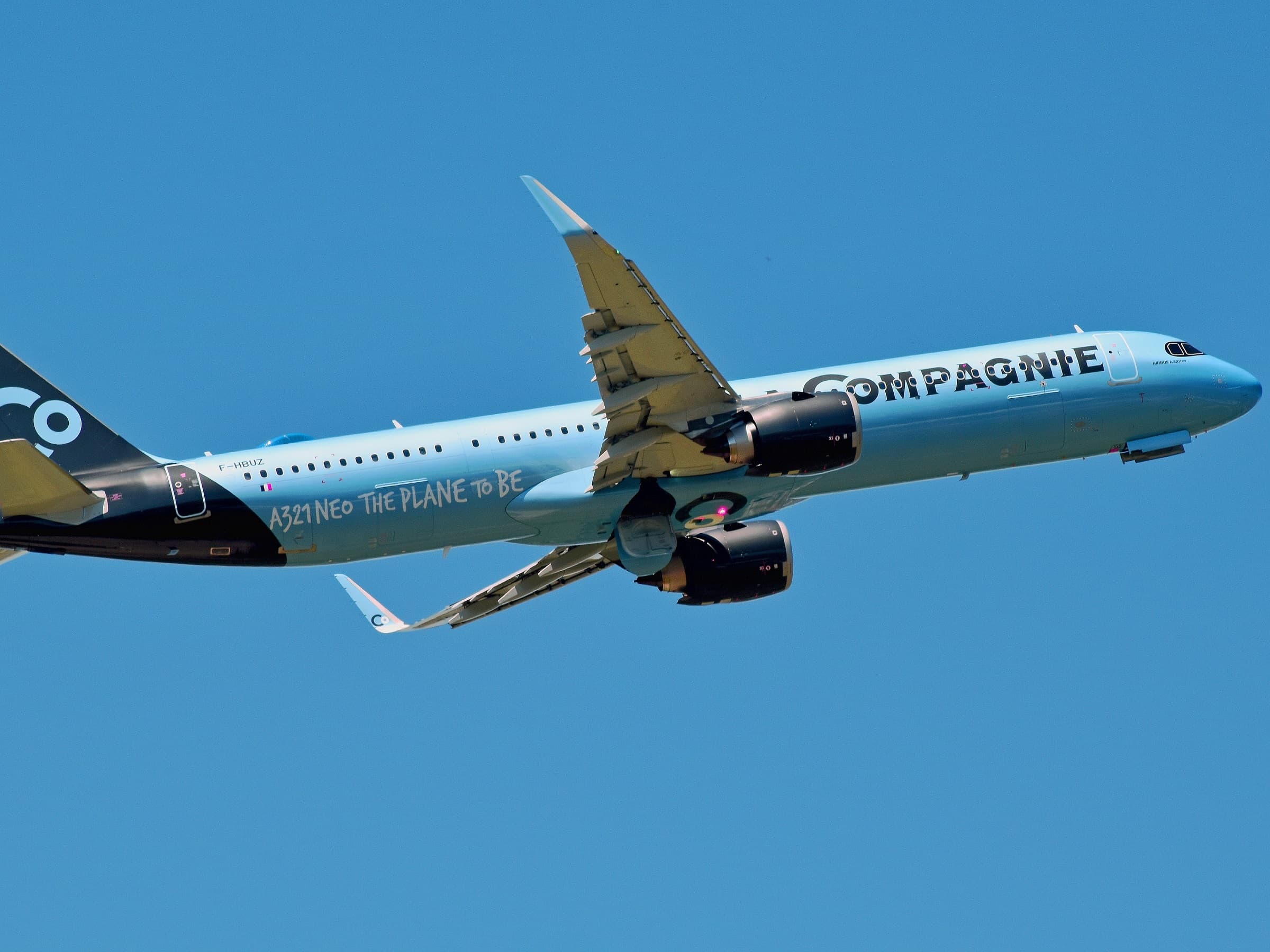
**La Compagnie has announced it will extend its Nice–Newark service into the winter season for the first time, operating two weekly rotations from winter 2026/2027. This marks a milestone for Nice-Côte d'Azur Airport, which has historically seen transatlantic routes limited to the summer peak.**
For ATPL students, this development is a practical case study in seasonal route planning and fleet utilisation. La Compagnie's decision to maintain a premium all-business-class service year-round on the Nice–Newark sector reflects a strategic bet on sustained demand from both North American tourists and business travellers in southern France. The airline will use its Airbus A321neo aircraft configured with 76 lie-flat seats, offering a boutique long-haul product that balances operational efficiency with high yield. Understanding how carriers like La Compagnie optimise aircraft utilisation across seasons is directly relevant to airline management modules in ATPL training.
**The winter schedule includes departures from Nice on Tuesdays and Fridays at 12:00 local time, arriving in Newark at 15:30. Return flights leave Newark on Mondays and Fridays at 20:30, arriving in Nice the next morning at 10:20.** This timing allows for convenient same-day connections from New York to the French Riviera, a factor that ATC students should note when studying slot coordination and airport capacity management at regional hubs like Nice. The airport's strategy to attract year-round long-haul services also highlights the importance of infrastructure planning and airspace management to accommodate increased traffic during off-peak seasons.
**For ATC trainees, the extension of this route provides a real-world example of how seasonal traffic patterns influence air traffic flow management.** Nice-Côte d'Azur Airport is already preparing for a record summer 2026 with 15 long-haul routes, including seven to the United States. Adding a winter transatlantic service helps smooth demand across the year, reducing the sharp seasonal peaks that challenge both airport operations and air traffic control. This is a key concept in the ATM syllabus: balancing capacity and demand through route development and scheduling.
**La Compagnie's all-business-class model also offers lessons in aircraft performance and economics.** The A321neo's long-range capability and lower fuel burn per seat make it viable for thinner routes like Nice–Newark, which might not support a widebody operation year-round. ATPL students can analyse how aircraft type selection, cabin configuration, and route frequency interact to determine profitability. The airline's focus on a premium product with free high-speed Wi-Fi and chef-designed meals also illustrates the competitive dynamics of the transatlantic market, where differentiation is crucial.
**In summary, this announcement is not just a piece of aviation news—it is a teaching tool for future pilots and controllers.** It demonstrates how airlines adapt to market trends, how airports build connectivity, and how operational decisions ripple through the entire aviation ecosystem. For students preparing for their ATPL or ATC exams, understanding these real-world applications of theoretical knowledge is invaluable.