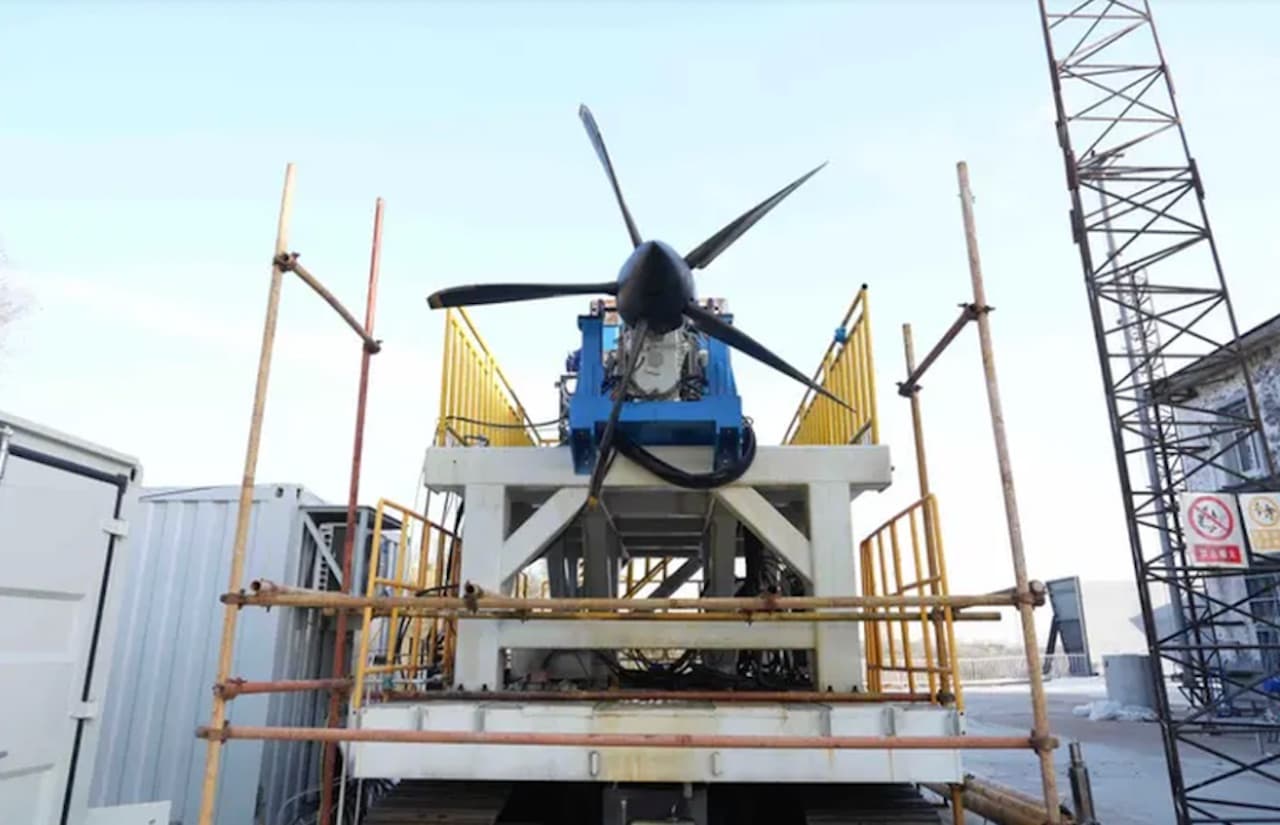
China has achieved a major milestone in the development of hydrogen propulsion for aviation with the successful test flight of a 7.5-ton cargo plane equipped with a megawatt-class hydrogen turbopropulseur. The 16-minute flight, which took place in Zhuzhou, Hunan Province, is the world's first of its kind, according to Chinese authorities.
The unmanned cargo plane was fitted with the AEP100, a hydrogen turbopropulseur designed and developed in China by the Aero Engine Corporation of China (AECC). The engine performed normally throughout the flight, and the aircraft completed all planned maneuvers without incident.
This test flight is the result of a broader effort to develop a hydrogen industry in China, aimed at reducing the country's dependence on fossil fuels and promoting the use of hydrogen energy in transportation and energy. China has launched several pilot programs for hydrogen in transportation and energy, with targets for the deployment of hydrogen vehicles and the development of production, storage, and distribution infrastructure.
The development of hydrogen propulsion for aviation poses significant technical challenges, including the energy density of hydrogen, cryogenic storage on board, and the integration of large tanks into the aircraft. However, this test flight provides important proof of concept, demonstrating that a turbopropulseur of this power can operate stably in flight, integrated into an aircraft and its systems.
For aviation students, this development is important as it shows the efforts countries are making to reduce their dependence on fossil fuels and promote the use of hydrogen energy in aviation. This could have significant implications for the future of the aviation industry and the careers of pilots and air traffic controllers.
Finally, it is essential to note that while this test flight is a significant milestone, many challenges remain to be overcome before hydrogen propulsion becomes a commercial reality in aviation. However, this development demonstrates China's determination to play a leading role in the development of hydrogen propulsion for aviation, and aviation students should be aware of these developments to stay up-to-date with the latest trends and technologies in the industry.