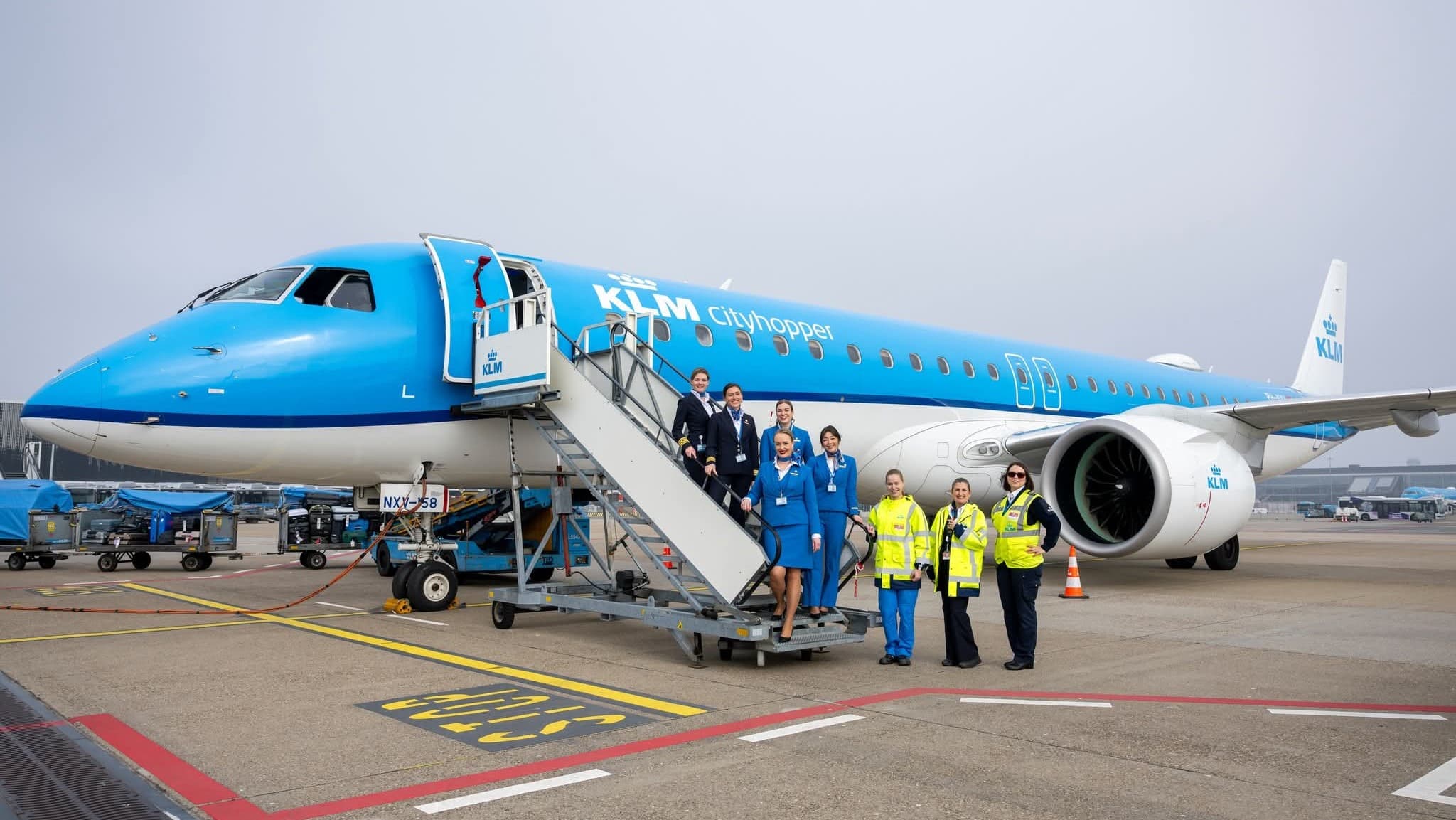
**KLM Cityhopper's Regional Fleet Renewal: A Strategic Duel Between Airbus and Embraer**
KLM Cityhopper, the regional subsidiary of KLM, is at a crossroads as it evaluates a critical order for approximately 25 regional jets to replace its aging Embraer E190s. The competition pits the Airbus A220-100 against Embraer's E190-E2, with a decision expected by the end of the year. This battle is not just about aircraft; it reflects broader trends in regional aviation that directly affect ATPL and ATC students.
**The Core of the Competition**
According to Brazilian economic daily Valor, KLM Cityhopper's CEO Maarten Koopmans confirmed ongoing negotiations with both manufacturers. The airline currently operates an all-Embraer fleet of 61 aircraft, including 20 E195-E2s, 19 E190s, and 17 E170s. The new order aims to replace some of the first-generation E190s, which seat around 100 passengers. The Airbus A220-100 offers 100-120 seats, while the Embraer E190-E2 can accommodate up to 114 passengers. This decision will shape the airline's operational efficiency and network strategy for years to come.
**Operational and Strategic Implications**
For ATPL students, this competition highlights the importance of fleet commonality and type rating management. Choosing the A220 would introduce a new aircraft type to KLM Cityhopper, requiring pilots to obtain additional type ratings and maintenance teams to adapt to a different airframe. Conversely, sticking with Embraer would maintain operational continuity, leveraging existing training programs and spare parts inventory. ATC students should note that introducing a new aircraft type can affect airport slot management, turnaround times, and noise profiles, especially at busy hubs like Amsterdam Schiphol.
**Broader Market Context**
This is not an isolated case. In 2025, LOT Polish Airlines faced a similar choice and opted for the Airbus A220, ordering up to 84 aircraft. KLM Cityhopper's decision will be closely watched as a bellwether for regional fleet renewal across Europe. The airline is also retrofitting its existing E195-E2s to add four extra seats, increasing capacity from 132 to 136, which reduces CO₂ emissions per passenger by about 3%. This demonstrates how airlines optimize existing assets while planning future investments.
**What This Means for Students**
For ATPL candidates, understanding fleet renewal strategies is crucial for career planning. Airlines often prioritize pilots with type ratings on new fleet types. ATC trainees should recognize that fleet changes can alter traffic patterns, especially if new aircraft have different performance characteristics (e.g., climb rates, approach speeds). This case study illustrates the real-world interplay between economics, operations, and regulation that defines modern aviation.
**Conclusion**
KLM Cityhopper's decision between the A220 and E2 is more than a corporate procurement; it is a microcosm of the challenges facing regional aviation. For students, it underscores the need to stay informed about industry trends, as these directly influence job markets, training requirements, and operational procedures. The outcome will be a valuable lesson in strategic decision-making for future aviation professionals.