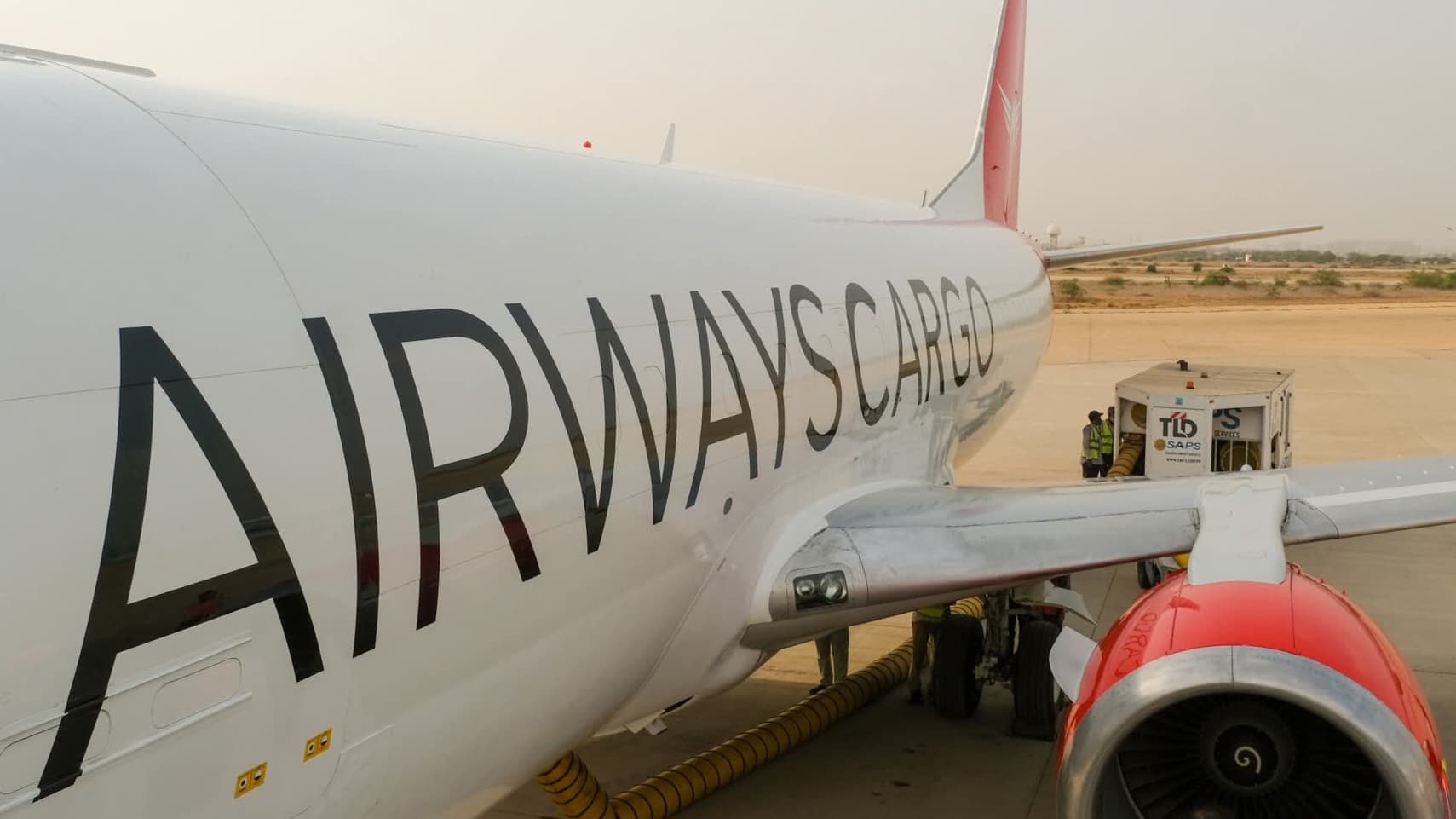
The Pakistan Navy and the Pakistan Maritime Security Agency have located the debris of the K2 Airways Boeing 737-400F that disappeared from radar screens on the night of July 7 while operating a cargo flight between Sharjah and Karachi. The wreckage was spotted off the coast of Ormara in Balochistan province, following a search and rescue operation lasting approximately 12 hours that mobilized the country's air and maritime assets.
Pakistani authorities announced that the wreckage was located south of Ormara port, on the Balochistan coast, about 100 kilometers offshore. The Pakistan Navy and Maritime Security Agency stated that this discovery came after the activation of a rescue coordination center and the coordinated deployment of military vessels, coast guard assets, and maritime surveillance aircraft. "Following the event, a rescue coordination center was activated and a search and rescue operation was launched at sea with multiple agencies to locate the missing aircraft," the airport authority detailed in a series of social media posts.
The authorities now aim to locate the five people on board: two pilots, two engineers, and a loadmaster, whose fate remains unknown as operations continue. Pakistan's Prime Minister Shehbaz Sharif publicly referred to a crash in the Arabian Sea and offered condolences to the families of the crew members, requesting that the armed forces and civil authorities deploy "all available means" for the search. The investigation has been assigned to Pakistan's Bureau of Air Safety Investigation, an independent entity created as part of the restructuring of Pakistan's civil aviation, which will reconstruct the precise timeline of the accident and determine the technical, operational, or human factors involved.
According to the Pakistan Airports Authority, the K2 Airways Boeing 737-400 cargo aircraft was operating flight KTA1732 between Sharjah, United Arab Emirates, and Karachi, Pakistan. The aircraft, registered AP-BOI, had taken off in the early evening and was cruising for about 1 hour and 20 minutes when the crew reported a navigation problem at 21:18 local time. Three minutes later, radar showed the aircraft "descending rapidly with a rapid heading change" before radar and radio contact was lost around 21:21 approximately 155 nautical miles (287 km) west of Karachi, over the Arabian Sea. Public flight tracking data, still being validated by investigators, suggests the aircraft was at 35,000 feet when it suddenly deviated from its route, lost altitude, then underwent a series of marked level variations before a final extremely rapid descent into the sea. Preliminary analyses indicate a drop of about 35,000 feet in roughly two minutes, an unusual flight profile that will fuel investigators' work on a possible loss of control or major system malfunction.
The aircraft involved, registered AP-BOI, is a 27-year-old Boeing 737-400 initially delivered in 1999 and first operated by Aeroflot under registration VP-BAR, then by Garuda Indonesia in passenger configuration before being converted to a cargo aircraft in 2011. AP-BOI joined K2 Airways as the airline's primary aircraft; the carrier operated only one cargo aircraft and has been officially registered since 2018. K2 Airways has not disclosed the precise nature of the cargo transported on the night of the accident, nor the possible presence of dangerous goods on board, a point that will be examined by authorities as part of the investigation and dangerous goods (DG) declaration obligations.
**MyATPS Angle for ATPL/ATC Students**
This accident highlights critical lessons for ATPL and ATC students. For pilots, the rapid loss of control from cruise altitude underscores the importance of upset prevention and recovery training (UPRT), as well as the need to manage navigation system failures under time pressure. For air traffic controllers, the sequence of events—from the crew's navigation problem report to the rapid descent and loss of contact—demonstrates the importance of radar monitoring, emergency communication protocols, and coordination with search and rescue services. The recovery of flight data and cockpit voice recorders will be essential for understanding the chain of events, emphasizing the role of accident investigation in improving aviation safety.