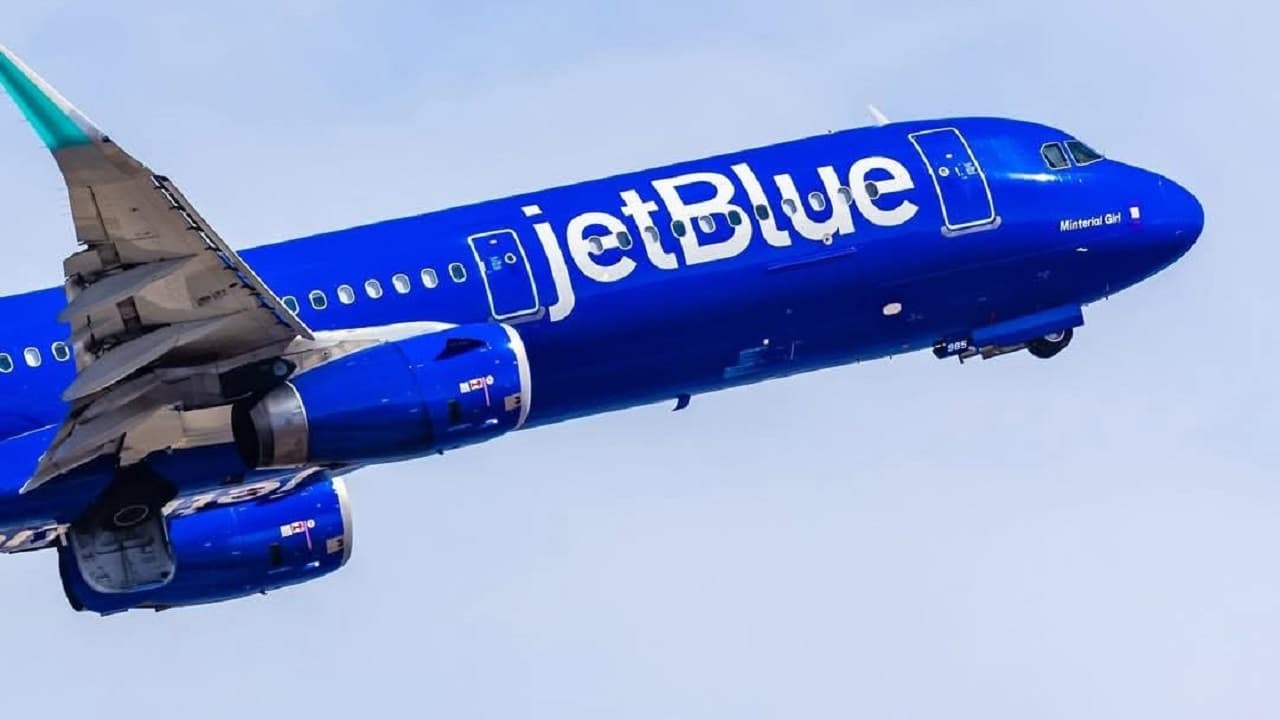
**A new transatlantic player enters Italy**
On May 14, JetBlue inaugurated its first-ever Italian route: a daily seasonal service between Boston Logan (BOS) and Milan Malpensa (MXP). This move marks a significant milestone in the airline's European expansion strategy, which began in 2021 with flights to London. For ATPL and ATC students, this development is a textbook example of how low-cost carriers are challenging legacy airlines on long-haul routes.
**Boston as a growing international hub**
JetBlue now operates up to nine non-stop European destinations from Boston during summer, including year-round services to Amsterdam, London-Heathrow, and Paris-CDG, plus seasonal flights to Barcelona, Dublin, Edinburgh, London-Gatwick, and Madrid. Boston has become a cornerstone of JetBlue's international growth, leveraging its strong domestic feed to funnel passengers onto transatlantic flights. This hub strategy is crucial for students to understand: it shows how secondary airports can compete with traditional mega-hubs like New York JFK or Chicago O'Hare.
**Aircraft and cabin configuration**
The Boston–Milan route is operated with the Airbus A321neo, equipped with JetBlue's transatlantic cabin featuring the premium "Mint" class and a densified economy section. This aircraft choice is noteworthy for ATPL trainees because the A321neo LR (Long Range) and XLR variants are increasingly used for transatlantic operations, offering lower operating costs and greater fuel efficiency compared to widebodies. Understanding the performance characteristics of these aircraft—range, payload, and ETOPS certification—is directly relevant to flight planning and operational decision-making.
**Competitive landscape**
JetBlue will compete directly with Delta Air Lines on Boston–Milan, while ITA Airways connects Boston only from Rome Fiumicino. This creates an interesting dynamic for ATC students: Milan Malpensa sees increased traffic diversity, requiring efficient slot coordination and airspace management. The route also highlights the importance of seasonal demand forecasting and network planning, core topics in airline management modules.
**Economic and academic ties**
Boston is a major hub for universities, research centers, and corporate headquarters. The new link strengthens economic and academic exchanges with northern Italy, a region known for its industrial and fashion sectors. For aviation professionals, this illustrates how route development is driven by demand beyond pure tourism—business travel and student mobility are key factors.
**Implications for trainees**
This news underscores the evolving nature of transatlantic aviation. ATPL students should note how aircraft technology (A321neo) enables new point-to-point routes, bypassing traditional hubs. ATC students can analyze the impact on Milan Malpensa's traffic flow and the coordination required to integrate a new carrier into an already busy airport. JetBlue's strategy also demonstrates the importance of product differentiation (premium economy, Mint class) in a competitive market—a lesson in airline marketing and revenue management.