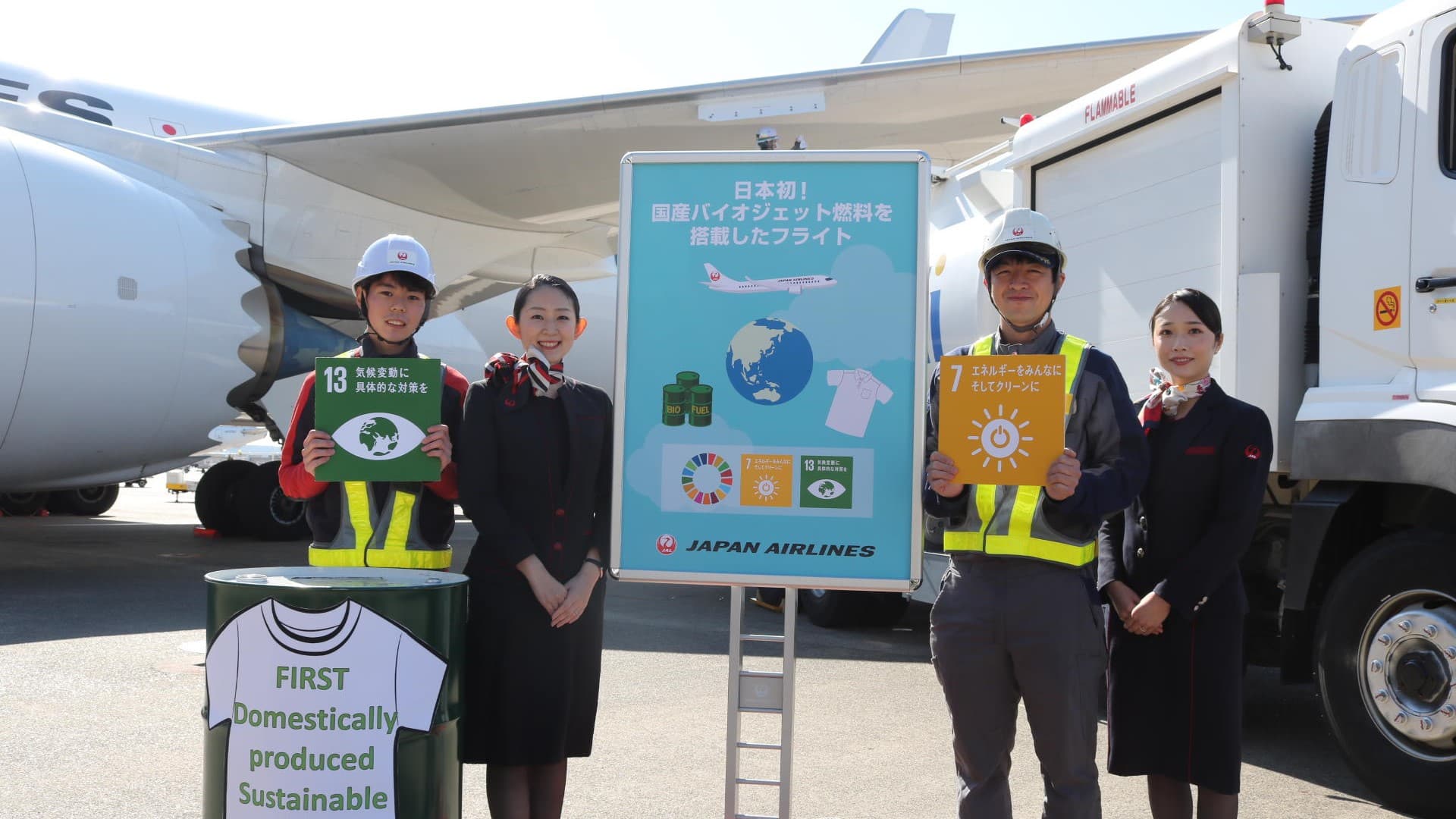
Japan has launched an ambitious nationwide program called "Fry to Fly" to collect used cooking oil from households and convert it into sustainable aviation fuel (SAF). With 300 supermarkets already participating, the initiative is part of the country's strategy to reduce reliance on imported fossil fuels and cut aviation's carbon footprint. The government aims to have 10% of Japan's jet fuel come from sustainable sources by 2030, requiring about 1.7 million kiloliters of SAF annually.
However, current domestic SAF production stands at only 30,000 kiloliters—just 0.3% of total kerosene consumption. Major airlines ANA and JAL have warned that the reality is "much harder than expected," and even if every drop of used oil were collected, it would cover only about a quarter of 2030 needs (550,000 kiloliters). Analysts consider imports of SAF or used oil "virtually inevitable" until other technologies like bioethanol-based fuels mature.
For ATPL and ATC students, this story highlights critical industry trends. SAF is not a niche topic—it is central to aviation's decarbonization roadmap. Understanding the supply chain, from collection logistics to refinery processes, is essential for future pilots and controllers who will operate in an environment where fuel composition, performance, and availability differ from conventional Jet A1. Moreover, regulatory frameworks like CORSIA and EU ETS increasingly mandate SAF usage, affecting flight planning, cost calculations, and operational decisions.
The Japanese case also illustrates the gap between ambition and reality. Despite strong political will and public participation, infrastructure and feedstock limitations pose significant hurdles. This mirrors global challenges: scaling SAF requires massive investment, international cooperation, and technological breakthroughs. For students, this means staying informed about alternative fuels, their certification (e.g., ASTM D7566), and their impact on aircraft performance and emissions.
In conclusion, Japan's "Fry to Fly" program is a microcosm of the broader SAF transition. It underscores the urgency of developing sustainable aviation fuels while highlighting the practical obstacles that the industry must overcome. As future aviation professionals, ATPL and ATC candidates should grasp these dynamics to adapt to a rapidly evolving regulatory and operational landscape.