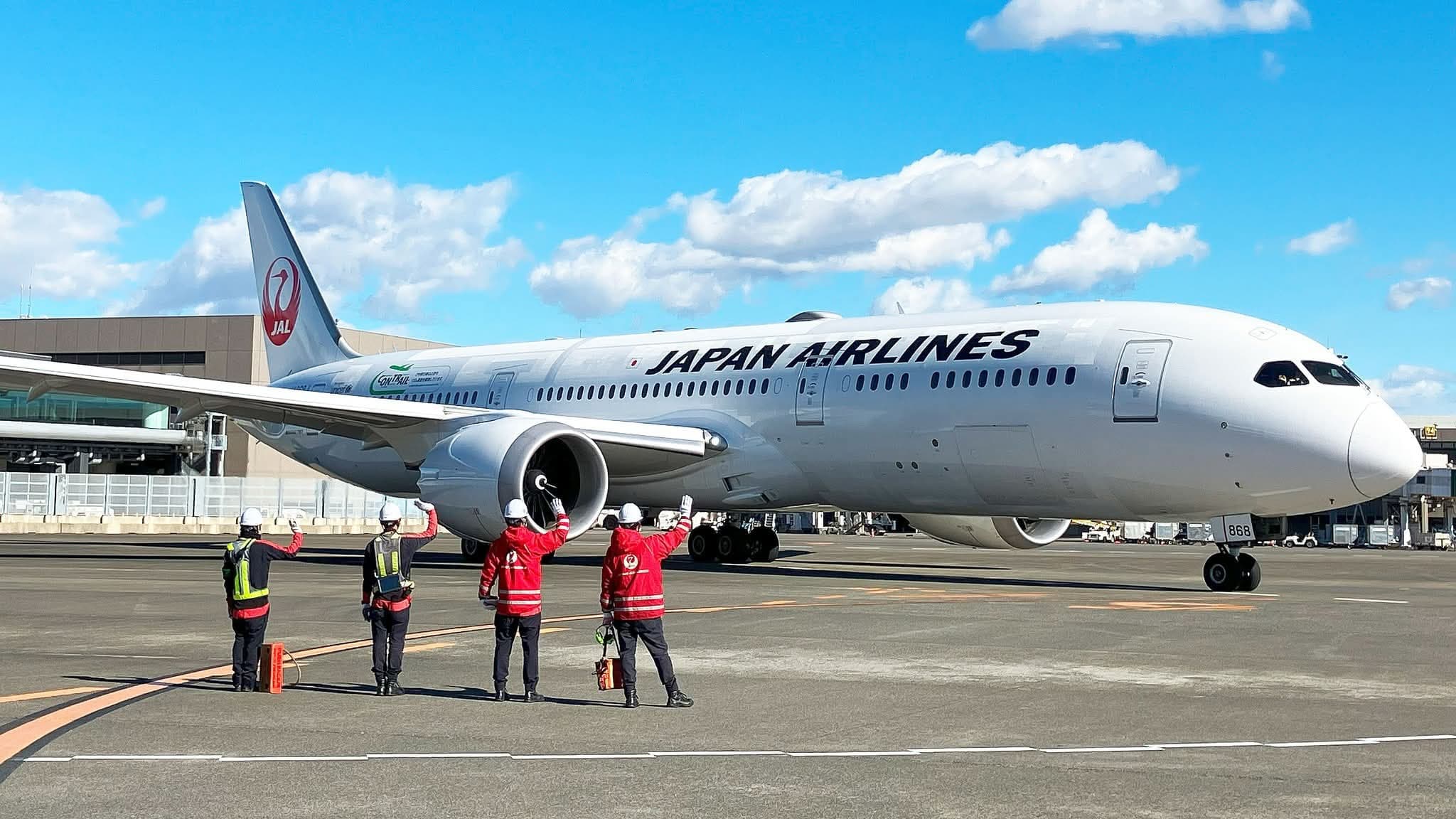
Japan Airlines (JAL) has begun an innovative trial of alternative fuel for ground operations at Yamagata Airport, using biodiesel produced from rice bran byproducts. Since May 28, 2026, the airline has been powering a baggage tractor—used to move containers and cargo on the tarmac—with this fuel, with the experiment set to run until the end of May 2027. The biodiesel is derived from fatty acids extracted from rice bran, the thin brown layer covering rice grains, a non-edible residue from rice bran oil manufacturing. It is produced by Boso Oil & Fat, a subsidiary of the Showa Sangyo group, using an ion-exchange resin technology developed by Tohoku University. According to the companies involved, this marks the first time a biodiesel made with this method has been used in an airport environment.
The choice of Yamagata Airport is strategic. Located in a region with significant climate variations, it allows testing of the fuel's performance under contrasting weather conditions—a critical factor for airport operations. Additionally, the airport's proximity to Tohoku University enables researchers to closely monitor fuel and vehicle performance. During the trial, partners will analyze parameters such as tractor behavior in real operational conditions, potential fuel impact on equipment, and supply stability and reliability.
JAL already uses biodiesel from used cooking oil at 23 airports across Japan for ground operations. However, this new project stands out by utilizing an alternative, non-food feedstock from industrial waste. This aligns with a strategic focus as global demand for biofuels intensifies, driven by aviation decarbonization policies. "Developing new raw materials is essential to ensure a stable supply of sustainable fuels," the project partners emphasize.
While this experiment currently involves only ground equipment, it fits into a broader energy transition for aviation. Airlines, including JAL, have committed to carbon neutrality by 2050, with Sustainable Aviation Fuels (SAF) playing a central role. However, SAF remains expensive and limited in availability. In this context, valorizing agricultural or industrial waste—such as rice bran, abundant in Japan—could offer a complementary pathway. For ATPL and ATC students, understanding such alternative fuel sources is increasingly relevant as airport ground operations evolve toward sustainability, impacting fuel logistics, emissions reporting, and regulatory compliance.